
Tommy Davis The Man Could Flat Out Hit
For two seasons, you could argue that Tommy Davis was the best young player in the National League. In 1962, at age 23, he finished third in MVP voting (behind teammate Maury Wills and Willie Mays of the Giants). What did he do that year? Nothing much, but lead the NL with a .346 batting average, 240 hits, and 153 RBI. The RBI are still a team record. The 240
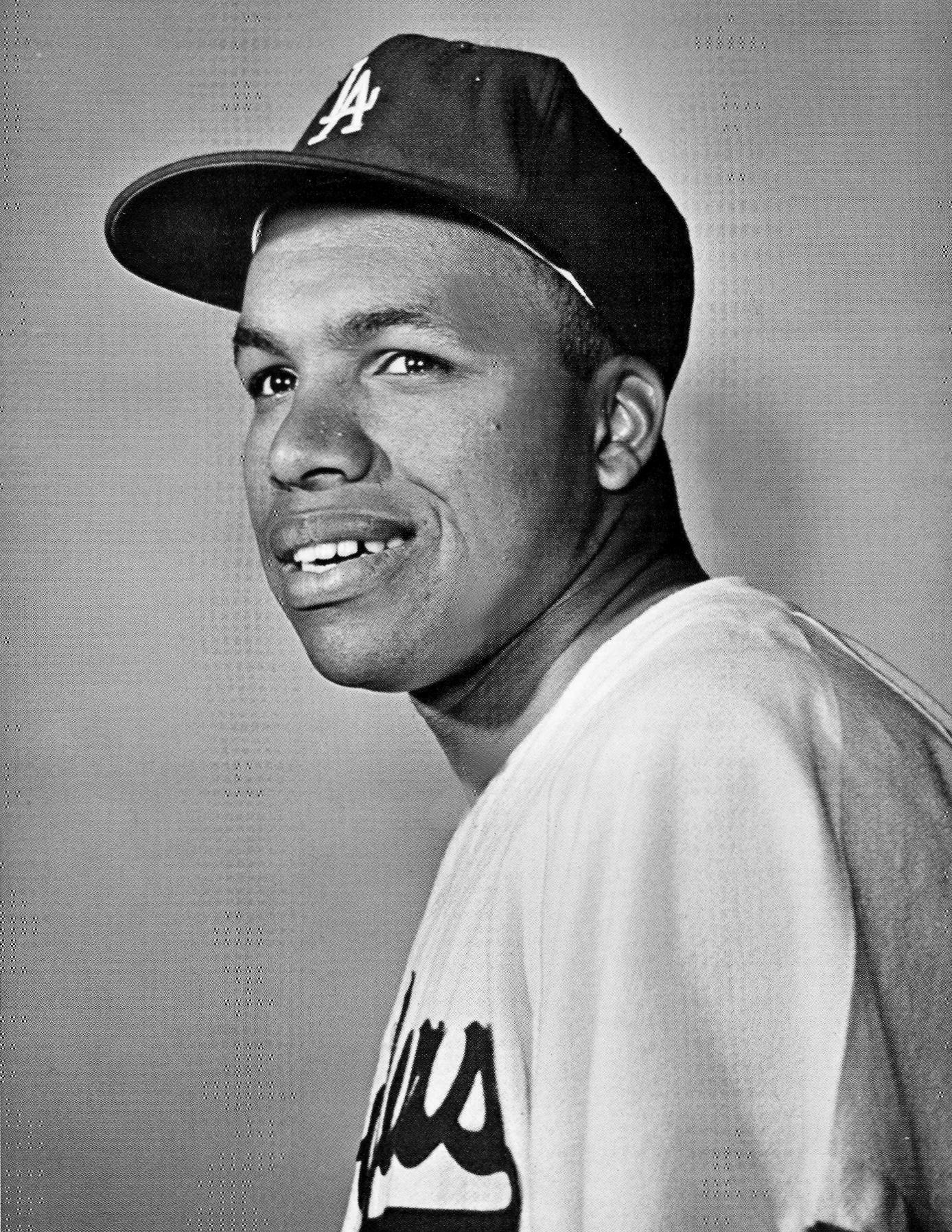
For two seasons, you could argue that Tommy Davis was the best young player in the National League. In 1962, at age 23, he finished third in MVP voting (behind teammate Maury Wills and Willie Mays of the Giants). What did he do that year? Nothing much, but lead the NL with a .346 batting average, 240 hits, and 153 RBI. The RBI are still a team record. The 240 hits were a Dodgers record for a right‑handed hitter, and the .346 average is second to Mike Piazza‘s .362 in 1997 for the highest average in L.A. Dodger history. In 1963, at age 24, he followed up by leading the NL in hitting again with a .326 average. Those are still the only two times an L.A. Dodger has led the league in batting average.
Tommy Davis never reached the heights of those two seasons again. After a solid year in 1964, he broke and dislocated his right ankle early in the 1965 season while sliding.
During an 18‑year baseball career, Tommy Davis batted .294 with 153 home runs, 2,121 hits and 1,052 runs batted in. He was also one of the most proficient pinch‑hitters in baseball history with a .320 batting average (63‑for‑197) – the highest in major league history upon his retirement.
Herman Thomas Davis Jr. (“my dad was Herman, my mom always called me Tommy,” said Davis) was born March 21, 1939, in the Bedford‑Stuyvesant neighborhood of Brooklyn, New York. Tommy’s team was the Dodgers, more so than ever after Jackie Robinson joined the team in 1947.
At age 16, Davis was a sports star at Boys High. He and future NBA star Lenny Wilkens were All‑City standouts on the basketball team. Tommy was the star catcher on the Boys HS baseball team. Hitting seemed to come really easy to him. Davis began his diamond career at the age of nine in fast‑pitch softball. When Davis started playing hardball, he felt he had much more time to swing. He was never a pull hitter or a power hitter; from the earliest age, he would simply take what pitchers gave him and hit the ball as hard as he could.
Davis learned the inside game of baseball from Clarence Irving, his coach on a Kiwanis League team. Irving was the only African‑American manager in the league and he drilled the fundamentals into his players. The team was made up of all the different ethnic groups in Brooklyn’s melting pot. In 1955, Tommy’s team made it to the state championships against a team from Watertown. After Watertown built a 5–2 lead, their players began taunting Davis and his teammates with racial slurs. When he heard the word “Sambo,” Davis started tearing the cover off the ball. The boys from Brooklyn won 7–5.
Davis was scouted by several teams, including the Phillies, Dodgers, and Yankees. The Yankees rolled out the red carpet for Davis, telling him that he could work out at Yankee Stadium whenever he pleased. “I would hit with the pitchers and shag when the regulars hit,” Davis remembered. “I probably did that three or four times.” He was leaning towards signing with New York despite pleas from Dodger scout Al Campanis that he couldn’t forsake his native Brooklyn. Campanis also pointed out how the team’s black players enjoyed the atmosphere on the Dodgers.
A personal phone call from Jackie Robinson on the Sunday of the week Davis planned to sign with the Yankees sealed the deal. Davis signed with the Dodgers for $4,000 – the highest bonus a player could get without being compelled to spend two years in the majors. Another Brooklyn signee, Bob Aspromonte, also got $4,000 – plus some cash under the table. “I don’t remember what Jackie talked about. Probably the advantages of signing with the Dodgers,” Davis said. “The important thing was that he took the time to call. I was going to sign with the Yankees on a Tuesday night. Instead, I signed with the Dodgers on a Tuesday afternoon.”
Davis spent his first summer as a pro with the Hornell Dodgers in upstate New York. It was the first time he played night baseball. It took some getting used to, but by the end of his first year, he had hit .325 in 43 games. The 1957 season found Tommy Davis playing for Kokomo of the Class D Midwest League. He had been homesick the year before, but manager Pete Reiser took him under his wing and functioned as a father figure for him. He encouraged Tommy to be an aggressive hitter and base runner. He led the league that summer with a .356 average and set a league record with 68 stolen bases. Every time he took off, Reiser could only shake his head. Davis had no idea what he was doing, but against the easily flustered competition, he slid in safely time and again. “Pete Reiser made a man of me,” said Davis. “One time I was out late with a couple of teammates and when we got back to the rooming house we lived in, Reiser was in my bed. He looked at the three of us and said, ‘That will be 50‑50‑50 (in fines), and don’t wake me up.’ I had to sleep on the floor.”
Davis’s next stop was Victoria, Texas of the Texas League. He played 122 games for the Rosebuds in 1958 and batted .304 with an OPS above .800 against a much higher grade of competition – despite being the only teenager on the team, and despite an injured wrist. Tommy said he sometimes felt like Jackie Robinson playing in Texas. “There were a lot of racial problems in Victoria. The more they yelled, the harder I played.” Davis finished up the year with the Montreal Royals, then the Dodgers’ top farm club. He got into 14 games and batted .308. The Royals won the International League crown that fall.
Davis was basically a full‑time outfielder at this point. That was where he played during his final stop in the minors, Spokane, the Dodgers’ Pacific Coast League affiliate. Playing 153 games for manager Bobby Bragan, Davis hit .345 to win his second batting title. He learned a lot from his older teammates, including Bob Lillis, Frank Howard, and Maury Wills. “That was the right place at the right time for me,” said Davis of his age‑20 season. The Dodgers rewarded Davis with a September call‑up. He came to the plate once in the final week and struck out against fellow rookie Marshall Bridges of the Cardinals. The Dodgers reached the World Series but Tommy was not eligible to play.
Davis made the Dodgers out of spring training in 1960. He earned his first career start, in center field, in the season’s third game, and collected his first major‑league hit. It was an infield single off Ron Kline. Davis saw the most action of anyone in center field for the 1960 team, starting 57 games there. One foggy night, he made a Willie Mays‑type over‑the‑shoulder grab in front of the Los Angeles Coliseum’s centerfield wall, 425 feet from home plate. It was a foggy night, so only the handful of fans sitting in the bleachers saw it. The umpire called the batter out based on their wild cheering after Tommy made the grab.
Davis made a respectable showing at the plate in his rookie season, batting .276 in 374 at-bats. His 11 homers were fourth-best on the club, as were his 44 RBI. He lost several home runs to the net in left field – shots he claims would have gone out of any other ballpark. Tommy drew only 13 walks, yet struck out a mere 35 times. In other words, he went up to the plate swinging. “My goal was to limit my strikeouts to one every ten at-bats,” Davis said. “You don’t know what might happen any time you put the ball in play.”
Davis started in all three outfield positions again in 1961, but the position he played the most was third base. Walter Alston seemed determined to make Tommy into an infielder and worked him out there all spring. The experiment ended after the Dodgers acquired journeyman Daryl Spencer to play the hot corner. “They never really explained to me how you had to short‑arm the ball at third,” Davis explained 50 years later. “I was throwing it like an outfielder and the ball was sailing over Hodges’s head.”
In 1961, Davis batted .278 with 15 homers, 58 RBI, 10 steals and 60 runs scored. He also received some much‑deserved press. There were several “Boy from Brooklyn” type stories in newspapers and magazines, including a long feature in Sport. Baseball writers seemed to sense that he was on the verge of harnessing his talent, and wanted to get to know what kind of person he was. What they found was the opposite of a rah‑rah guy, but not in a way that generated a negative portrayal. Davis was incredibly calm for a 23‑year‑old in one of baseball’s biggest pressure‑cookers. And the quieter he was, the better he seemed to play – no matter where the Dodgers penciled him into the lineup.
None of the platitudes used to describe Tommy Davis, however, hinted at the offensive force he would become in his third major‑league season. By early June, Davis’ average had climbed into the .330s. It never came down, as he piled up hits at a stunning rate. More impressive – and critical to the Dodgers’ success – was Tommy’s clutch hitting. He became an animal with men on base. He rarely went for more than a couple of days without driving a runner in.
Of course, the headline‑grabber for L.A. in 1962 was Maury
Wills. When he reached base, he would
either steal or Gilliam and Willie Davis would try to move him into scoring
position. Tommy spent most of the year hitting cleanup, so he often came to the
plate with one or more speedy runners in scoring position. He had 100 RBI before July was out – and
started in both All‑Star Games that month, too. “Every time Tommy came up with a man on
second, he would drive him in with a single,” Sandy Koufax once recalled. “When
he came up with a man on first, he drove him in with a double.”
What explains his big 1962 season? “Starting and playing every day was the key,” said Davis, who played in 163 of the Dodgers’ 165 games that season. “Maury, Gilliam, and Willie all had good years in front of me, and Frank Howard behind me hit 31 bombs (with 119 RBI and a .906 OPS) so I saw a lot of fastballs. Ron Fairly was always pissed off. He said after Howard and I were done there was no one left for him to drive in.” Early in the year, the Dodgers looked as if they might run away with the pennant. But they cooled off in the final two months. After losing 10 of their final 13, they found themselves in a first‑place tie with the Giants. The ensuing playoff came down to a deciding third game. Davis drove a Juan Marichal pitch out of the park with a runner on in the sixth inning to give the Dodgers a 3–2 lead. L.A. tacked on a fourth run but could not hold the lead. Davis was on deck when the final out of the season was made. Davis playoff homer gave him 27 for the season – the first and only time he would hit more than 20 in a year. His 153 RBI were a dozen more than Willie Mays, who finished second. Tommy’s RBI total was the highest for a National Leaguer since Ducky Medwick knocked in 154 in 1937. Davis had only 63 extra‑base hits in 1962, which means a high number of his RBI came on singles. This was a tribute in part to his clutch hitting, and to the Dodger offense, which was remarkably adept when it came to moving runners into scoring position. Davis’ .346 average was the best in baseball in 1962. Davis also led the league in hits with 230, the most in NL since Stan Musial produced the same number in 1948. Tommy was one off the lead league in triples, with nine, and was fifth in the NL with 120 runs scored. He stole 18 bases and, as a left fielder, was as good as there was in the league in 1962.
Davis successfully defended his batting crown in 1963, finishing at .326, six points ahead of Roberto Clemente. The last Dodger to win consecutive batting titles was Jake Daubert, in 1913 and 1914(raise your hand if you remember the immortal Jake Daubert). Davis led the team with 181 hits and 88 RBI and was second to Frank Howard with 16 homers. After a slow start, the Dodgers caught fire and won the pennant that year with 99 victories. “We were a tight group that season. We had great speed and pitching. Perranoski was outstanding, sometimes people forget that. And if I had to win one game Podres was right there with Koufax. Johnny would give you a short, efficient game. You could make early dinner reservations when Podres pitched,” said Davis. The Dodgers swept the Yankees in the World Series. Davis tied a record with a pair of triples in Game Two. In Game Three, he singled in the lone run in a 1‑0 victory. He batted .400 to lead hitters on both clubs.
The 1964 season began with great promise for Tommy Davis and the Dodgers but ended in disappointing fashion. L.A. won a meager 80 games, and Tommy’s average plummeted more than 50 points to .275. His power numbers were essentially the same, as were his RBI. His WAR, however, dipped to 2.3 from 6.8 in 1962 and 4.6 in 1963. He was still a clutch hitter, relatively speaking, as he drove in 86 runs on 18 fewer hits. But coupled with truly disastrous seasons from Jim Gilliam and Frank Howard, the top of the Los Angeles lineup simply could not generate the runs needed to win tight ball games.
The Dodgers recovered in 1965 to win 97 games and return to the World Series, but Davis missed almost the entire season. On May 1, with the Giants in town, Davis was going from first to second on a grounder to Orlando Cepeda. Cepeda flipped to Gaylord Perry for the out at first. Tommy, not knowing whether there would be a play on him, made an awkward slide and snapped his ankle. “I was running on the inside of the baseline expecting Cepeda to throw to Pagan,” Davis said slowly. “As I approached the bag I did a crossover step with my left leg and the back spike of my right leg caught in the clay and turned my foot completely around. Perry dove to tag me and I never felt it. I was in shock. Wayne Anderson (a Dodger trainer) came on the field and snapped my foot back in place right on the base path. Lou Johnson took my place and became the hero of the World Series. I can’t be bitter about it. I broke an ankle…. But what the heck, maybe that wasn’t supposed to be.
Davis rebounded to hit .313 in 1966, but was traded to the New York Mets for Ron Hunt and Jim Hickman after the season and spent the rest of his career bouncing from team to team. He retired after the 1976 season.
Still, a bit hobbled from his injury, Tommy nevertheless led the Mets in almost every offensive category in 1967. He had a team‑best .302 average, 32 doubles, 16 home runs, 174 hits, 72 runs and 73 RBI. Davis said that, including all his years with the Dodgers and later in Baltimore, that 1967 was his greatest year. “I had to prove myself again. By having a decent year I was able to play until 1976. I was certified good enough to play, thanks to 1967 with the Mets.”
The Mets would trade Davis to the WhiteSox in 1967. The Mets received Tommie Agee and Al Weiss in
return. “I deserve some credit for that 1969 championship, don’t you think?”
Davis joked. “You think the Mets would send me something for helping them
win.”
What Tommy Davis accomplished as a major leaguer on one good leg, most players would be proud to do on two. Not that this sums up his athletic career, but it is an important backdrop to his improbable baseball odyssey. Davis seemed ready to have his ticket punched for Cooperstown as he entered his ball‑playing prime. However, an instant on the base paths in 1965 took him down a very different road. “I don’t know if I would have made the Hall of Fame,” Davis said in July 2011. “I had better years than some guys who are in. It’s not for me to judge.”
In 1968 he was selected by the Seattle Pilots in the expansion draft. Tommy’s leg bothered him for much of the 1969 season, but he was able to steal 19 bases in the five months he played in Seattle. He also hit 29 doubles, by far the most on the team. Davis was batting .271 and leading the Pilots in hits and RBI when they traded him to the Houston Astros. He played out the season for Houston, batting .241 and stealing one more base to make it an even (and career‑high) 20. All told, he batted .266 with seven homers and 89 RBI.
Davis spent 1970 with the Astros, A’s and Cubs. The call‑up of teenage star César Cedeño in Houston made Tommy expendable. In Oakland, Davis was part of a formidable outfield that included Reggie Jackson, Rick Monday, Joe Rudi and Felipe Alou. Once the A’s had faded from contention, owner Charlie Finley agreed to sell Davis to the Cubs. Tommy’s totals for three teams in 1970 amounted to a .284 average with six homers, 65 RBI and 10 stolen bases. The Cubs released him after the season; Tommy believed that Finley engineered that release from his Chicago insurance office in order to re‑sign him at a bargain rate. Davis remains a little bitter about this stage of his career. “Nobody gets released after hitting .284, you ever hear of that?” he asked. Since the Cubs released him, his next club was not bound by the 25% limit on salary cuts. Consequently, he said his salary went from about $80,000 to less than $40,000. “To lose that money that late in my career really hurt me. It affected my retirement payouts. I feel it to this day.” According to baseball‑reference.com, Davis’s salary eventually dipped to $25,000 before recovering into the $30,000s with Baltimore in the middle 1970s.
Davis returned to Oakland in 1971. He had a solid year and helped the club reach the playoffs for the time, but was released during spring training in 1972. This move was perceived by many as punishment because Tommy had introduced the team’s young star (and his Oakland apartment‑mate) Vida Blue, to attorney Robert Gerst. With Gerst’s encouragement, Blue insisted on a new contract that did not include the dreaded reserve clause, leading to a memorable holdout in the midst of a historic players’ strike.
Timing is everything in baseball. At 34, Davis could still hit, but his days as an everyday defensive player were at an end. The arrival of the designated hitter in 1973 season made him instantly relevant again. Serving as Baltimore’s full-time DH, he led the team with 169 hits and 89 RBI. His .306 average ranked third in the AL. Davis had another fine year in 1974, once again leading the Orioles in several key offensive categories, including hits (181), average (.289) and RBI (84). Baltimore won the AL East, surviving a late charge by the Yankees. Alas, both years Baltimore’s season ended with an ALCS defeat at the hands of the Oakland A’s.
Davis’s final season as a major‑league regular was 1975.
Tommy’s .283 average was second on the club to Ken Singleton’s .300 mark. Davis was 36 at the end of the season but
hardly fading. He had 25 hits in September to boost his average a dozen
points. Even so, Baltimore’s DH job in
1976 was likely to go to slugger Lee May, who was becoming a defensive
liability at first base. The Orioles released Tommy in February.
Davis caught on with the Yankees in 1976 but failed to make the team in spring training. He stayed in shape and signed to play with the Angels in June. He finished the year as the Royals’ DH, but joined Kansas City too late to be eligible for the epic ALCS showdown with the Yankees. KC’s designated hitters failed to bat their weight in that series. On October 2, Davis appeared in his 1,999th regular‑season game. He collected a pair of singles—hits number 2,120 and 2,121.
When the Royals released Tommy Davis in January, he decided to call it quits. He was tired of moving from team to team, though he conceded that his lackadaisical approach may have irked some of his employers. Even in his glory years with the Orioles, he was known to disappear from the dugout between at-bats to read or grab a shave. “The lazier I felt,” he liked to say, “the better I hit. Besides, what manager would question a player who could come into a game cold and hit better?”
Davis stayed in baseball after retiring as a player. He worked for the Dodgers as a minor‑league instructor and also as part of the community relations department. He and his wife, Carol, raised their daughter in Greater Los Angeles. Davis also has three daughters and a son from his first marriage. He served as the batting coach for the Seattle Mariners for one season in 1981(under manager Maury Wills) and eventually returned to the Dodgers – pressing the flesh out in the community and passing along batting tips to everyone from prospects to middle‑aged fans at the team’s fantasy camps.
Davis remains in constant demand at autograph shows and as a speaker. In 2005, he co‑authored Tommy Davis’s Tales from the Dodgers Dugout with Los Angeles Times sportswriter Paul Gutierrez. He also started a small company called Tommy Davis Enterprises that sells promotional items corporations use as giveaways. He also worked for a while promoting musical acts, like Donna Summer, Kiss, and the Pips, as promotion manager for Casablanca Records.
The Dodgers have need of a good right-handed bat in the line-up. They could do a whole lot worse than obtaining one that could hit like Tommy Davis. For a couple of years, he was as good as they came, only to have his career derailed by an unfortunate injury. In fact, I believe he could fall out of bed today and still hit .300. Albeit, it may have to be off a batting-tee.
More from Dodger Talk
Enjoy it While You Can!
It was both surprising and not surprising to me that the Dodgers signed Kyle Tucker. That they can make it work is a tribute to the true genius of Mark Walter and Andrew Friedman. Enjoy it while you can, because it will end soon. In the upcoming CBA and talks among owners, MLB…
Dodgers Food Trailer
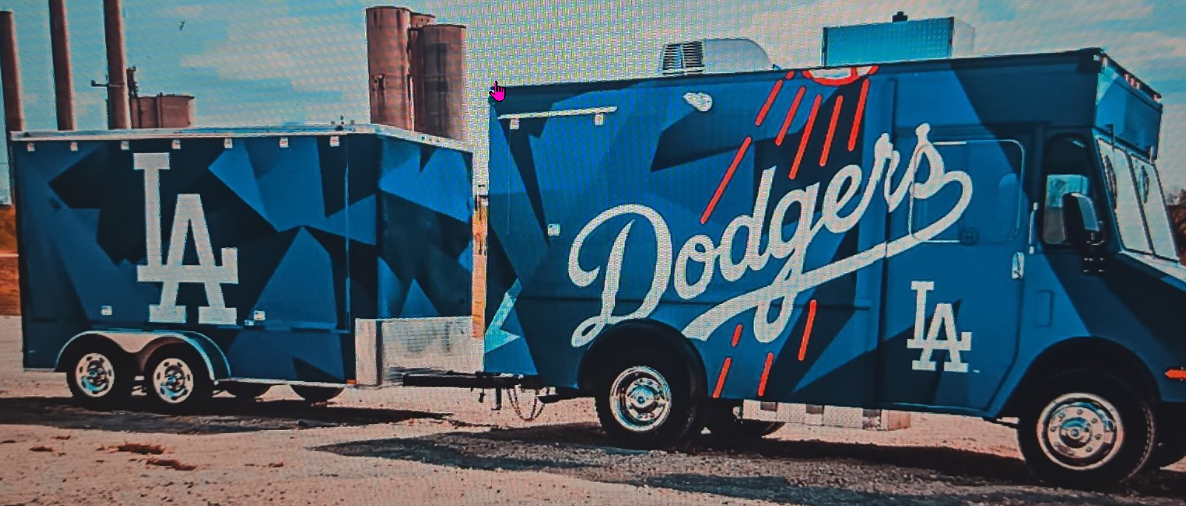
I did this interview a couple of weeks ago with Chef Mike, who runs the Dodgers Food Trailer for the Great Lakes Loons. They are there for every home and road regular season and playoff game. They prepare three meals a day for approximately 50 people (players and coaches). Since games end late most evenings, they do not prepare breakfast. Many of their hotels have a complimentary breakfast anyway. However,…
Meet LAD 2026 Draft Picks 1-12
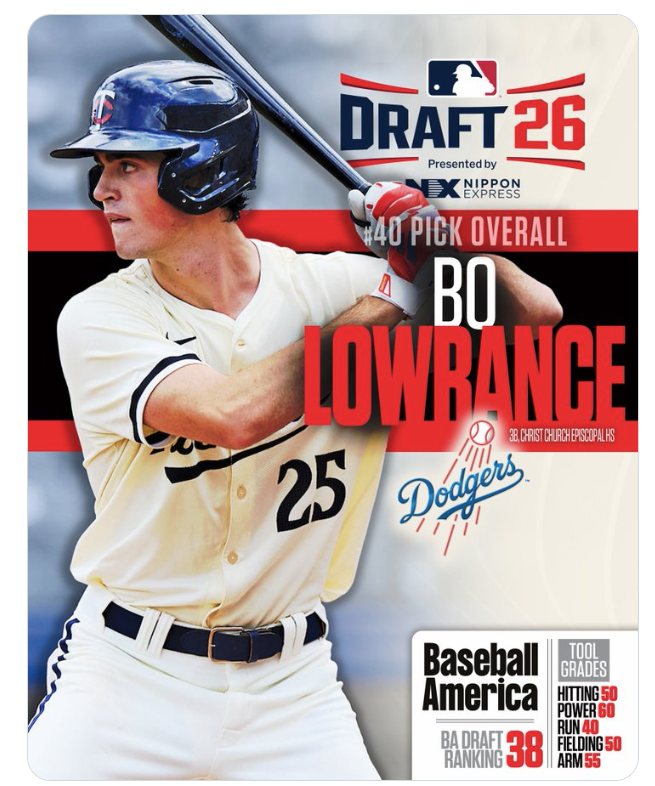
3 picks were High School players (2 SS and 1 OF). There was a college OF, college catcher, college SS, and 10 college pitchers. Of all the talk for a need for a catcher, the only catcher the Dodgers selected was Luke Bard, son of LAD bullpen coach Josh Bard. Bard was a 4th year senior from Houston Christian University. He is not a prospect, so the Dodgers are still…
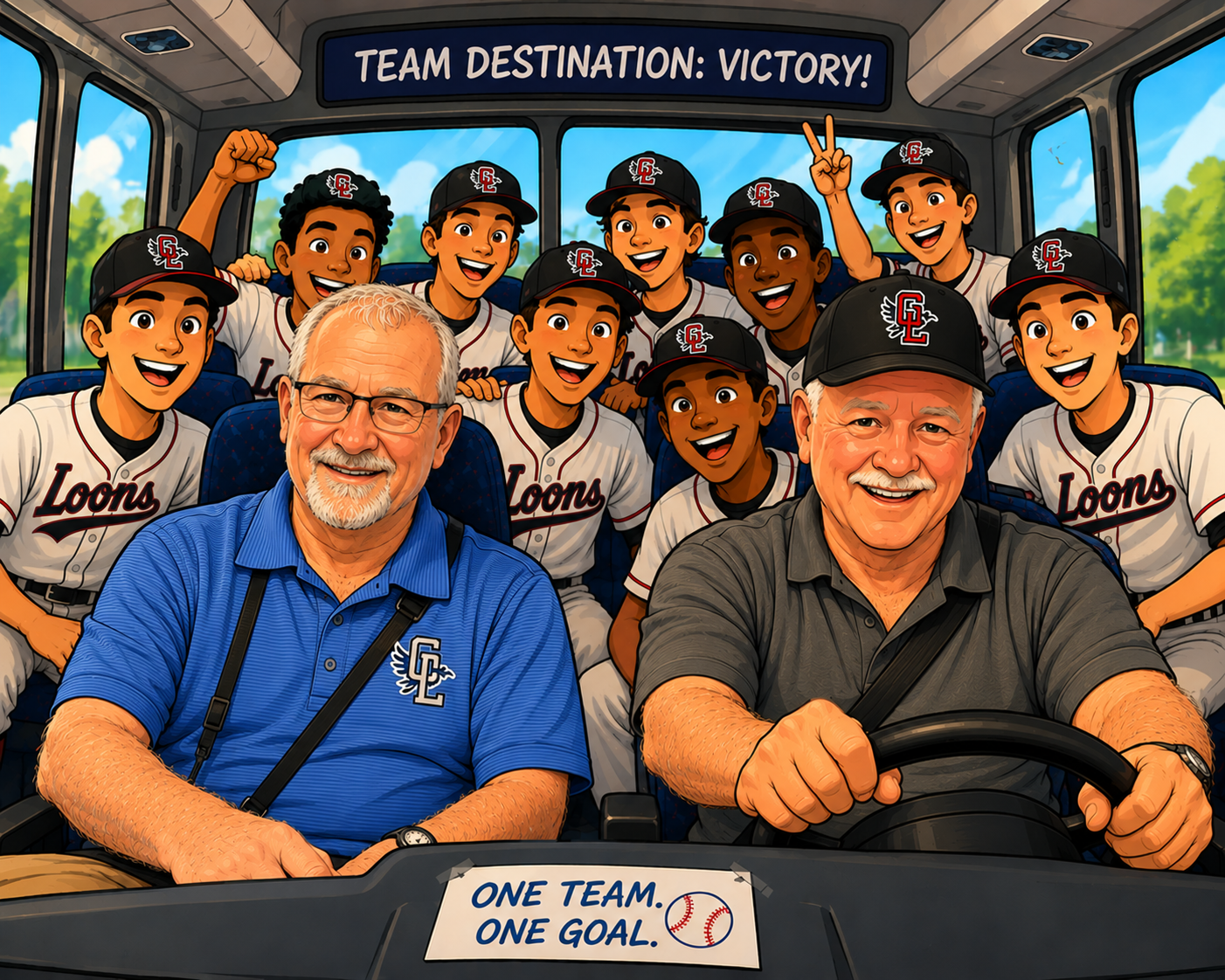
Interview with Paul Beachy – Team Bus Driver For The Great Lakes Loons (LA Dodgers Minor League Team)
It’s been a few days since I did this interview. We have evidently been working my son-in-law (the video guy) like a rented mule at US Water Systems. However, I am taking him to London with me in a few days, so maybe Watford will buy him a pint as a tip, but he’s a dang Red Sox fan, so there is that! I thought that it would be interesting…
Discussion (79)
Disagree, not disagreeable
I’m still waiting for someone to offer me a million dollar contract.
Someone could make the same guarantees you refer to but on a major league contract and give them something like one or two million for that. Both guys are worth that to a team as a gamble even if they don’t earn any of the incentives.
Dback non-tender Taijuan Walker is an interesting possibility, especially if he is willing to pitch either in the bullpen, or starting. Minor league contract with spring training invite, and an incentive heavy major league contract if / when he makes the major league roster. One year deal that allows him to build value for free agency in after the 2020 season. Seems like a low risk deal, with potential for high reward. Same deal with A’s non-tender Treinen for a bullpen spot.
Am I to assume that we didn’t non-tender anyone, including Yimi?
There are no obvious non tendered that AF will look at but there were some interesting moves. Besides Treinen, Ryan Buchter was also non-tendered by the A’s. Good year in 2019, however with non sustainable peripherals. He is more in line with who the Dodgers look at. He was a Dodger farm hand for 3 months in 2015. I am not advocating for him, but IMO he is more likely an AF candidate than Treinen.
Interesting non tender in AZ…Taijuan Walker. They also wised up with Souza. I was hoping they would continue to keep him.
Jimmy Nelson, Kevin Gausman, and Aaron Sanchez will get some calls.
At least four more backup catchers non-tendered with the most interesting being Elias Diaz. Kevan Smith, Kevin Plawecki, and Caleb Joseph also non-tendered.
Marlins traded for Jonathan Villar. I think that is a good deal for the Fish.
Besides Buchter, there are Alex Claudio and Tayron Guerrero as relievers that AF will end up looking at. Especially Guerrero and his 100+ MPH fastball. He is one of those what if candidates. He fits the hard throwing profile.
Former Dodger prospect Erick Mejia was cut loose by KC.
I cannot say it was a bad trade because the Pads gave up nothing, but trading for Jurickson Profar is a real head scratcher for me.
The teams’ front office personnel and player agents will begin to hook up Sunday night. Many are projecting that Josh Donaldson will sign before the December 12.
Some interesting names non-tendered today. In addition to those named above, Cesar Hernandez, Josh Phegley, Jimmy Nelson, Kevin Gausman and Kevin Plawecki are some who might be worth a look. Certainly no difference makers, but each has had their moment in the sun at one time or another.
Barnes back for 1.1 million. Could do worse
A’s have non-tendered Treinen.
His agent is probably fielding lots of calls as I type this.
That’s the question? Do u sell out for one year of greatness and a title and then crash and burn for several years? A lot of bad contracts in Boston. Or do u prefer the AF way. Consistent almost but no cigar!
Peraza being non-tendered was a no-brainer.
I like Charlie Culberson, but I understand $1.8MM for him seems high. I thought that Culberson, John Ryan Murphy, and Adam Duvall would all have been non-tendered, as their combined projections total a tad more than the projected arbitration for Shane Greene. They still have Camargo for the Culberson role, and they do not need a third catcher. Duvall is easily replaced. with Riley and Enciarte. Pache is not far off. I guess AA is deciding whether Riley or Camargo ends back at third. That could give Duvall new life.
Jackie Bradley Jr. is being tendered. With JDM not opting out, Betts still expected to earn nearly $30MM, and crazy a** contracts for Sale, Price, and Eovaldi, it is hard to even guess what Boston is going to do. JBJ can still be traded. Some have him going to SFG, but I cannot see Farhan paying JBJ that much when they are not ready to contend. Chaim Bloom has his work cut out for him. Dombrowski did not do him any (or Boston fans) any long term favors. But they did win going away in 2018.
Mike Moustakas signed 4 year $64MM. Does that affect what Donaldson and Rendon ask for?
Charlie Culbertson is a FA…
I would be surprised if the Dodgers non-tendered Yimi Garcia, but disagree with Mark that he’s just a tweak away from greatness. He’s just not that expensive and they could keep him or trade him if they decide they have better options.
His ERA was 3.61 this year (close to his career average of 3.66) but his FIP was 5.19 and his career FIP is 4.47. In other words, he’s lucky that he only gives up 3.6 ER/9 IP.
In 5 years and 160 IP, he’s given up 32 HR including 15 last year. And he’s only made the post-season roster 1 time in 5 seasons – he’s not trustworthy in clutch situations.
Josh Hader would be interesting in Blue. I assume that the Brewers want the world for him. He was pretty homer-prone last year. (He gave up 15 like Yimi did). But his ERA was 2.62, his WHIP was .8, and he had 138 K in 75 IP. He has only 3 MLB seasons so is controllable for 3 more seasons (he is first time arb eligible as a Super 2 player).
YIKES! Moustakas gets $16M AAV for 4 years.
With the Winter Meetings starting next week, I thought some of you might want to look back on the Winter Meetings 9 years ago in Indy. Watch the background…
Ac,Mark or someone who is the Brewers GM reason I asked is because I wouldn’t want the Brewers GM trying to pull a fast one on AF like he did the Marlins for Yelich.
For the Friedman Bashers who lamented losing Jose Peraza, he was non-tendered. You can have him back!
Apparently Scott Alexander has 2 option years left but has 3.097 service time.
Lets assume for this discussion that Alexander is the least productive reliever in the bullpen this season or at least one of the least productive.
Can the Dodgers send him to the minor league? Or is he going to be one of those relievers that takes up a spot on the 26 man roster because he’s not tradable and the Dodgers fear losing him if they send him to the minors?
I know Yimi Garcia is out of options. So he could be clogging up a 26 man roster spot if he sucks this season. That is if the Dodgers tender him.
I totally agree with SoCal Bum Ruiz really should not be mentioned in any trade for a reliever for the right starting picther need to think very hard about that.
Ruiz, Kazowski and Sheffield. Do it!
Josh Hader is allegedly on the market.
It probably starts with Ruiz or Lux and a couple of pitchers.
OK… I’ll bring up another name, Jayson Werth… One of my favorites who just couldn’t stay healthy until he was traded…Who knew!??!
Today is the day (5:00 PM PT) that all arbitration eligible players on the 40 man need to be tendered a contract offer or potentially lose them. I keep reading that Yimi Garcia is a candidate for non-tender. He is projected to make $1.1MM via arbitration so how is that a deterrent for the Dodgers. I am not nearly as optimistic as Mark is about how good Yimi might become, but he is worth twice the ML minimum, and the Dodgers have the dollars and a need for relievers. At $1.1MM he is a worthy middle reliever, but not late inning high leverage. The contract is not guaranteed, and he can always be released. The only reason to non-tender him is if they have a need for a spot on the 40 man.
Tommy D is one of my all time favorite Dodgers. My brother-in-law has met him a couple of times and says he’s an extremely nice guy. Very down-to-earth and very friendly.
In other news, Ken Rosenthal reports the Brewers are willing to listen on Josh Hader.
What should we offer? He’s only 25 and has 4 years of control remaining. It would take a lot but it might be worth it.
Bill Buckner was probably my favorite Dodger, EVER… behind Sandy… until he was traded. That broke my heart!