
MEET BULLET JOE ROGAN
There’s a pretty good chance, unless you are an ardent student of “old-time” baseball and you are a scholarly student of the Negro Leagues, that you have never heard of Bullet Rogan. I have to confess that I knew very little of Bullet Joe Rogan until my recent article on the Negro Leagues. Frankly, even with the information we have, there is far too little known about him. From those

There’s a pretty good chance, unless you are an ardent student of “old-time” baseball and you are a scholarly student of the Negro Leagues, that you have never heard of Bullet Rogan. I have to confess that I knew very little of Bullet Joe Rogan until my recent article on the Negro Leagues. Frankly, even with the information we have, there is far too little known about him. From those that saw him play, Rogan is said to have hit like Ty Cobb. He pitched like Walter Johnson. He played center field like Willie Mays. He was a two-way star who did it all. Quite simply, he may have been one of the greatest players that ever played the game. .
In a wonderful series written for the Athletic, Joe Posnanski ranked him the 92 best player of all time. In a conversation with Posnanski, Buck O’Neill, one of the Negro Leagues’ defining figures and MLB’s first black coach, and who played with Rogan at the end of his career, said that “Rogan threw as hard as Satchel Paige, was the best fielding pitcher in baseball history, was a world class center fielder and could handle the bat better than anyone he had ever seen.” O’Neill also added that “If you saw Ernie Banks hit in his prime, then you saw Rogan.”.
Legendary manager Casey Stengel, a fellow Kansas Citian and one of Rogan’s greatest champions, said Bullet was “the best all-around player in the world and one of the best, if not the best, pitcher that ever pitched.”
Bob Feller, after watching a 48 year old Rogan get 3 hit against his all-star barnstorming team, said “I can’t imagine how good he must have been when he was young.”
Frank Duncan, who caught both Satchel Paige and Rogan, said,
“Satchel was easier to catch. He could throw it in a quart cup. But Rogan was all over the plate—high, low, inside, outside. He’d walk five-six men, but he didn’t give up many runs. Bullet had a little more steam on the ball than Paige—and he had a better-breaking curve. The batters thought it was a fastball heading for them and they would jump back from the plate and all of a sudden, it would break sharply for a strike. I would rank him with today’s best. I have never seen a pitcher like him, and I have caught some of the best pitchers in the business.”
Satchel Paige said of Rogan:
“Yeah, I pitched against Bullet Joe. Rogan was one of the world’s greatest pitchers. I never did see him in his prime if you want me to tell you the truth. I came up from Birmingham to Kansas City. He beat me 1-0 in the 11th inning. Yeah, he was the onliest pitcher I ever knew, I ever heard of in my life, was pitching and hitting in the cleanup place. He was a chunky little guy, but he could throw hard. He could throw hard as Smoky Joe Williams — yeah. Oh yes, he was a number-one pitcher, wasn’t any maybe so.”
A former teammate, George Carr, had this to say about Rogan:
Rogan was the greatest pitcher that ever threw a ball. He had not only an arm to pitch with but a head to think with. Rogan was a smart pitcher with a wonderful memory. Once Rogan pitched to a batter, he never forgot that batter’s weaknesses and strong points. And don’t think Rogan was nicknamed “Bullet” for nothing. That guy had a ball that was almost too fast to catch. He would really burn ’em in there.
That’s some very high praise. But why do we know so little about him?
Record keeping and statistics were a hit and miss endeavor in the years that Rogan played. Not only that, there is much mystery that surrounds even the most basic information about Rogan. It is known that he was born in Oklahoma. However, when he was born is not as clear. It could have been 1889, 1893, or maybe even later. His exact birth date has never been established. Whenever he was born Rogan, in a very rare interview had this to say about his birth: “I was born playing baseball.”
There is also confusion about his name. Some records show him as Charles Wilber Rogan. His Hall-of Fame plague is inscribed “Wilber Joe Rogan (Bullet).” Mostly, though he was known as “Bullet Joe” or simply “Bullet.”
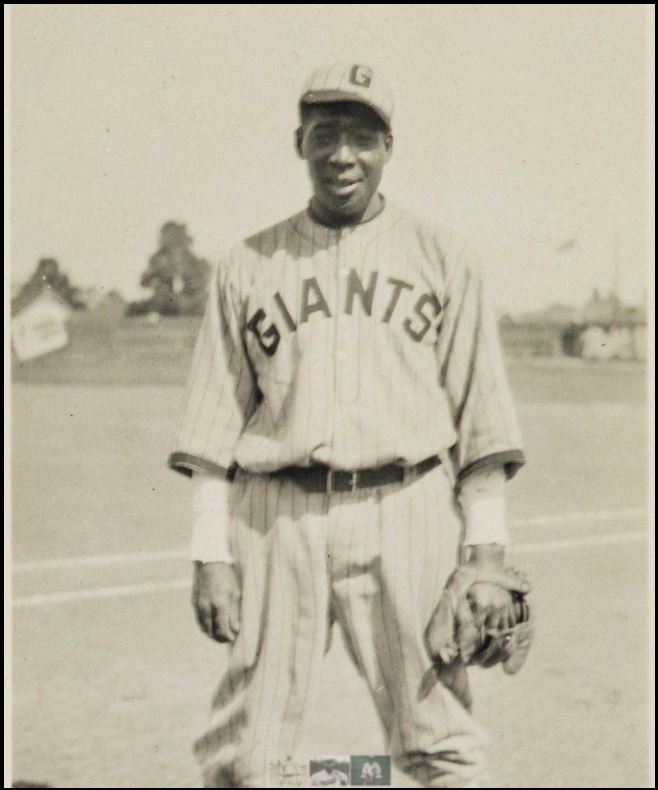
Rogan’s mother died when he was 15 years old. After his father remarried, he moved the family to Kansas City, Kansas. Rogan attended Summer High School. He joined the high school baseball team as a catcher but dropped out before he graduated. He is said to have begun his baseball career as a catcher with a semi-pro team called Fred Palace’s Colts in 1908. The next season he played with the Kansas City Giants, and was credited with 54 consecutive wins at that level of competition. It’s not really certain when, or how, he started playing baseball before these experiences.
In the fall of 1911, Rogan ran away to join the Army. Apparently he lied about his age. Rogan served in the Philippines with the 24th Infantry an all-black (Buffalo Soldier) regiment. In 1914, he was honorably discharged but reenlisted with the 25th Infantry, another Buffalo Soldier regiment. In 1915, while stationed at Schofield Barracks in Hawaii, Rogan was recruited to play for the 25th Infantry Wreckers in Hawaii, perhaps the best African American baseball team in the country at the time. The team included other future Negro League stars such as William “Big C” Johnson, Lemuel Hawkins, Bob Fagan, Heavy Johnson, and Dobie Moore. By the time he joined the Wreckers, Bullet Joe was already known for his baseball skills. A story written at that time about his debut with the Wreckers had this to say:
“The chief interest in the game was the first appearance on the local diamond of Rogan, late of the Twenty-Fourth Infantry, who arrived on the last transport. There is hardly a company commander in the Twenty-Fifth Infantry who has not made a bid for this man’s assignment to their company, without success. … He played the first three innings at third base and made a great impression. He looks like the classiest infielder the regiment has had in some time. In the fourth, he went into the (pitcher’s) box and here his success was even more pronounced. He had worlds of speed and a quick delivery following a leisurely windup that is in itself puzzling to any batter. At the bat, he had three chances and in each case met the first ball pitched on the nose but each time in the direction of some fielder.”
As Posnanski wrote: “Within a year, Rogan’s pitching was being celebrated in the Chicago Defender (Headlines included: “Rogan Strikes Out Eighteen Men,” “Rogan Wins Again,” etc. When he had to miss a game, the headline was: “Twenty-Fifth Wins Without Rogan”).”
While playing for the Wreckers, Rogan’s team won the Post League Championship, the United States Army Series Championship, and the Oahu League Championship.
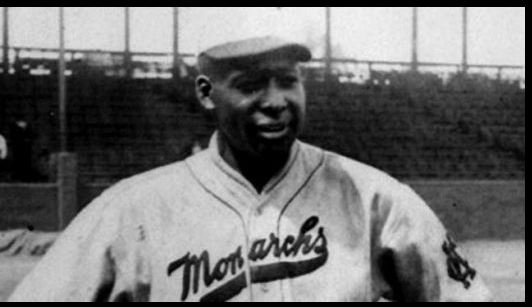
During his Army stint, legend has it that Casey Stengel saw him play while on an exhibition tour in the fall of 1919. He was so impressed that he recommended Rogan and several of his army teammates to J. L. Wilkinson, then forming the Kansas City Monarchs for the inaugural Negro National League season. That story may or may not be true, but Rogan was definitely no secret. When the Negro National League was founded in 1920, Rogan was one of the best known black players in the country. There were numerous efforts to get him signed. The Monarchs won the bidding war. He certainly didn’t look the part of an exceptional baseball player, but he was definitely the epitome of the adage “big(or good) things come in small packages”. He was only 5′ 7″ tall and weighed 160-180 pounds, depending on which record you believe
In 1920, Rogan and Dobie Moore joined the Monarchs. Rogan quickly became the premier pitcher and biggest box-office draw in the young league. In his first season, what records there show that he went 7-7 on the mound with a 2.98 ERA. He started 14 game and completed 13 of them. At the plate, in 193 at bats, he hit .290.
In 1921, he started to take things up a notch. As a pitcher, he started 29 games, completing 24. His record was 16-11, with an ERA of 1.79. As a hitter, he batted .298, in 275 at bats.
By his third season with the Monarchs, he hit .368, and his 13 home runs were good for second in the league. He had a .648 slugging average. On the mound, he went 15-8, with a 2.93 ERA, starting 22 games and completing 21.
In 1923, he continued to get better. As a hitter, he batted .370, with a .569 slugging average. On the mound he led the league with a 17-11 record. He also had another sub 3.00 ERA, coming in at 2.94. This year he started 25 games and completed 21. He also led the league with 151 strikeouts.
In 1924 Rogan hit .386, with a .564 slugging average. On the mound he was 18–6, completing 20 of the 25 games he started. He also starred in the first ever Black World Series, leading the Monarchs with 13 hits and winning two games as Kansas City defeated the Eastern Colored League champion Hilldales. That winter he led the 1924/25 Cuban League with nine victories for the champion Almendares club.
Bullet Joe may have reached his peak in 1925, leading Kansas City to its third straight league championship with a 18–2 record. He completed 18 of the 19 games he started and had a 1.84 ERA. At the plate he and a .372 batting average, with a .589 slugging average. In the playoffs against the St. Louis Stars he hit .450 and won three more games, including one shutout. However, before the World Series rematch with Hilldale, Rogan suffered a knee injury while playing with his young son. Forced to undergo surgery, he missed the series. Without their star, the Monarchs were defeated in six games.
The following season, Rogan became the manager of the Kansas City Monarchs. In that season’s NNL playoffs against the Chicago American Giants, he pitched and lost both games of a series-deciding doubleheader to the younger Bill Foster. He continued to be their best hitter and pitcher until 1928, when he was either 39 or 34. In 1928, Bullet Rogan was the best hitter (.358) and arguably the best pitcher (10–2) on the Monarchs.
Rogan continued as the Monarchs’ manager in 1929 when they won their fourth NNL championship and recorded the best record (62–17) in the history of the league. On April 29, 1930, in Enid, Oklahoma, Rogan played for the Monarchs in baseball’s first night game. In August he was hospitalized with an undisclosed illness. He remained out of the lineup for more than a year, finally returning on September 28, 1931.
When Wilkinson did not organize a Kansas City Monarchs team for 1932, Rogan joined a white independent team in Jamestown, North Dakota, where he played until August. He batted .315 and went 20–3 as a pitcher before returning to the reorganized Monarchs in September. In the winter of 1933 and 1934, Rogan returned to Hawaii and the Philippines as a member of the Philadelphia Royal Giants, a black all-star team. The Royal Giants toured Japan and China as well. In 1936, at the age of 43, Rogan appeared in the East-West All-Star Game.
Like I said earlier, the Negro League baseball stats are sketchy. However, those stats that have been researched and collected are incredible. Baseball-Reference credits Bullet Joe with a 119-50 record as a pitcher for the Monarchs, including 128 complete games and 15 shutouts. As a hitter, he had a .338 batting average, .515 slugging percentage and .905 OPS. He ranks among the winningest pitchers in Negro League history, and among the top hitters. As won wag wrote: “Move over, Babe Ruth and Shohei Ohtani.”
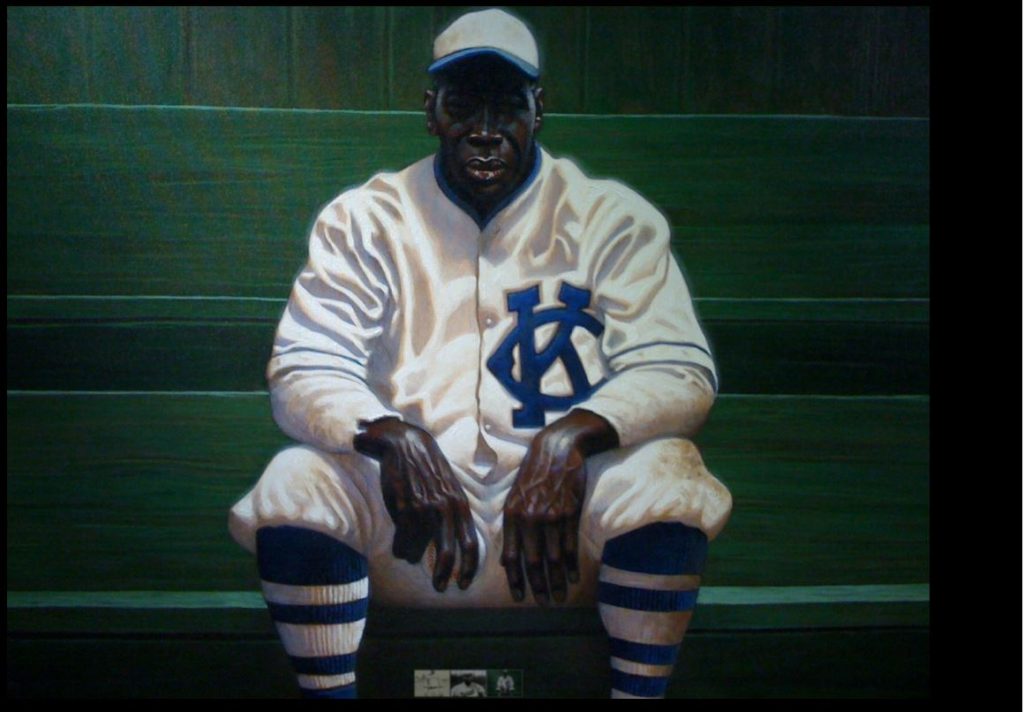
Rogan retired from the Monarchs in 1938. After retirement, Rogan worked as an umpire in the Negro American League until 1946. In his book, “We Are The Ship, The Story of Negro League Baseball” Kadir Nelson, describes umpiring in the Negro Leagues and tells a story about Bullet Joe:
“Umpiring wasn’t always that great. Some of the [umpires] wouldn’t know a strike from their left foot. At one time the league had official umpires, but they couldn’t travel with the teams. It was too expensive. A few of the umpires were former players. Pop Lloyd and Wilbur “Bullet” Rogan used to ump in later on in their careers. Those guys were tough. They had to be with guys like Oscar Charleston and Jud Wilson in the league. At one game in Kansas City, there were three umpires, Rogan was behind the plate and the other two were at first and third. A play took place at third base, and Rogan ran down the line. He called the man out and the base umpire called him safe. They started to argue and got into a fight. Bullet Rogan pulled out a knife and the other guy panicked and took off running toward the center-field fence and climbed over it. The next day it was in the papers. Rogan had a bad temper. [Players] wouldn’t argue to much with him about balls and strikes. Whatever, he called, you would just let it go. He was old, but he’d fight you anyway.”
After he quit umpiring, he worked for the post office in Kansas City. He died in 1967. In 1998 he was inducted into Major League Baseball’s Hall of Fame.
It so difficult to determine how good a player was that you never seen play. It’s also difficult to gauge how good the competition was that Rogan played against. Certainly the same good be said of Ruth, Gehrig or many others of that era. The great black players were not allowed to play with the whites and, rarely, would the whites play against all black teams. One thing that can be said, is regardless of who he was playing with or against, Bullet Joe Rogan was one very fine baseball player. If Casey Stengel thought he was the best there ever was, well who am I to argue with him.
Some additional random thoughts:
● Speaking of umpires not knowing a strike from their left foot, the umpires in the first two games with the Padres were as bad as I have witnessed in recent memory.
● Watching Paddack vs Buehler and May vs Lamet go at it was a lot fun. If Buehler and Paddock each had an “off” night, it will be amazing to see them duel each other when they are both on. May and Lamet were doggone good. Dodgers and Padres should be at for several more years to come.
● I had an epiphany on Monday night. The Dodgers play much better when they win, than when they lose. It’s remarkable that I never noticed that before. Simple solution, they should win more often.
● Forgive me, but I don’t get the constant bitching about Roberts as a manager. He makes his share of mistakes, most managers do. Moreover, why attribute his success solely to his players, didn’t Weaver, Alston, Cox, Sparky Anderson, and Terry Francona have good players? I always thought that Joe Maddon was a good manager. Do you think the Angel fans are happy with how he used Ohtani in his first 2 games on the mound? I doubt it. Even though he screwed up, he’s still a good manager. So is Roberts.
Here’s a House Full of Bullets for you.
More from Dodger Talk

Dodgers Food Trailer
I did this interview a couple of weeks ago with Chef Mike, who runs the Dodgers Food Trailer for the Great Lakes Loons. They are there for every home and road regular season and playoff game. They prepare three meals a day for approximately 50 people (players and coaches). Since games end late most evenings, they do not prepare breakfast. Many of their hotels have a complimentary breakfast anyway. However,…

Meet LAD 2026 Draft Picks 1-12
3 picks were High School players (2 SS and 1 OF). There was a college OF, college catcher, college SS, and 10 college pitchers. Of all the talk for a need for a catcher, the only catcher the Dodgers selected was Luke Bard, son of LAD bullpen coach Josh Bard. Bard was a 4th year senior from Houston Christian University. He is not a prospect, so the Dodgers are still…

Interview with Paul Beachy – Team Bus Driver For The Great Lakes Loons (LA Dodgers Minor League Team)
It’s been a few days since I did this interview. We have evidently been working my son-in-law (the video guy) like a rented mule at US Water Systems. However, I am taking him to London with me in a few days, so maybe Watford will buy him a pint as a tip, but he’s a dang Red Sox fan, so there is that! I thought that it would be interesting…

Thanks for Your Service: Chris Taylor
I was going to do this post when Chris announced he was retiring, then he changed his mind, but since the chances of him ever playing for the Dodgers again are slim and non-existent, I will go ahead with this post. He unretired, went on the IL, then decided to call it quits on May 24th. Taylor was born in Virginia Beach VA on August 29th, 1990. He attended Great…
Discussion (67)
Disagree, not disagreeable
Mark I think most teams would love to have Strip as their number 3. He pitched better than his results last night. More horsepower on his fastball this year. If we win a WSvthis year Driveline deserves a share! And thx 2dem for a great piece. All the incredible talent in the Negro Leagues that could have changed the history books in MLB.
I agree. I don’t have the stats but the relievers I see pitching back to back and or multiple innings seem to have less success. Your multi inning guys should have a couple days rest as well.
Stripling has some telling career splits
Innings 1-3 his OPS against is .652
Innings 4-6 his OPS against is .769
For some peculiar reason his OPS against in inning 4 is .883. Third time through order maybe?
In inning 1 his ERA is 3.4
In inning 2 his ERA is 2.38
In inning 3 his ERA is 2.53
Then it goes well over 4.
I think it’s safe to say Stripling is a 5 inning starter. Plan for that and winning his starts is possible.
The problem as I see it is that 5 inning starters put pressure on the bullpen. I don’t like seeing anyone in our pen throwing 2 days in a row. Treinen and Jansen both did it last night and neither were sharp, Treinen throwing 29 pitches and Jansen 20. I know there are times it’s going to happen. Keep them at a minimum by asking the pen to only pitch 3 or less a night.
Expecting professional starters to finish 6 should not be that big of an ask.
Great piece, Rob!
I had heard of Rogan but did not know much about him. It’s too bad he could not have played in the Bigs. He might have been as good as Ruth.
Chicken Strip made a couple of bad pitches, but overall, I have been very pleased with him. I think about 28 other teams would love him as their #5… especially in this short season.
I forgot that CT3 also had a cannon – what a way to end the game. Grisham is fast too!
Across MLB, for the most part, pitching is ahead of the hitting. Team Batting Averages are unusually low.
The Dodgers are 2nd to the Indians with a 2.42 Team ERA.
Muncy and Bellinger will get it together but that’s why they have a “team” – one guy can pick up the rest. Last night it was Taylor and Pederson. Shouldn’t Taylor have been sitting last night? What was Doc thinking?