
Is Dave Roberts a Successful Manager?
Taking a break from the should we or should we not sign Cole or Rendon, or both discussion, I thought I would bring our attention back to Dave Roberts and look at him as a manager. A totally non-controversial subject. Hall of Fame manager, Sparky Anderson had much to say about managers during his illustrious career, including: “A baseball manager is a necessary evil” and “Just give me 25 guys on
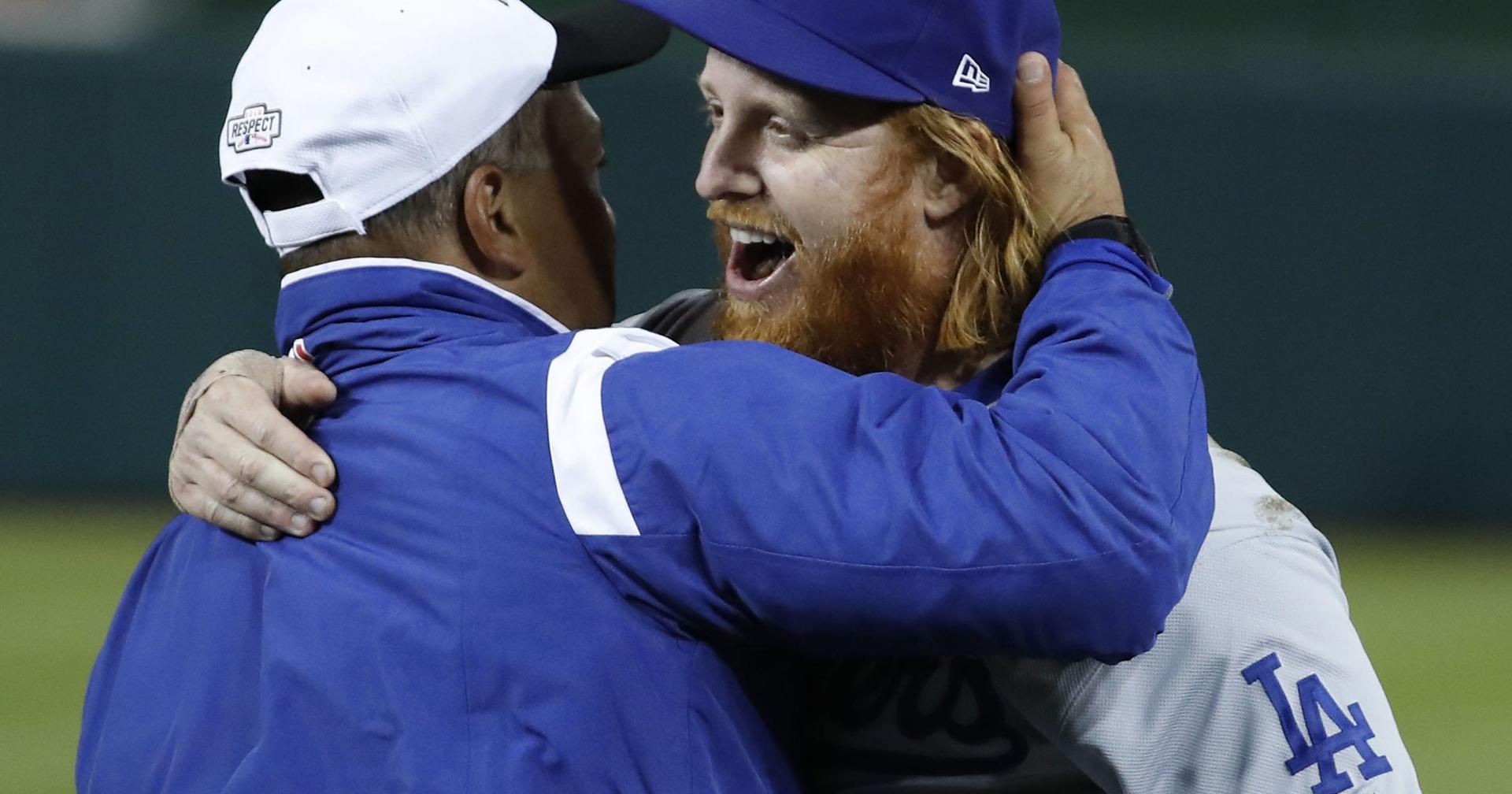
Taking a break from the should we or should we not sign Cole or Rendon, or both discussion, I thought I would bring our attention back to Dave Roberts and look at him as a manager. A totally non-controversial subject.
Hall of Fame manager, Sparky Anderson had much to say about managers during his illustrious career, including: “A baseball manager is a necessary evil” and “Just give me 25 guys on the last year of their contracts, and I’ll win a pennant every year.”
Given the ongoing discussion about manager Doc Roberts and how many fans (including some on this blog) refer to him as “an idiot”, “dumb”, “Mr. Magoo”, “he should be fired instantly”, etc, etc. (as an aside, I would love to see some of these individuals share those thoughts with any of the players on the Dodgers, and see them get their ass kicked into next week Tuesday). I admit that I do not share any of these opinions, and find these characterizations of Doc quite offensive. With that said, I thought it might be a good exercise to look at some hall of fame managers and those who are presently considered “great” managers by most and see just how well Dave Roberts compares to them.
HALL OF FAME MANAGERS:
Joe Torre: He managed 15 years before he made the playoffs. In his first 5 years, his record was 286-420, never finishing higher than 4th place. In his 29 years of managing, he led his teams to 6 pennants and 4 WS championships(all with the Yankees).
Bobby Cox: He managed 11 years before his first pennant. In his first 5 years, his record was 344-417. In his 29 years of managing, he led his teams to 5 pennants and 1 WS championship. 15 times his teams finished 1st in their division. His first 5 years he was 344-407, with no division titles.
Earl Weaver: He probably started out as well as anyone. First 4 years, 3 pennants and 1 World Series championship. In 17 years of managing he led his teams to 4 pennants and 1 WS championship. 6 times his teams finished 1st in their division. His first 5 years he was 446-272.
Tony LaRussa: He managed 11 years before he garnered his first pennant. In his first 5 years, his record was 337-307, finishing first in the division once. In his 33 years of managing, he led his teams to 4 pennants and 2 WS championships. 11 times his teams finished 1st in their division.
Tommy Lasorda: He started off with a bang. 2 pennants in his first 2 years. In his first 5 years, his record was 427-332, finishing 1st twice. In his 21 years as a manager, he led his teams to 4 pennants and 2 WS championships.
Sparky Anderson: He also started off well, winning a pennant in his 1st year, and finished first or second 4 times in his first 5 years. In his first 5 years, his record was 473-329 finishing 1st 3 times. In his 26 years as a manager, he led his teams to 5 pennants and 3 WS championships. His teams finished 1st in their division, 7 times.
Casey Stengel: He managed 9 years before his first pennant. In his first 5 years, his record was 348-414, never finishing first. In his 25 years of managing, he led his teams to 10 pennants and 7 WS championships(all with the Yankees). 10 times his teams finished 1st in their division. Sparky Anderson (who thought Stengel was one of the all-time great managers) had this to say about him: “I don’t believe a manager ever won a pennant. Casey Stengel won all those pennants with the Yankees. How many did he win with the Boston Braves and Mets?”
Whitey Herzog: He managed 10 years before his first pennant. In his first 5 years, his record was 372-320, finishing first 3 times. In his 18 years of managing he led his teams to 3 pennants and 1 WS championship. 6 times his teams finished 1st in their division.
Dick Williams: Won a pennant in his first year. In his first 5 years, his record was 454-339, and he finished first 3 times. In his 21 years of managing, he led his teams to 4 pennants and 2 WS titles. 6 times his teams finished 1st in their division.
Frank Robinson: (Hall of Fame, but not as manager). He managed 16 years without a pennant. In his first 5 years, his record was 329-319. His teams never finished first.
RECENT MANAGERS:
Bruce Bochy: Considered a shoo-in for the hall of fame. In his first 5 years, his record was 409-383, with one pennant and twice his team finished first in the division. In his 25 years of managing, he led his teams to 4 pennants and 3 WS titles. 6 times his teams finished 1st in their division. His overall record is 2003 – 2019. He finished with a losing record, yet is a hall of fame candidate.
Buck Showalter: In his first 5 years, his record was 378-365, with one first-place finish. In his 20 years as a manager, 3 first-place finishes, but no pennants or titles.
Dusty Baker: In his first 5 years, his record was 383-362, with one first-place finish. In his 22 years as a manager, 5 first-place finishes, and one pennant.
Joe Girardi: In his first 5 years, his record was 462-348, with one first-place finishes. In his 11 years as a manager, he has 1 pennant and 1 WS title.
Clint Hurdle: In his first 5 years, his record was 352-436. In his 17 years as a manager, his teams have never finished first in their division, but he does have a pennant to his credit. He does have an overall losing record in his career.
Joe Maddon: In his first 5 years, his record was 404-406, with two first-place finishes and a pennant. In his 16 years of managing, he led his teams to 1 pennant and 1 WS championship. 4 times his teams finished 1st in their division.
Terry Francona: In his first 5 years, his record was 383-427, with no first-place finishes or pennants. In his 19 years of managing, he led his teams to 1 pennant and 1 WS championship. 4 times his teams finished 1st in their division.
A. J. Hinch: In his first 5 years, his record was 360-338, with one first-place finish and a WS title. In his seven years, he led his teams to 2 pennants and 1 WS championship. 3 times his teams finished 1st in their division.
Bud Black: In his 12 years of managing, his teams have never finished first or won a pennant. In his first 5 years, his record was 388-423. His overall winning percentage is under .500
Bob Melvin: In his first 5 years, his record was 399-411, with 1first place finished and no pennants. In his 16 years of managing, he has only the one first-place finish to his credit.
Don Mattingly: In his first 5 years, his record was 446-363, with three first-place finishes, but no pennants. In his 9 years of managing, he led his teams to three first-place finishes and nothing else.
Mike Scioscia: In his first 5 years, his record was 425-385, with one first-place finish and 1 WS title. In his 19 years of managing, he led the Angels to six first place finishes and the one WS title.
Ron Gardenhire: In his first 5 years, he had 4 first-place finishes, but no pennants. His record during that span was 455-354. In his 13 years of managing his teams finished first 6 times, but he has no pennants or WS titles to his credit.
Greg Counsell: In his 5 years of managing his record is 405-381, with one first-place finish and no pennants.
Torey Luvello: In his 3 years of managing his record is 260-226, with no first-place finishes or pennants.
Dave Roberts: In his first 4 years, his record is 393-256, with four first-place finishes and two pennants. It’s only a small sample, but his winning percentage is 4th highest of all time.
Most of these managers are held in very high esteem. Dave Roberts, despite the opinions of many stacks up very well with each of these individuals. I know there are some who, despite this evidence, will continue with their chosen narrative, and will continue to argue that “he has been lucky”. “he inherited a good team”, the Dodgers win “in spite of him”.
Each of the above managers has made huge in-game mistakes. Some have continued to make the same mistakes over and over. Yet, they remain beloved and revered. I’m in no way a Dave Roberts apologist. But, as I said before, I am glad he is the manager of the Dodgers.
Next week, time permitting ( I have a big trial starting on Wednesday), I will look at the subject of “What makes a Good Manager?” We’ll see how well Dave Roberts stacks up in that analysis.
More from Dodger Talk

Enjoy it While You Can!
It was both surprising and not surprising to me that the Dodgers signed Kyle Tucker. That they can make it work is a tribute to the true genius of Mark Walter and Andrew Friedman. Enjoy it while you can, because it will end soon. In the upcoming CBA and talks among owners, MLB…

Dodgers Food Trailer
I did this interview a couple of weeks ago with Chef Mike, who runs the Dodgers Food Trailer for the Great Lakes Loons. They are there for every home and road regular season and playoff game. They prepare three meals a day for approximately 50 people (players and coaches). Since games end late most evenings, they do not prepare breakfast. Many of their hotels have a complimentary breakfast anyway. However,…
Meet LAD 2026 Draft Picks 1-12
3 picks were High School players (2 SS and 1 OF). There was a college OF, college catcher, college SS, and 10 college pitchers. Of all the talk for a need for a catcher, the only catcher the Dodgers selected was Luke Bard, son of LAD bullpen coach Josh Bard. Bard was a 4th year senior from Houston Christian University. He is not a prospect, so the Dodgers are still…

Interview with Paul Beachy – Team Bus Driver For The Great Lakes Loons (LA Dodgers Minor League Team)
It’s been a few days since I did this interview. We have evidently been working my son-in-law (the video guy) like a rented mule at US Water Systems. However, I am taking him to London with me in a few days, so maybe Watford will buy him a pint as a tip, but he’s a dang Red Sox fan, so there is that! I thought that it would be interesting…
Discussion (24)
Disagree, not disagreeable
I turned on the WS in the 6th inning just to watch Cole. And he was impressive. But as we’ve seen all year, the plate umpire blew a 3-2 pitch in the 7th inning that should have been ball four and would have brought the tying run up to the plate. Instead Robles gets called out on strikes to end the inning. Just another example of why baseball needs an electronic strike zone. And this time it was in the WS being watched by countless fans across the country. The technology to get it right exists. USE IT!!!!!!!!!!!!!
I want to add one thing, and this is about Gene Mauch. Mauch seems to have turned into a parody of what he was, which was a very smart baseball man, and a a fine manager. Always articulate, and with great knowledge of the game, whenever I heard him interviewed. He took over an absolutely woeful Phillies team which was probably the worst in baseball, they lost 23 games in a row in 1961 in Mauch’s very early years there. He taught them how to play, helped engineer smart acquisitions; and looked like he had built the best team in baseball in 1964–until the very end of the season. He may have overdone things then, kept using his best relief pitcher over and over; pitched his two best starters with two days rest (not completely uncommon back then: Koufax and Drysdale were doing it down the stretch in ’65). They lost ten in a row, lost the pennant on the last day of rhe season to the always hot down the stretch St. Louis Cardinals. He was bitterly criticized for that, and deserved some of it; but missing was the credit for completely turning around that franchise, and teaching them to play smart baseball.
Then he went to the brand new expansion team at Montreal, and did rather well considering that. They were no pushover at all. Then he went to the Angels, where with the obvious financial help of Gene Autry, they built a powerhouse. But then came the year where he took Mike Witt out in the ninth inning, and Donnie Moore gave up a home run to Dave Henderson, and the Angels did not win their first pennant after all. Somehow this turned into some of the bitterest criticism I have ever seen, whereas Mauch was actually a very fine manager who sometimes was prone to overmanaging. at least in retrospect. Taking out Witt looked like a mistake, but it wasn’t any worse than Roberts pulling Hill twice. I just think that here is a case where a fine manager was unjustly pilloried for losing a pennant with the Phillies, who were awful for the 10 years before Mauch got there, and for ten years after he left; and for making that likely mistake in the Angels playoff series. It is one of the injustices of baseball managing history, I think.
Managers are hard to effectively measure. This is particularly true when it comes to evaluating those whom you haven’t seen manage day to day. I know that the fervent fan bases of most clubs do not usually like the manager, whereas someone who views just from the records, is likely to be more favorable.
How do you separate the manager from the talent on hand? Not easy, particularly in baseball, where there is less scheming. It is easier to look at a football coach and judge how his teams look and perform on each side of the ball, how prepared they are. In MLB, this is more difficult to distill. There are Yankees fans who always thought that Torre did not handle his pitchers well, but NY fans usually complain. Many Braves fans hated Bobby Cox as a manager, but I did not see this up close, so I don’t know if that is accurate, or just complaining. It helps when you have all that talent, particularly a Mariano Rivera. But Torre always seemed to know how to handle the late innings of games. So did LaRussa, though some thought he was more about cultivating an image. I think that Bob Melvin does very well with Oakland, but they are not given enough talent to do well in the playoffs against the better teams. And I don’t see many of their games, as with most non-Dodgers teams.
As to Roberts, I get to watch him. He clearly does well with handling players, keeping the team grounded, instilling discipline. For actual strategy, I would not rate him very high. He does not adapt to situations very well, this has been shown in the last three years. He took Hill out too soon ,twice. His choice of relief pitchers, other than the very obvious ones, is often baffling. What he said about wanting to save Freese for a high-leverage situation later, is a big flaw of his; he tries to plan it out, then stick to it; whereas the best managers adapt to the situation and what is needed then.
Freese might have made a big difference, it was certainly worth the try, but he couldn’t if he wasn’t used. Roberts let Kershaw give up one home run, then left him in for another. Then he left Kelly in too long and just sat there until it was too late. He almost did that with Kelly in Game 3, with the big lead. The best big-game managers, Torre, Weaver, Danny Murtaugh, often sensed when to take someone out. They also had the ability to discern which pitcher or pinch hitter might be most effective in that spot, not always the obvious lefty/righty decisions which Roberts inevitably makes. Roberts seems to have a blind spot, the inability to make effective decisions when most crucial. That’s what separates the best poker players from the average ones. Anyone can play a really good hand or a really bad one. But those iffy hands are the ones which make the difference.
I don’t know how anyone could watch Roberts’ work in the last three playoff seasons, and conclude that he is a really good manager. Winning a lot of regular season games means something, but it is a different genre, almost. His career has more seasons to go, but Roberts is looking like a “sucker play” manager, the kind who piles up wins but cannot win titles, unless he were given an absolutely push-button team. There are managers and coaches like that in various sports. They retire with great records, but somehow at most one title. Others have more varied seasons, but when they have the right team, they make it pay off big. Bruce Bochy is the best example of that. It’s no coincidence that he has three championships, while Roberts has none, albeit in less seasons. I don’t think that Roberts is going to change, he is going to make the same kind of decisions in every playoffs. The only hope is that he either is given so much talent that it will overcome it, or that we get lucky one year. He’s going to get outmanaged by the better managers most of the time.
Ok thanks. Wow. Could be a letdown for the Nats. Wss.
With Scherzer out for now, how good is Ross?
I think Doc is not a bad manager during the season. He is not great but acceptable. During a short play off he is not a good manager. For three years he has been horrible. What makes anyone think he will get better next year in the play offs.
On my opinion this what happens to Doc. He makes plan on how he wants to manage a game before the game starts. This is great. It is what he should do. However once the game starts he does not adjust to what is happening. In one game Bellinger doubled and no outs. Nothing was done to move Bellinger to third. We were ahead 2-0 if I remember. You need to add runs on when you are ahead.
The other situation was the last game. Doc said he would piggyback Kershaw with Beuhler. That was fine if you had to use Kershaw early. When it got to the 8th, Kershaw should of never been used. We had four relievers left who are used to pitching in the final two innings.
The last point is that Kelly is not used to pitching two innings. Doc did it for the first time.
These are decisions that just frost me. I just do not see Doc getting better.
As much as I am a lIfe-time Dodger fan, and one of the BIGGEST Giants dislikers around, I have to say Bruce Bochy was a good manager. His record speaks for itself. I think he was used to running the team and making decisions by mostly himself and I do not think he would look kindly to mandates coming down from the front office. Some thoughts are that he decided to leave because of Zaidi maybe wanting to be involved in decisions etc., if that is true. thoughts?
This prompts several responses:
1 – Casey Stengel was a great manager because he managed the Yankees of 1949-1960, where he compiled a W – L record of 1149 – 696 (.623), won 10 pennants in 12 years and the Series 7 times, including 5 years in a row! You can’t pretend that Roberts (or just about anyone else) is this successful. However, this says something about Roberts too – put another way, would some random manager be as successful with the Dodgers of 2016 – 2019?
2 – The role of a manager in the current age isn’t the same as it was before the SABR revolution. A post-Moneyball manager doesn’t have the same responsibilities.
Take Walter Alston for example. He, his coaches and scouts would get as much information as possible on the opposition and make their own decisions without much input from the front office, whose job it was to obtain players.
Now the role of manager in most Major League cities is to be a go-between between players and front office, to sell front office theories about how to play, whom to play and so forth, and to be a “positive influence” but to avoid screwing things up. I think that most agree that Roberts is a good communicator, gets buy in from the players and is a positive influence. I think where most differ is whether he consistently avoids screwing things up.
Certainly the likes of Walter Alston would not tolerate interference in his dugout from the front office, but he was much better at Xs and Os than Roberts.
3 – Put another way, Stengel managed bad teams in Brooklyn, Boston and New York (Mets) and great teams in New York (Yankees). He was successful with the Yanks because they had great players and wasn’t successful in his other managerial assignments because they didn’t. But would another manager have been as successful with the Yankees of 1949 – 1960? Would another manager have been more successful with the Dodgers in the past 4 (not 5) seasons?
Going forward, how confident are you that Roberts improve in the “not screwing things up” portion of his management assignment? Based on his track record, I’m not that sanguine about it.
Whoa 59inarow, that’s some harsh talk there. Maybe, you should have stop your comments after the first two paragraphs. I was all on board with your thoughts until you started your rant on 2D2. I don’t know why you felt the need to go in that direction. Just because you felt 2D2 was making a personal attack against you I don’t feel it was necessary to go off on him like that. Remember, he contributes material to this blog on his own time with no compensation. It’s just such a waste of time and energy to get so upset with someone when you might feel attacked. Just make your comments (like you did in the first two paragraphs) and move on with the rest of your day.
That being said 59inarow, I agree with you on Roberts ability to lead us to a WS victory. Could anybody win with the recent Dodger teams? Of course not. But, your example of regular success of Mattingly and Roberts shows that you don’t have to extra ordinary to do so. I never thought Mattingly was very bright or showed any confidence as a manager. With Roberts, I don’t think there is anyone more successful at managing a locker room than he is. With the constant need to play everyone (which I don’t agree with) and keep the troops happy he does an excellent job. But, he has proven many times that he is awful at managing a bullpen. And, what concerns me is that he seems to be getting worse at it in the playoffs. During the season his unusual decisions are not so glaring because of the length of the season and the quality of teams in our division. During the 2017 WS we all know he made some critical mistakes and as painful as they were I gave him a pass because of his inexperience. In the 2018 WS he made not only some questionable decisions, but had communication issues as well. But, the Red Sox were a much better team and Roberts’ errors didn’t make much difference. This year he just went off the rails with his game 5 decisions. Allowing Kershaw to go back out for the 8th inning I could understand. But in the back of my mind I’m thinking of all the disasters that had happened recently in Kershaw’s first innings. The pitch that Rendon hit was not a bad pitch and give him credit for hitting a ball out of the strike zone for a homer. And, at that point many were thinking the same thing. First inning bombs against Kershaw Get him out of there…NOW. Nope. Roberts reasoning…”Kershaw has been a dominating pitcher for the past 10 years”. WTF??? Consider what’s been happening to him recently in the first inning, not what he has done in the past 10 years. You have Kolarek in the pen who has had success against Soto and who was acquired for this exact situation. Naw, forget that. Roberts had a gut feeling that Kershaw would succeed in getting Soto out. And, then with Kelly he compounds his poor decisions. It was a gift that Kelly pitched a clean 9th. So why not send him out for the 10th when you have a well rested bullpen? Who knows why. And, sure enough Kelly goes off the rails immediately. Roberts reaction? Just stand in the dugout and watch a complete meltdown of your pitcher. Deer in the headlights look. I mean what is going through Roberts mind? And, after the HR he still leaves him and allows two more to get on base before he removes him. The question I have is what kind of input does Geren and Honeycutt have with Roberts? I can’t believe it was a consensus between the three of them to allow Roberts to do what he did. I think Roberts needs a stronger bench coach when it comes to handling pitching. Or, maybe Pryor will provide that.
So, with Roberts returning in 2020 all we can hope is that he finally learns from his past mistakes in the playoffs.
We’ll see.
What happened Mark? I thought someone hacked into 59’s account or he got out of the wrong side of the bed. Glad you fixed it. No need for that stuff.
2D2…as Arte Johnson used to say. Very interesting. You mentioned some of my very favorite managers: Lasorda, Anderson, Weaver and others. I had no idea that Sparky managed for 27 years. Did Walt Alston not also manage many years? Thank you for that detailed report. Enjoyed it.
Great effort 2D2… Telling it like it is…
Attn: Watford my Man – A little late, but great win for England over New Zealand in Rugby… Now if the Rams can get a W in London today…
HOF’er Ted Williams: “All managers are losers, they are the most expendable pieces of furniture on the face of the Earth.”
Ok we started over!