
Great moments in Dodger history part 1: 1958-1978
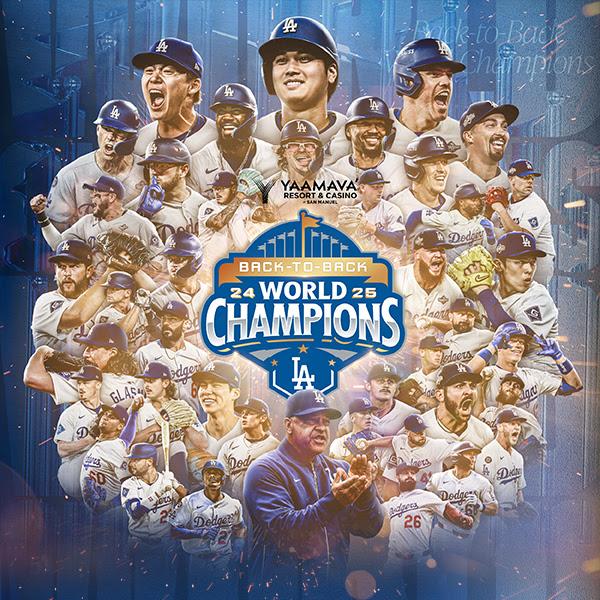
1890-2026, that is how long the Dodgers franchise has been a member of the National League. There have been many great moments in the history of the team. The Brooklyn franchise managed one World Series title in its 67-year existence. The LA version has won 8. Amazingly, none has occurred in a season where the team has won 100 games or more. In fact, the 53 Dodgers set a franchise record for wins with 105. They lost the series in six games. The 55 Championship team won 98 games. They were boosted by the fact that they won 22 of their first 24 games and had a 9.5 game lead on May 10th.
The first LA team to win 100 games was the 62 Dodgers with 102 wins. They lost a 3 game playoff series to the Giants. The 59-championship team won 88 games. The most wins by an LA Dodgers championship team? 99, by the 63 champs who would sweep the Yankees in the World Series. Other losers with 100 or more wins, 74-102 wins, 2017-104, 2019-106 setting a new franchise record, 21-106, 22-111 new franchise record, 23-100, 26-100. The least wins of course came in the 81-strike season and the 2020 year of the pandemic.
Besides the team great moments, there have been some great performances and plays by individual players that helped the team win. In this post, I will take a look back at some of the great moments, not all, that post would be a very long read. In keeping with fans that may have actually seen these teams or moments, we will confine the parameters to 1947-present. The simple reason for this is the signing of Jackie Robinson and how the game changed after his arrival.
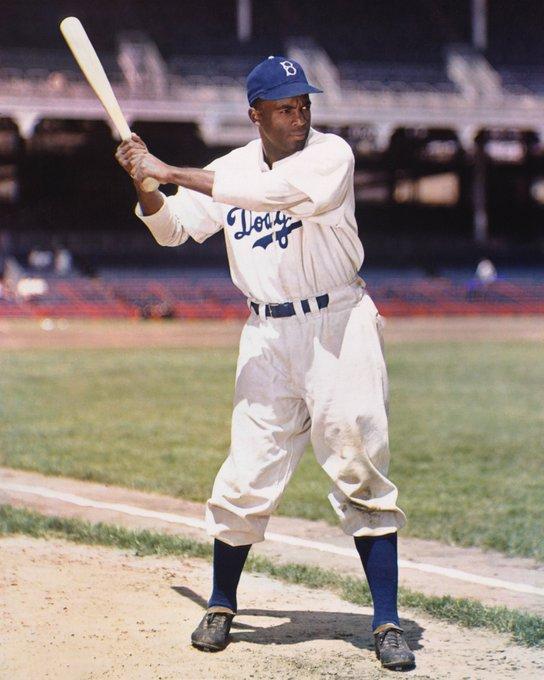
Robinson plays first game for the Dodgers: April 15th, 1947. Ebbets Field, Brooklyn. Jackie Robinson started at 1st base batting second for Brooklyn against Boston Braves pitcher, Johnny Sain. Joe Hatten started for Brooklyn. They would win 5-3 witnessed by a crowd of 26,623. Jackie went 0-3 with a run scored and a sac-bunt. The next day he went 1-3 with 2 walks in a 12-6 Brooklyn win. Jackie would go on to win the first ever Rookie of the Year award, which now bears his name. After Jackie got the award in 47, Newcombe 48, Joe Black 52, and Jim Gilliam 53, would follow.
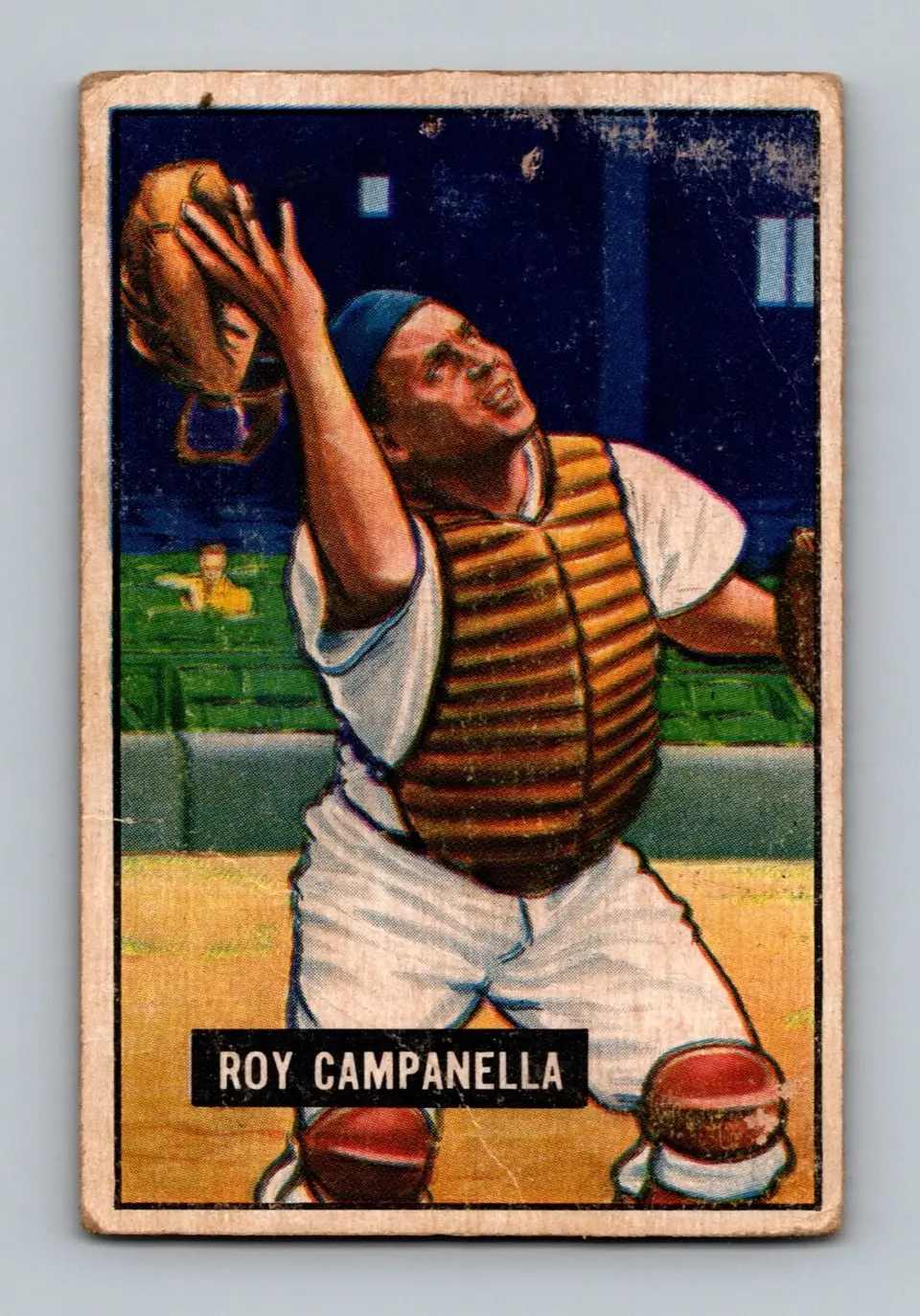
1948: Campanella joins Robinson in Brooklyn: 26-year-old Roy Campanella joined the Dodgers as their primary catcher in 48. To accommodate the move, they moved Gil Hodges, the backup catcher to Bruce Edwards to first base. Hodges would remain there until taken by the Mets in the expansion draft in 1961. Campanella played in 83 games, batting .259/9/45 and was 21st in the MVP vote. Hodges hit .249/11/70 in his first full season. Rex Barney threw a no-hitter against the Giants on September 9th, 1948. 17 years later on September 9th, 1965, Koufax threw his perfect game against the Cubs.
Newcombe debuts and wins the ROY Award, Jackie wins the MVP: The 49 Dodgers would win the pennant and play the Yankees in the World Series for the third time. Newcpmbe went 17-8 with a 3.17 ERA earning the ROY. He led the league in S/9 with 5.5. Robinson had a league leading .342 BA, hit 16 homers with 124 RBIs, and led the league in stolen bases with 37. They lost the series in 5 games. Jackie Robinson would be traded to the Giants after the season; he refused the trade and instead retired. On August 31st, 1950, the Dodgers were playing the Boston Braves at Ebbets Field, trying to catch the Phillies. Erskine started for the Dodgers, but the star of the day was Gil Hodges. In the second inning, Hodges blasted a 2-2un homer off of Warren Spahn. In the 3rd, Hodgers blasted a 3-run homer off of Normie Roy. In the 6th, he hit another 2-run shot, this time off of Bob Hall. Hodges then singled in the 7th. In the bottom of the 8th, Hodges blasted his 4th homer of the game, another 2-run shot. Hodges set a record with 17 total bases drove in 9 of Brooklyn's 19 runs. In May of 2003, Shawn Green would go 6-6 recording 19 total bases against the Brewers. He had 4 homers, a double and a single driving in 7 runs.
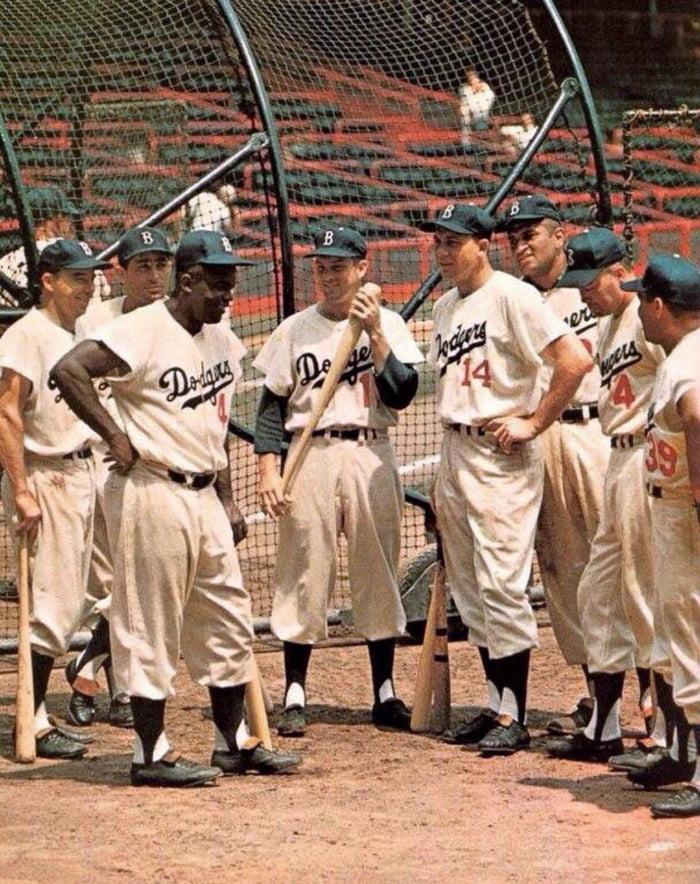
1951, Boys of summer first year as a unit: For the first time, Roger Kahn's boys of summer played together as a unit. At least 7 of them did. LF was always an open spot. In 51, it was Andy Pafko. But the starting 7 were Campy, Hodges, Jackie, Cox, Reese, Snider and Furillo. Erskine had joined the rotation and Roe went 22-3. During the 51-53 run under Dressen, Duke Snider started his five consecutive 40-homer seasons which would end in 1957. He hit over 20 just once in LA. Duke hit 4 homers and drove in 8 in the 52 World Series. He would homer 4 times in the 55 series becoming the only player to ever hit 4 homers twice in a series. He also hit 11 World Series homers in his career, still the most World Series homers by a Dodger.
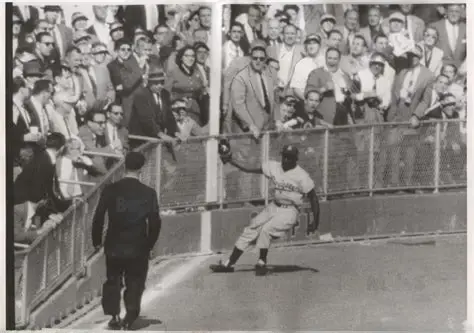
1955: Dodgers win first and only World Series in Brooklyn: After the 53 teams' loss to the Yankees in the series, manager Charlie Dressen asked for a multi-year contract. Brooklyn instead let him walk and hired AAA manager Walter Alston to lead the team in 54. The 53 team had set a record with 105 wins, most in Dodger history. In 54, they finished 2nd to the eventual champion Giants. The 55 team had a lot of power. They hit 201 homers led by Snider's 42. Duke led the league in RBIs, 136, and runs 126. Campy would win the MVP award. Newcombe led the team with 20 wins, and Labine had 13 wins and 11 saves. Some kid named Koufax was 2-2 in 12 appearances. They came out of the gate hot going 22-4 in their first 26 games. They won the pennant by a 13.5 game margin and went to NY to play games 1 & 2 against the Yankees who had won 96 games. Campanella would win his 3rd MVP award barely edging out Duke Snider and Eddie Mathews of the Braves. Brooklyn lost the first two games of the series at Yankee Stadium 6-5 to Ford and 4-2 to Tommy Bryne. Back at Ebbets Field, Podres beat Turley 8-3, Labine pitched 4.1 innings in relief of Erskine for an 8-5 win. Craog then beat Bob Grim 5-3 with Labine getting the save. Ford beat Spooner 5-1 in game six in New York. Podres then shut out the Yankees 2-0 in the clincher. The critical moment being a catch down the left field line on a line drive by Berra made by reserve outfielder, Sandy Amoros. Podres was the series MVP. On the Yankees side, Mickey Mantle only played in 3 games in the series.
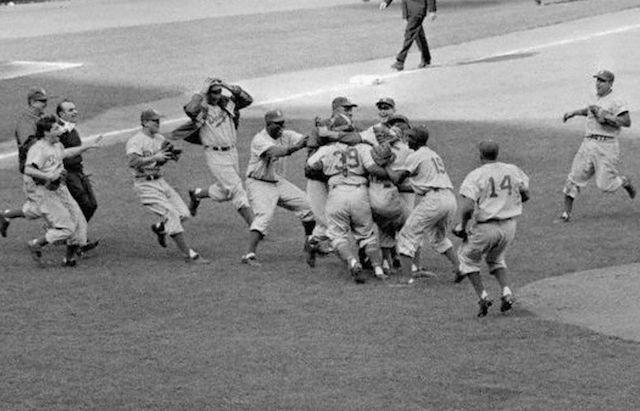
The Dodgers last two seasons in Brooklyn 56-57, Newcombe won the first Cy Young award in 56 and also the NL MVP. Newcombe won 27 games that year. As good as he was, Newcombe was not good in the World Series. His record was 0-8 with an 8.59 ERA. He also was pitching in the fateful 9th inning in 51 against the Giants when they rallied to win the game on Thompson's homer. Newcombe is somewhat of a tragic figure since it was revealed much later that he had a drinking problem. He did finally overcome that and worked for the Dodgers until he passed away in 2016. Carl Erskine became the first Dodger to record 2 no-hitters. His first was on June 19th, 1952, against the Cubs and his second was on May 12th against the Giants. Sal Maglie also threw a no-hitter that year on September 25th against the Phillies. The Dodgers won their last pennant and lost the series to the Yankees in 7 games. Of note is that game five, pitched by journeyman pitcher, Don Larsen, the Dodgers were the victims of a perfect game. Still the only perfect game in postseason play. They played their last game at Ebbets Field on September 24th, beating the Pirates 2-0 in front of 6,702 fans. That winter, Roy Campanella was paralyzed in an auto accident and never played again.
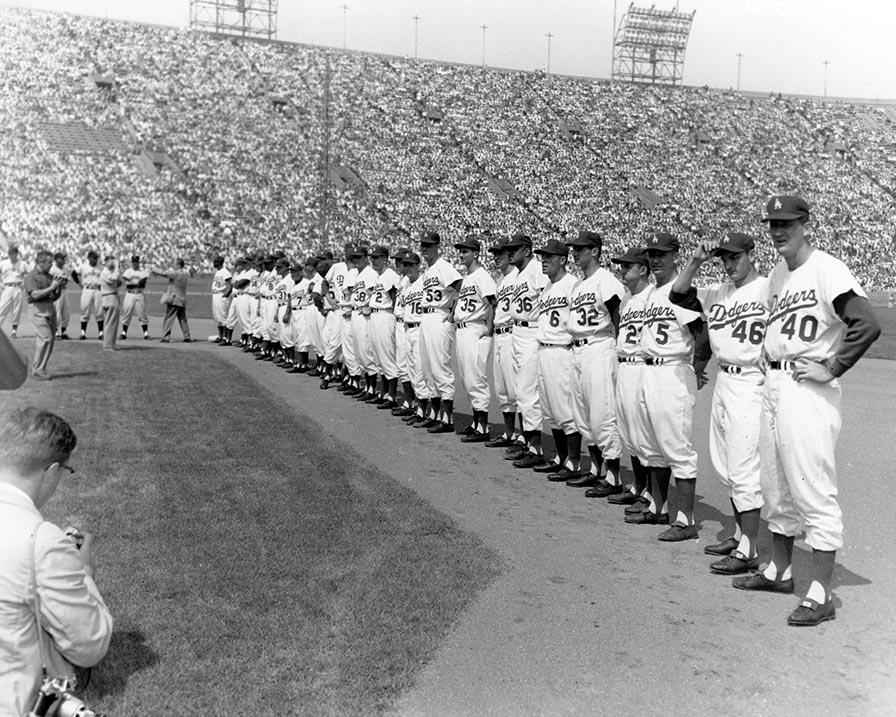
1958-59: Los Angeles era begins. From 7th place to World Champions: The Dodgers owner, Walter O'Malley, had two choices of where his team could play until his dream stadium was finished. One was Wrigley Field near Exposition Park, home of the PCL's LA Angels seating around 22,000. The other was the Los Angeles Memorial Coliseum, constructed for the 1932 Olympics and at that time the home of USC Trojan football, which could seat almost 100,000. Walter went for the bigger venue. Pee Wee Reese played his last season in 1958 and would be a coach for 1959 before moving to broadcasting. Duke, Hodges, Furillo, Gilliam, Cimoli and Newcombe were still with the team in 58. Newk would end up being traded to the Reds. The Dodgers were never in contention in 58. The Giants had also moved west to San Francisco. That move was needed so O'Malley could move the Dodgers west. Traveling west to play one team would cause some scheduling problems. LA finished 7th with a 71-83 record, 21.5 games back of the Braves.
In the winter of 58, Bavasi traded Cimoli to the Cardinals for former ROY, Wally Moon. It would prove to be a fortuitus trade. With Reese retired, Zimmer took over as the starting SS. Hodges was at 1st, Neal at 2nd and Gilliam was the 3rd baseman. Roseboro, in his second full season was the starting catcher. The outfield was Moon in left, Demeter in center and Snider played right most of the time. Furillo was injured and played in just 50 games. Hodges led the team with 25 homers and Snider added 23. Zimmer was a total bust at SS hitting just .163 in 97 games. He was replaced at SS by 26-year-old Maury Wills. The rotation consisted of Drysdale 17-13, Podres 14-9, Koufax 8-6, Craig 11-5 and Danny McDevitt 10-8. Labine was the main closer, but he would lose that position late in the season with the arrival of Larry Sherry. Koufax showed some of what was in store in the future with an 18-strikeout performance against the Giants on August 31st in LA. After Sandy struck out three Giants in the top of the 9th giving him 18, Wally Moon hit one of his "Moon shots" over the left field screen for a 5-2 walk off win. Koufax broke a record that night with 31 Ks in two consecutive games, passing Bob Feller. Sandy would strike out 18 a second time in 1962 against the Cubs.
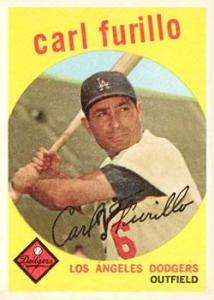
1959 two-game playoff with the Braves: The Dodgers and Braves finished the season tied with 86 wins apiece. The first game was played in Milwaukee. McDevitt against Carl Willey. LA scored 1 in the 1st and 1 in the 3rd. The Braves scored 2 in the second knocking McDevitt out of the game. He was relieved by Sherry. The game went into the 6th with the score tied. Roseboro led of the 6th with his 10th homer of the season to right. That was it, Sherry pitched 7.2 innings of scoreless relief allowing 4 hits and 2 walks. The teams returned to LA for game 2. The game featured both teams Aces, Drysdale for LA and Burdette for the Braves. Drysdale lasted 4.1 innings giving up 4 runs. Burdette meanwhile limited the Dodgers to 2 through 8 innings. The Braves scored 1 in the 8th for a 5-2 lead. Burdette gave up 3 consecutive hits in the 9th and was replaced by Don McMahon. Larker then singled scoring Moon and Lillis who had run for Snider. Hodges advanced to 3rd. Spahn relieved McMahon and Furillo was sent up to pinch hit for Roseboro. He hit a sac-fly scoring Hodges with the tying run. In the 10th, LA brought in Stan Williams to pitch, Pignatano took over behind the plate, Moon moved to left, Fairly took over in center and Furillo went to right. Both teams threatened in the 11th, but no one score. Rush took over for the Braves with 2 outs in the 11th. Williams retired the Braves in order in the 12th. Rush got the first 2 outs in the 12th. He then walked Hodges and Pignatano singled sending Hodges to second. Furillo then singled up the middle on a ball that was fielded by SS, Felix Mantilla, whose throw was wild and Hodges scored on the error. LA won 6-5. It was Mantilla's 2nd error since replacing the Braves regular SS, Johnny Logan who was shaken up on a play in the 7th and had to leave the game. The Dodgers would now face the White Sox in the World Series.
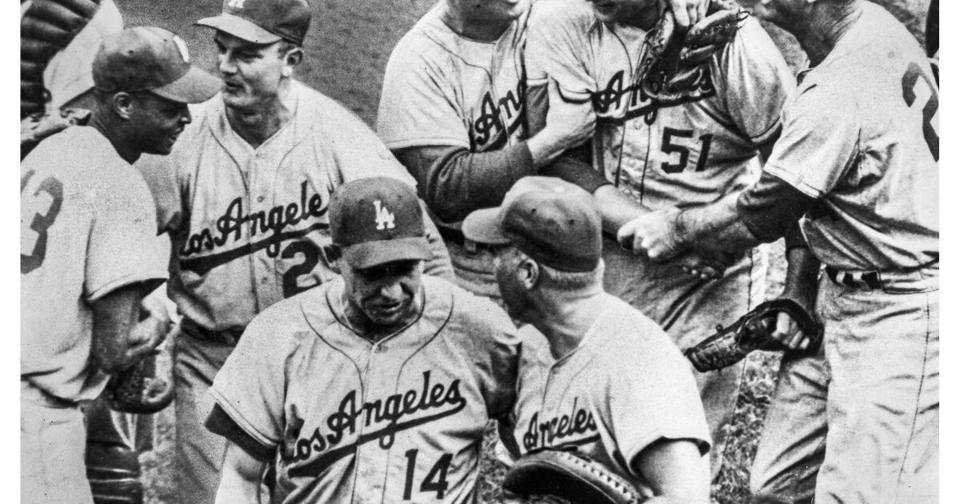
1959 World Series First title in Los Angeles: The Sox pounded the Dodgers 11-0 in game one behind two Ted Kluzewski homers. Early Wynn bested Roger Craig. The Sox jumped out to a 2-0 lead in game two behind Bob Shaw. Podres would pitch six innings allowing just those 2 runs. LA got one back in the 5th on a homer by Charlie Neal. In the 7th inning with 2-outs, Neal hit his second homer, a 2-run shot off of Shaw. Chuck Essegian, pinch-hitting for Podres, slugged a solo shot making it 4-2 LA. Sherry pitched the final 3 innings allowing 3 hits and 1 run. LA tied the series at one game apiece. The teams went to LA for games 3-4-5. Game 3 featured the Dodgers Ace, Drysdale against Dick Donovan. It was a pitcher's duel. Through the top of the 7th, both teams were scoreless. In the bottom of the 7th, Neal singled. Moon made the first out. Donovan then walked Larker and Hodges to load the bases. He was replaced by Gerry Staley. Furillo pinch hit for CF, Demeter. He then singled in Neal and Larker. Drysdale allowed 2 singles and Sherry hit a batter in the 8th loading the bases with no-outs. The Sox scored a run when Al Smith hit into a double play. LA got the run back in the 8th when Wills singled and scored on Charlie Neal's double. Sherry shut down the Sox in the 9th and LA led 2-1. Game 4 had Craig against Wynn again. In the 4th, LA knocked Wynn out of the game by scoring 4 runs. With 2 out, Moon singled. He scored on a single by Larker who went to second on an error on the play. Hodges singled scoring Larker. Hodges went to 3rd on a single by Demeter and then scored on a passed ball. Roseboro ended the scoring by singling in Demeter. 4-0 LA. Craig gave up the tying runs in the 7th on a Kluzewski single and a 3-run homer by Sherm Lollar. Sherry pitched a scoreless 8th and Hodges blasted a leadoff solo shot in the 8th for the 5-4 final. Sherry got the win. Game 5 was probably the best pitched game of the series. With a chance to clinch the win, LA sent Koufax to the mound against Shaw. Sandy would pitch 7 innings, allowing just 1 run, 5 hits, 1 walk while striking out 6. But Shaw was just a little better throwing 7.1 innings, allowing 9 hits and walking 1 and no runs. Billy Pierce faced 1 batter and walked him. Donovan pitched 1.2 innings giving up nothing and getting the save. The teams returned to Chicago for game 6. Wynn started for Chicago on 2 days' rest, Podres started for the Dodgers. The game was basically over by the top of the 4th. Snider hit a 2-run homer after a walk to Gilliam for a 2-0 lead. it was Duke's 11th and final homer in a World Series, still the most series homers in Dodger history. In the top of the 4th, Larker singled, moved to second on a sac-bunt and scored on Will's single. Wills then scored on a double by Podres knocking Wynn out of the game. Donovan relieved Wynn and gave up a walk to Gilliam. Neal doubled for 2 more and then he allowed a 2-run homer to Wally Moon making it 8-0 LA. Podres ran into trouble in the bottom of the 4th as the Sox scored 3 on the 3rd homer of the series by Kluzewski. Sherry relieved him and would pitch the last 5.2 innings of the game allowing 5 hits, a walk and striking out 1. Chuck Essegian, pinch hitting for Duke Snider in the 9th hit his 2nd pinch hit homer of the series for the final 9-3 score. That tied the Giants Dusty Rhodes for the most PH homers in a World Series. Sherry was named the MVP of the series. It would be the last series ever played in by 3 Brooklyn stars, Hodges, Snider and Furillo.
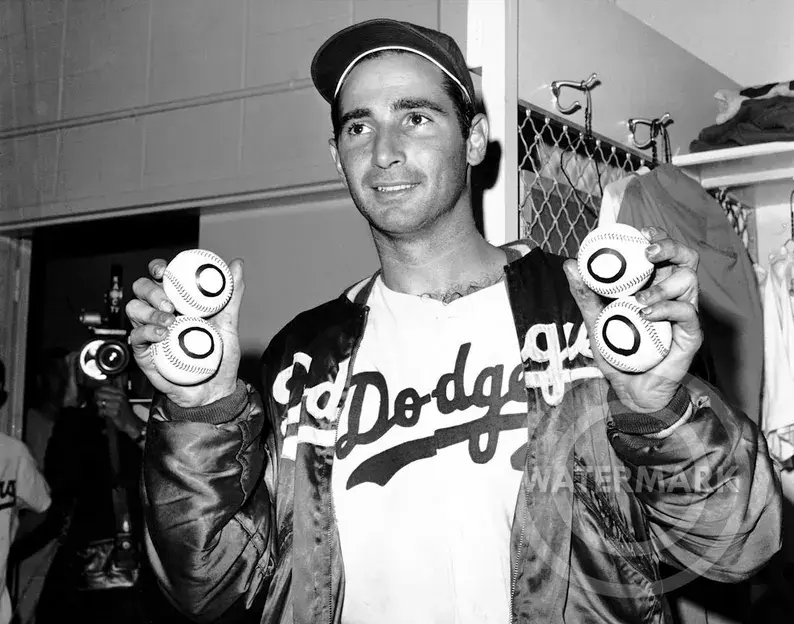
1961-66: Koufax becomes a dominant pitcher: After six seasons with the Dodgers, Koufax had a 36-40 record with a 4.10 ERA. He had decided after the season that he was going to quit baseball and devote his time to an electronics business, he had invested in. He was frustrated with his lack of progress and resentful of Dodger management. He threw his equipment in the trash. Nobe Kwano, the Dodgers clubhouse manager, retrieved the equipment in case he decided to return in 61. Sandy came to regret retiring finding work boring. He decided to give baseball one more shot. That winter, Sandy had a tonsillectomy due to recurring throat issues and as a result he reported to spring training 30 pounds under his normal playing weight. That forced him to regain muscle mass and weight through a strict weight and nutrition regimen. He would from then on report to spring training under his playing weight.
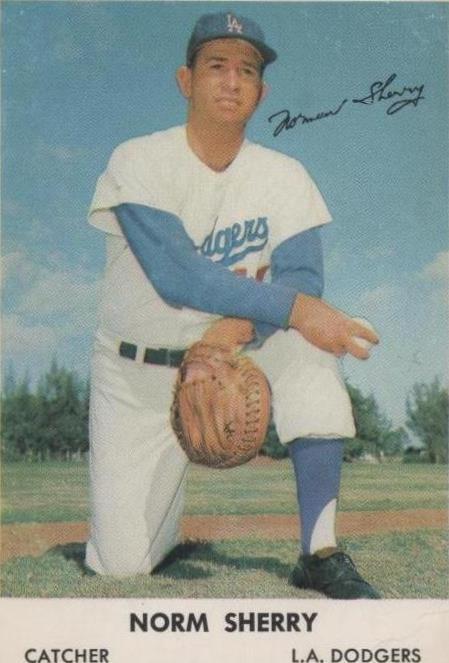
Scout, Kenny Myers, had noticed a hitch in Koufax's windup where he would lean back so far, he would lose sight of the target. As a result, it caused Sandy to tighten up his mechanics allowing him better control and the ability to disguise hit pitches. On March 23rd, Koufax was chosen to pitch a B-game against the Twins in Orlando. Hodges was acting manager that day and since Ed Palmquist had missed the flight, he told Sandy he needed to pitch at least 7 innings. His catcher that day was Norm Sherry, Larry's brother. Before the game, Sherry advised him to not throw so hard if you get behind a hitter. This was because of Sandy's tendency to lose his temper and throw hard whenever he got into trouble. It worked until Koufax reverted to throwing hard and walked the bases loaded with no outs in the 5th. Sherry went to the mound and reminded him of their talk. Koufax struck out the side and finished 7 innings allowing no runs and just 1 hit. The rest of his spring training was very strong. Side Note: It was reported sometime later that at some point the Dodgers considered trading Koufax to the Yankees for Elston Howard. But that has never officially been stated.
With all the changes, Koufax posted an 18-13 record with a 3.52 ERA. He also led the league in strikeouts with 269, breaking Christy Mathewson's NL record of 267. He was an All-Star for both games and finished 18th in the MVP voting. 1962: Many good things would happen for the 62 team, and some not so good. First, they moved from the coliseum to their new home, Dodger Stadium. They would lose the first game there to the Reds, 6-3, but won the second behind Koufax. On April 24, Koufax matched his MLB record of 18Ks winning his 3rd game of the season against the Cubs. On June 30th, Koufax pitched his first no-hitter, beating the Mets even though he allowed 5 baserunners, the most allowed in a no-hitter ever by a Dodger. It was his 11th win of the year. He won the player of the month award for June, the only time in his career he would receive the award. Unknown at the time was the fact that Sandy was pitching with an injured hand. He had been jammed while hitting in April. Numbness soon set in his left index finger. Because he was pitching well, he ignored the condition and hoped it would clear up. Instead, it worsened and by July his whole hand was numb. He was pitching against the Reds and the finger split open. A vascular surgeon diagnosed him with a crushed artery in his palm. 10-days of experimental medication successfully opened the artery and avoided the chance of amputation.
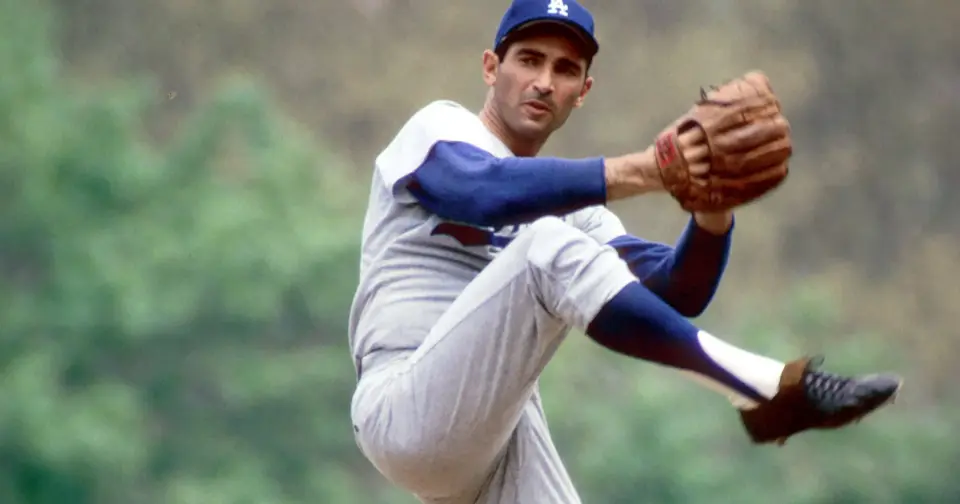
While their Ace was sidelined, some Dodgers were having career years. Drysdale would win 25 games and win the Cy Young, which at the time was given to just 1 pitcher from both leagues. Tommy Davis would hit .346 with 230 hits and 153 RBIs. The 230 hits and 153 RBIs are still LA Dodger records. Maury Wills would steal 104 bases, hit .299 and win the NL MVP award. Koufax would return in September, but because of rust he was ineffective. LA was locked in a tight race with the Giants. They were 4 games up with 7 to play. They could have won the pennant on the last day, but the Cardinals swept them and a 4-game losing streak left them tied with the Giants. For the 4th time in team history, they would have to have a 3-game playoff to decide the pennant winner. They lost to St. Louis in 1946 2-0, to the Giants in 51, 3-2, and beat the Braves in 59, 2-0. The first game was played in San Francisco and Koufax was clobbered in an 8-0 Giant win. Game 2 in LA was a lot closer with LA winning a walk-off 8-7 victory after trailing 5-0 6th inning scoring the winning run in the 9th on a walk off sac-fly by Fairly. The Giants used 4 different pitchers in the 9th, Bobby Bolin, Dick LeMay, Gaylord Perry and Mike McCormick. LA had 3 walks and a sacrifice bunt setting up the winning run. Game 3 had Juan Marichal against Podres. Alston had considered using Larry Sherry. The Giants scored 2 off of Podres in the 3rd to take a 2-0 lead. LA got one back in the 4th on a Snider double, a single by Tommy Davis moved him to 3rd, and Frank Howard then grounded out with Snider scoring. SF threatened in the 6th, but Roebuck relieved Podres and ended the threat. In the bottom of the 6th, Snider singled and Davis hit a 2-run homer making it 3-2. They made it 4-2 in the 7th as Wills singled and then stole second. Gilliam was the first out, Wills then stole 3rd, his 104th of the year and scored when the throw went wild. In the 8th, Don Larsen replaced Marichal in the middle of an at bat by Tommy Davis. Davis walked and was sacrificed to 2nd. He stole third. Howard struck out, but Larsen intentionally walked Roseboro and Willie Davis loading the bases. Alston let Roebuck hit for himself and he grounded out. Needless to say, not hitting for Roebuck in that situation was a mistake in my book. He had some better hitters on the bench; he also refused to let Drysdale warm up to pitch the bottom of the 9th even though Snider and Drysdale pleaded with him to do so. His reply was that he wanted Drysdale to pitch the first game of the World Series, forgetting that you have to get there first. An obviously gassed Roebuck a single, force out, walk, another walk and a single by Mays made it 4-3. Williams replaced Roebuck and allowed a sac-fly to Cepeda tying the game. Alou went to 3rd on the out. Mays went to 2nd on a wild pitch, and Williams walked Ed Bailey to load the bases. Williams then walked Jimmy Davenport making it 5-4 Giants, and a Larry Burright error allowed the 4th run of the inning. Billy Pierce set the Dodgers down in order for his only save of the year.
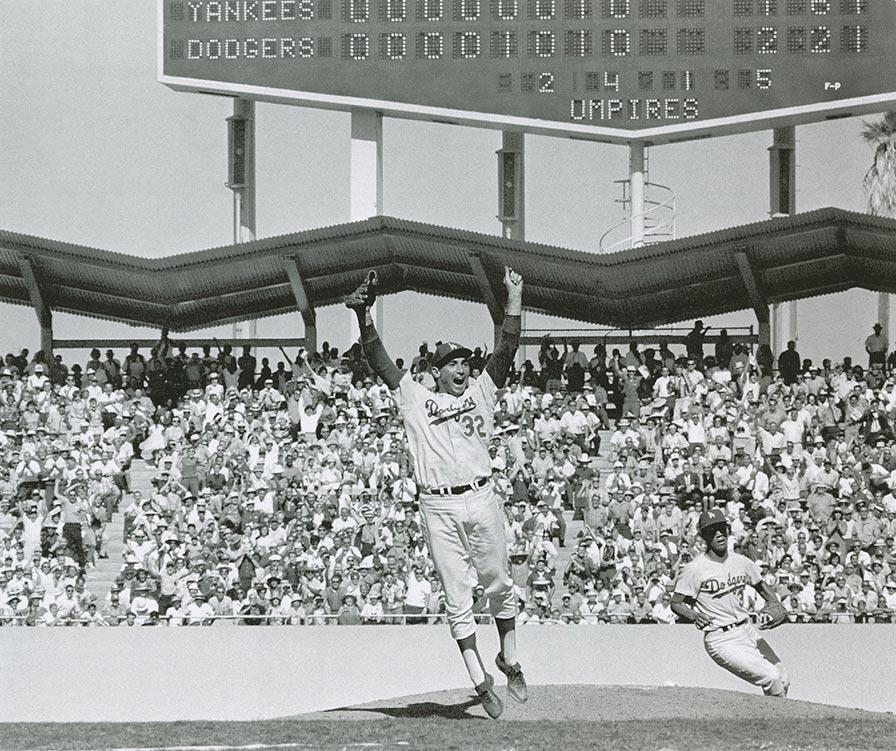
1963-66: Over these four seasons, Koufax would become a Hall of Fame pitcher. MLB increased the size of the strike zone in 63 because they felt there was too much offense. As a result, K-rates rose 6%. Tommy Davis won his second batting title in a row. 1963, Koufax would win the first of 3 Cy Young awards. He won 25 games, struck out 306, had 11 shutouts, he also won the MVP award. He pitched his second no hitter on May 11th, beating Juan Marichal and the Giants 8-0. He had a perfect game through 8 innings, but he walked Ed Bailey and Willie McCovey, who was pinch hitting in the 9th before getting the final outs. He had his second immaculate inning of his career on April 19th against the Astros becoming the first NL pitcher and the 2nd pitcher ever to throw 2. The other was Lefty Grove. He missed two weeks with an injury to the posterior capsule of his left shoulder on April 23rd. Koufax would win games 1 and 4 in the World Series, beating Ford both times as LA swept the Yankees. He set a Series record for most Ks in a game with 15 in game 1. He was named the series MVP. 1964 was a down year for the team, and Koufax had a salary dispute with the team before the season. He wanted 75,000 and Bavasi offered 65. Eventually he would settle for 70,000 dollars. He pitched a shutout on opening day, the only opening day start of his career. He missed 3 starts after he felt something go in his arm on the 22nd of April against the Cardinals which ended with him receiving 3 cortisone shots. On June 4th, he pitched his 3rd no-hitter, beating the Phillies 3-0 in Philadelphia. The only baserunner was Dick Allen who drew a walk and then was cut down trying to steal. On August 9th, he jammed his elbow diving back into second base. He managed to pitch and win 2 more games, but on the morning after his 19th win, he awoke to find his elbow as big as his knee. He was diagnosed by the team doctor with traumatic arthritis. He finished 19-5 with a 1.74 ERA which led the NL and he had 7 shutouts.
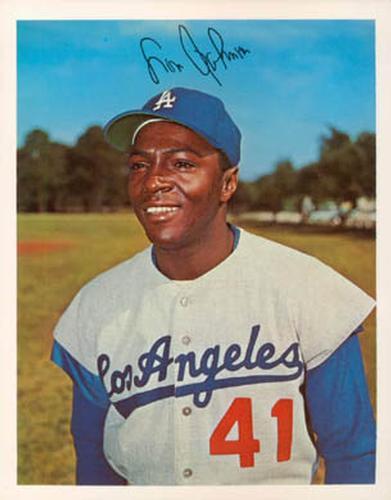
1965-66 Back-to-Back Cy Youngs: Koufax now had to change some things in the way he pitched since the team doctor, Robert Kerlan, had told him he would eventually lose the use of his left arm if he continued to pitch. So, he quit throwing sidearm, which he frequently did to lefties, and he dropped the slider from his repertoire. He used a capsaicin-based Capulin ointment called by the players Atomic Balm on his shoulder and arm, he would then soak his arm in ice to prevent swelling. He would often wear a rubber sleeve when he did these treatments to prevent frostbite. He also took Empirin with Codene every night and occasionally during a game. He also took Butazolidin, a drug used to treat inflammation caused by arthritis, which was eventually taken off of the market due to toxic side effects. When needed, he was given a cortisone shot in his elbow. He did this for the last two years of his career. 65 was a banner year for Sandy, he won 26 games, struck out an MLB record 382 batters, led the league for the 4th straight year in ERA with a 2.04 mark, had 27 complete games, 8 shutouts and recorded 2 saves. He won the Cy Young for the second time and pitched a perfect game against the Cubs at Dodger Stadium on September 9th, winning 1-0 over the Cubs Bob Hendley, who allowed just 1 hit. He struck out 14, the last 6 batters in a row. They won the pennant on the next to last day of the season when beat the Braves 3-1 on 2 days rest. The Dodgers met the Twins in the World Series. Sandy made news when he refused to pitch the first game because it fell on Yom Kippur, the highest holy day in the Jewish religion. Drysdale and Koufax lost games 1 & 2. Osteen won game 3, Big D won game 4, and Koufax shut out the Twins 7-0 in game 5 and the teams headed back to Minnesota with LA holding a 3-2 lead. Osteen would lose game 6, and even though it was Drysdale's turn to start, Alston decided to pitch Koufax on 2-days rest. Koufax pitched a 3-hit shutout with 10 Ks, despite battling fatigue and chronic pain for a 2-0 Series clinching win. One of the runs came on a homer by Lou Johnson, a journeyman outfielder who replaced Tommy Davis when he broke his ankle in May. Koufax won the series MVP award. He finished 2nd to Willie Mays in the NL MVP voting.
In 1966, Koufax won 27 games, lost 9, had a 1.73 ERA for his 5th and final ERA award, had 27 complete games, 5 shutouts and 317 strikeouts to lead the league. In the winter of 1965, he and Don Drysdale held out by not signing their contracts. Eventually they settled for 100,000 for Big D and 125 K for Sandy. Marving Miller would use the Koufax-Drysdale holdout as an argument for collective bargaining and was elected the first executive director of the MLBPA. Koufax had been told by Kerlan that it was time to retire. He could no longer straighten his arm, and occasionally it would go numb, causing him to drop whatever he was holding. He had already decided to retire after the season but kept it to himself. He went on to make every start that year. 41. On September 25th, a day after Yom Kippur, he matched up in Chicago with fellow Jewish lefty, Ken HoltzmanHe allowed just 2 runs, 1 unearned in the first inning, but Holtzman carried a no-hitter into the 9th, allowing 1 run on just 2 hits. It was Koufax's last regular season loss. Sandy was the unanimous winner of the Cy Young award for the second year in a row. LA met the Orioles in the World Series and were swept in 4 games. They scored 2 runs in the first game, and none in the last three games. Sandy lost game 2, 6-0. He allowed 4 runs, just 1 earned. Usually, reliable CF Willie Davis committed 3 errors in one inning, but the Dodgers as a team committed 6. In November, Koufax announced his retirement. In 1972, Sandy was elected to the Hall of Fame. From 1961-66 his record was 129-47. His career record was 165-87.
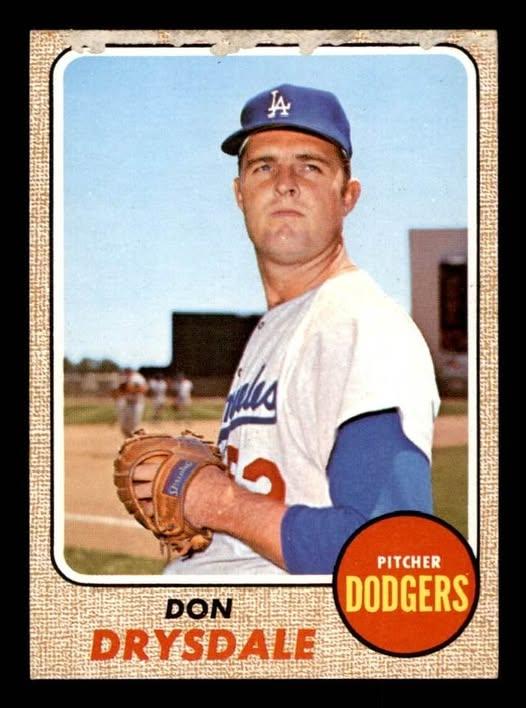
1967-1979: Without Koufax in the rotation, the Dodgers finished 8th in 67 and 7th in 68. There would be some bright spots along the way. In 1968, Drysdale strung together 6 consecutive shutouts resulting in a record 58.2 innings of shutout baseball. The team climbed to 4th place in 1969. Big D had to retire due to a torn rotator cuff, which at the time there was no operation for. Bill Singer threw the first no-hitter by a RHP in LA Dodger history on July 20th, 1970, against the Phillies in Los Angeles. It was the second no-hitter caught by Jeff Torborg, who had been the catcher for Koufax's perfect game. For the next four years, LA finished 2nd every year, narrowly missing winning the West in 71 when they lost by 1 game to the Giants. In 1974, after some astute trades, the won the West and then beat the Pirates 3-1 in the LCS. It was also the beginning of the 8-year run for "The Infield", Garvey, Lopes, Cey and Russell. Garvey was the MVP of the league, and closer Mike Marshall won the Cy Young and pitched in a record 106 games finishing 83 and leading the lead with 21 saves. They played the 2-time champion A's in the World Series, winning only game 2 in LA on a 2-run homer by Joe Ferguson. Four of the games were won by scores of 3-2. In 1976l, long time manager, Walter Alston retired with 4 games left in the season. He was replaced by 3rd base coach, Tommy Lasorda. In 1977, LA had 4 players hit 30 homers or more, Garvey 33, Smith 32, Cey 30 and Baker 30. Baker hit his on the last day of the season.
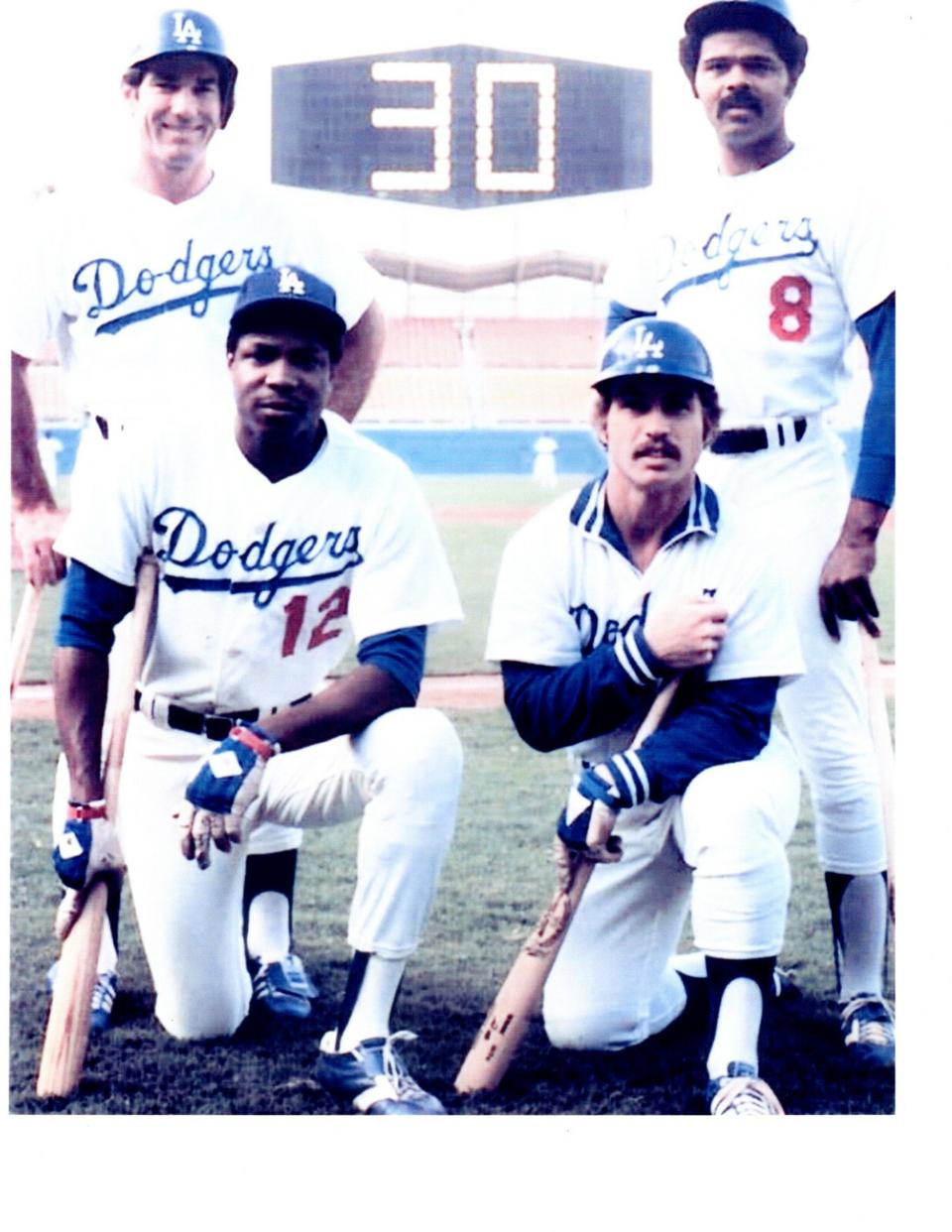
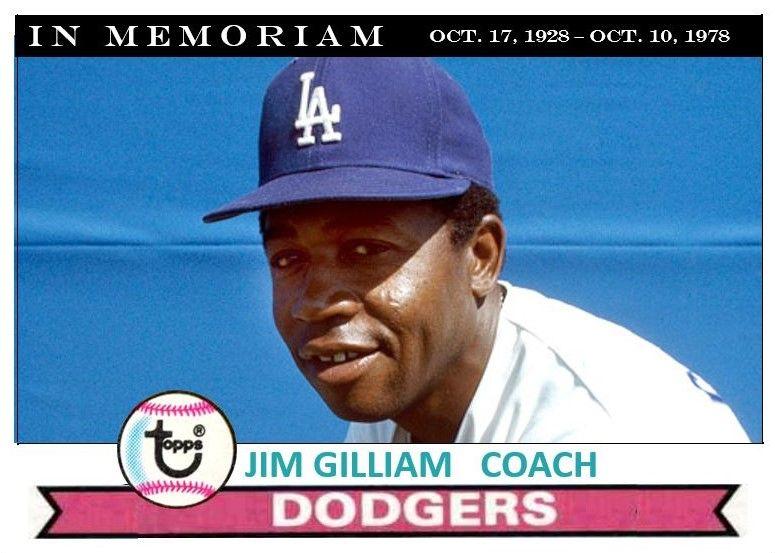
Tommy John, who had been acquired for Dick Allen in December of 71 won 20 and lost 5. They won the pennant, beat the Phillies 3-1 in the LCS and then lost to the Yankees in 6 games. In 78, they won the pennant again, beat the Phillies in the LCS again 3-1 and once more lost the series to the Yankees in six games. They had dedicated the 78 series to the memory of Jim Gilliam who died suddenly 9 days before his 50th birthday. The team dropped under .500 in 79, 11.5 games back, the bright spot was Rick Sutcliffe who won 17 games and was the first of 4 consecutive ROY's for the Dodgers. The next installment will take us from 1980-2000.
Discussion (2)
Disagree, not disagreeable
So much history and lore.... Thanks for another trip to the past, Bear. This has me thinking: Who belongs on the all-time Dodgers team? With all respect to Zach Wheat, Dazzy Vance, and all the Superbas, I'll be sticking to the post-integration era, in the interest of social justice. My nominees.... Catcher: Campanella, Piazza, Roseboro, Will Smith First Base: Hodges, Garvey, Karros, Freddie Second Base: Jackie Robinson, Davey Lopes, Jeff Kent....and later Mookie? Third Base: Cey, Beltre, Justin Turner, Max Muncy Shortstop: Pee Wee, Maury Wills.... OF: Duke Snider, Carl Furillo, Willie Davis, Tommy Davis, Reggie Smith, Dusty Baker, Rick Monday, Kirk Gibson, Matt Kemp, Andre Ethier, Shawn Green, Bellinger-in-his-MVP season, and Mookie. DH: Shohei Manager: Durocher, Alston, Lasorda, Dave Roberts Front office: Branch Rickey, Andrew Friedman. (RIP Fred Claire) Announcer: Vin, Vin and Vin
Just off the top of the noggin. Who am I forgetting? Probably some obvious ones... A lot of pitchers could be considered. My five-man rotation has Koufax, Drysdale, Newk, Fernando and Kershaw. I've got Orel as the long man and spot starter. Don Sutton is also a nominee. My bullpen features Kenley, Perranoski, iron man Mike Marshall for sure. Who am I forgetting? Anyway, the nominees include several HOFers, numerous MVPs and Cy winners. Illustrious! Kirk Gibson might be remembered as a one-hit wonder, but he was really so much more than that.
Will keep this going with 2 more parts, too much great stuff has happened to put it all in one post. Besides, it keeps me busy.