
Bill Buckner: Gamer or Goat
NOTE: I told you Rob Schelling aka/2demter2 would be back little did I know how soon! Mark Timmons Gamer: A player who approaches the game with a tenacious, spirited attack and continues to play even when hurt; a competitor; a player who doesn’t make excuses. The term is a compliment, most especially when it comes from another player. Goat: one blamed for causing a failure or defeat, esp. in

NOTE: I told you Rob Schelling aka/2demter2 would be back – little did I know how soon!— Mark Timmons
Gamer: A player who approaches the game with a tenacious, spirited attack and continues to play even when hurt; a competitor; a player who doesn’t make excuses. The term is a compliment, most especially when it comes from another player.
Goat: one blamed for causing a failure or defeat, esp. in a team sports competition.
Bill Buckner was, by all accounts, the epitome of a gamer. He had a fiery temper and approached the game with great intensity. As Jeff English wrote “Buckner detested strikeouts, which he considered failure. In nine different seasons he ranked either first or second in his league in at-bats per strikeout.” Walter Alston once said of Buckner, “He gets the red neck a lot, but I sort of like that.” At times, Billy Buckner was seemingly held together by duct tape – but he went out there any ways and played his heart out. He played well and he played hurt, more often than not he played hurt. He suffered a severe ankle injury in 1975, from which he never recovered. From then on, he played with a walker (not really). Chicago Cubs manager Herman Franks once remarked, “You should see this guy getting ready for a game. He rides that bike in there and does all kind of exercises. Then he goes in, and Tony (trainer Garofalo) tapes him from here to here.”
Columnist Dick Young once called Buckner “one of the guttiest players around today. He plays with a bad ankle, takes aspirin and steals a base.” Buckner, sans the gambling, patterned himself after Pete Rose. He would regularly sacrifice his body for the opportunity to play winning baseball. Some have suggested that but for his ankle injury, Buckner could have had a career worthy of Hall of Fame consideration. He was, without a doubt, one of the purest hitters of his generation, topping the .300 mark in seven different seasons
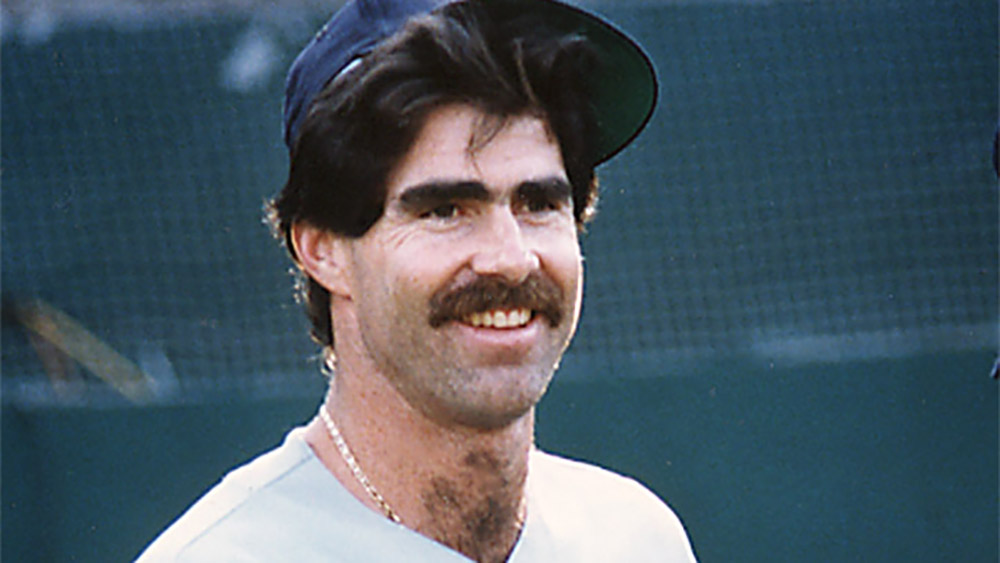
Buckner was a gamer! Buckner’s career touched four decades. He made his debut with the Dodgers in 1969 and played his final game for the Red Sox in 1990. He spent his first eight seasons with the Dodgers and eight more with the Chicago Cubs. He won the National League batting title in 1980 and made the All-Star team in 1981. Buckner led the National League in doubles in 1981 and 1983. Buckner finished his career with 2,715 major league hits, only 65 players in major league history have more. From 1977 to 1982, he averaged only 21 strikeouts a season and he never struck out more than 39 times in any season that he played. Talk about a contact hitter! Many modern players strike out that often in a month, let alone an entire season.
Despite his fine career, Buckner is remembered as one of the most notorious goats in the history of American sports. All because of a single play, one moment in time, that occurred on October 25, 1986, in the 10th inning of the sixth game of the World Series against the New York Mets. Thereafter, his last name became synonymous with “you blew it.” I’m of the mind that perhaps Kevin Cash can identify with Buckner in a very intimate way. Cash has been a wonderful manager for his 6 years at the helm of the Tampa Bay Rays, respected and loved by his players and the Rays’ fans. But, for the foreseeable future, he’s going to be known for pulling Blake Snell from game 6 of the World Series. A move many have panned as the cause of the Rays losing game 6. As I expound a little later herein, I believe that Buckner’s label as a “goat” is unfair and he should be remembered for a great deal more than that one solitary play.
William Joseph Buckner was born to Leonard and Marie Buckner on December 14, 1949, in Vallejo, California. He was raised in American Canyon, California, which is a community in Napa County, with his three siblings, brothers Bob and Jim, and Jim’s twin sister, Jan. His father died when Bill was a teenager. His mother worked for more than 20 years as a captain’s stenographer for the California Highway Patrol, and it was she that saw to it that the Buckner kids found their way into organized baseball. While attending a Cub Scout mothers meeting, she signed her boys up for Little League. “I thought it would keep them busy and out of trouble,” she recalled. “So they signed up.” Billy was a natural athlete, and advanced for his age. As a seven-year-old, Marie falsified his birth certificate in order to get him into Little League a year early. He excelled from the beginning.
Buckner attended Napa High School and starred both as a football and baseball player. As a pass-catching end, he caught 61 passes good for 963 yards. He was named to the Coaches All-American team two years in a row. But he really excelled at baseball. As a first baseman on the baseball team, he hit a whopping .667 in 1967 and .529 in ’68. Recalling high school, Buckner stated, “I was very goal-oriented. I was going to go to school and college, play sports, and go on to professional baseball. I didn’t spend a lot of time doing nothing.” Buckner was also very strong academically and wanted to attend college. His college choices came down to USC(this should make Jeff happy!) and Stanford. But, before he could commit to a college he began to attract the attention of major league scouts. Former New York Yankees second baseman and California Angels scout Joe Gordon recalled that Buckner “had the finest swing I saw anywhere on the West Coast, and probably is one of the best young hitters in baseball with his compact swing and power to all fields. He seems to have complete control of his bat and his body.”
Despite his desire to go to college, that endeavor would have to wait, because the Dodgers selected Buckner in the second round (with the 25th overall pick) of the June 1968 amateur draft. That Dodgers’ 1968 has been rated the best draft class of all time, with no other team’s draft coming in a close second. Besides Buckner, drafted that year were Ron Cey, Steve Garvey, Davey Lopes, Tom Paciorek, Bobby Valentine, Doyle Alexander, Geoff Zahn and Joe Ferguson. These players combined for a total of 234.8 WAR. What a class!! The Dodgers’ 2016 draft, as good as it appears to be, has a long ways to go before it can compare to this class.
In 1968, Buckner started his professional career with the Ogden Dodgers in the rookie-class Pioneer League. His manager was Tommy Lasorda. Buckner, who played every game at first base, hit .344 average, with 4 homeruns and 41 RBI. He also stole 15 bases in 16 attempts. Buckner, Garvey(.338) and Paciorek(.327), finished 1-2-3 in league batting average leaders. It’s no wonder that Ogden had the best won-loss record in the league that year.
Buckner began the 1969 season at Double-A Albuquerque, where he batted .307 in 70 games. In July he was promoted to Triple-A Spokane to replace first baseman Tommy Hutton, who had been called up by the Dodgers to fill in for the injured Wes Parker. There he hit .315 mark in 36 games. This led to Buckner receiving a September call-up to Los Angeles. On September 21st Buckner got his first major league at-bat against Gaylord Perry. He popped out to the second baseman. That was his lone appearance for the Dodgers that season. After the 1969 season, Buckner participated in the Arizona Instructional League, where he batted .350 with 10 stolen bases in 46 games. He also spent time improving his skills as an outfielder.
In 1970, Buckner was expected to compete for a roster spot with the Dodgers. Dodgers manager Walter Alston suggested, “It’s possible Bill could be our starting left fielder. He’ll certainly get a good look in the spring.” Buckner, who never lacked in confidence, responded by saying, “I think I can hit .300 in the majors. I know I’m a better hitter right now than some who have been playing there.” Some within the Dodgers organization were urging Alston to commit to playing Buckner. Scout Goldie Holt told club vice president Al Campanis, “Buckner has so much ability and is so far advanced that I would put him in left field and leave him there against all kinds of pitching.” Holt wasn’t the only one who predicted big things for Buckner. When the Dodgers traveled to Pompano Beach to play the Washington Senators in a spring training match-up, the Dodgers’ batting practice turned into a hitting clinic of sorts as players and coaches gathered around Washington manager Ted Williams. After watching Buckner take some swings in the batting cage, Williams remarked, “You don’t have to worry. You’re going to be an excellent hitter one of these days.” He predicted that Buckner would eventually win a batting title. Coming from Ted Williams that is worthy praise indeed!!
That spring, Buckner would win the Dearie Mulvey Memorial Award, given annually to the Dodgers’ outstanding rookie of the spring. Buckner hit .303 in 19 games with a club-leading five doubles and five stolen bases. He didn’t commit an error in the field, and as was his habit, he didn’t strike out a single time.
He made the roster out of spring training, as the starting left-fielder. However, he struggled and after 14 games was hitting a meager .121. As a result he, along with Steve Garvey, were optioned back to Spokane. Buckner opted not to immediately report to Spokane because he wanted to complete his semester of college courses at Southern California. Although his decision was questioned by Al Campanis, Buckner was given permission to attended his classes. do that and didn’t report to Spokane for over 3 weeks. Once Buckner arrived at Spokane, he wasted little time. He had seven hits in his first nine at-bats. Unfortunately, he then suffered a broken jaw in a collision with teammates Davey Lopes and Bobby Valentine. He played two games before x-rays revealed the fracture. Recalling the injury, Spokane manager Tommy Lasorda said, “Buck broke his jaw and the front office told me to sit him out for five weeks. Buckner missed only one game and wound up hitting .335 and learned to spit and swear with his jaw wired shut.” He ended up hitting .335 for the year and received another call-up to the Dodgers in September and batted .257 in 14 games.
Buckner stuck with the Dodgers as an outfielder out of spring training in 1971. Buckner and some of the other young Dodgers batters faded late in the season. He would end with a .277 batting average in 108 games, as the Dodgers placed second in the National League West behind the Giants. Despite the end of the season fade, Buckner was selected as an outfielder on the Topps Rookie All-Star Team. Also, San Francisco Giants manager Charlie Fox had this to say about Buckner, “I think his position eventually will be first base, and I’d like to have him right now to fill in there when we needed him. He’s going to be quite a hitter.”
1972 was a better year for Buckner, as he hit .319 in 105 games. He split time between left field and first base that year, and many thought he would be the replacement for the retiring Wes Parker the next year.
However, in 1973, as a 24 year old, Buckner again split time at first and in the outfield, as Steve Garvey began to get more and more time at 1st base. He finished the season hitting .275.
in 1974, Buckner enjoyed his year for the Dodgers. He hit .314 for the season. He also had a Cody Bellinger level year in the field, making play after play in the outfield, including several highlight-reel-quality catches. This prompted te Sporting News to note, “Even more impressive than Buckner’s hitting has been his fielding. The left fielder has made five brilliant catches.” Buckner would receive some consideration for MVP that year. Dodgers pitcher Don Sutton said of Buckner, “And Buckner. Wow! If he doesn’t get some votes – I mean a lot of votes – it’s an injustice. He’s made so many unbelievable catches out in left field we’re starting to take him for granted.” Buckner ended up finishing 25th in the voting.
The Dodgers won 102 games that year and beat the Pittsburgh Pirates in the playoffs to advance to the World Series against the two-time defending World Series champion Oakland A’s. Unwittingly, Buckner provided some unneeded motivation for the A’s when in an interview with the San Francisco Examiner, Buckner stated that he thought the A’s were an inferior ball club. The article quoted Buckner as saying, “I definitely think we have a better ball club than they do. The A’s have only a couple of players who could play on our club. Reggie Jackson is outstanding. Sal Bando and Joe Rudi are good and they have a good pitching staff. Other than that … I think if we played them 162 times, we could beat them 100.”
Owner Charlie Finley called a team meeting before Game 4 of the Series and read this article to his team. Oakland won Game Four – 5-2. In game 5, trailing 3-2 in the 8th inning, Buckner lined a hit to center, but was thrown out trying to stretch into a triple. Not only eliminating a late-inning opportunity for a scoring rally, he broke several baseball cardinal rules. However, Buckner made no apologies for the play, noting, “It was something I did all year and I’ll do it again. I can’t stop taking chances because I got caught once.” Dodgers manager Walter Alston agreed, calling it “one of those plays. If you make it, it’s a great play. If you don’t, it’s a bad play. We let our players go all season. We want them to play aggressively. Bill just ran into two great throws, a perfect throw from the outfield and a perfect throw from the relay man.” The A’s, with only “a couple of players” who could play on the Dodgers, clinched their third straight World Series title with a 3-2 victory.
Buckner really hoped to build upon his successful 1974 season in 1975. Unfortunately, it was not meant to be. Buckner suffered a severely sprained left ankle sliding into second base against the Giants on April 18. He did not return to playing action until May 16th. He was still hampered by the injury when he returned, going hitless in 8 of his first 9 games back. His ankle never healed, and he also suffered from a pulled thigh muscle. Nevertheless, he remained in the lineup. Because of the injuries, Buckner was unable to get any bunt hits, or beat out infield grounders as before. As a result, he would only hit.243 in a limited 92 games. He was finally placed on the injured list in August and had ankle surgery on September 1.
Despite the fact that he was the subject of many trade rumors during the off-season, Buckner returned to the Dodgers in 1976 and had a good season. As the starting left fielder, Buckner would play in 154 games, hit .301 and set a new career high with 60 runs driven in. He also worked on being able to get bunt hits and beat out infield grounders. As Buckner put it, “I figured I could hold my breath four seconds,” At end of the season, he once again underwent surgery on his left ankle.
That off-season, the Dodgers traded Buckner, shortstop Ivan de Jesus, and minor-league pitcher Jeff Albert to the Chicago Cubs for outfielder Rick Monday and pitcher Mike Garman. Initially Buckner was furious and bitter, but eventually warmed to the idea. Of the trade, he said, “Sure, I’ll miss the Dodgers. And I’ll miss Tommy Lasorda. Lasorda raised me up. I even played for him when he was managing in the minors. I was looking forward to playing for him in his first year as the Dodger manager. At least I know this: The Cubs wanted me. The Dodgers didn’t.” This was one of those good baseball trades that worked out well for both teams.
Buckner would spend the next 8 years with the Cubs, and they were probably his best 8 years, as he really blossomed as a hitter. He never healed from his ankle injury, but during that 8 year period, he would hit .300, winning the batting title in 1980, with a .324 average. In 1981, Buckner hit .311 and in 1982, he hit .306, with a career high 105 RBI. After the 1982 season, Buckner was once again the subject of trade rumors, some of which were of his own doing, as he became increasingly dissatisfied playing for the losing Cubs.
In 1983, Buckner was still with the Cubs and hit 280 with a league-leading 38 doubles. However, his role with the Cubs for 984 was more and more uncertain. Once again, he endured another off-season of constant trade rumors. In 1984, he opened the season as the Cubs’ starting as the first baseman. The trade rumors continued to swirl, and he was soon benched in favor of Leon Durham. It didn’t matter that the Cubs’ fans were decidedly in Buckner’s camp, management wasn’t and on May 25th Buckner was traded to the Boston Red Sox for pitcher Dennis Eckersley and outfielder Mike Brumley. Yet another trade that worked out fairly well for both teams.
Buckner was ecstatic to go to the Red Sox. He would play in Boston for 3½ seasons before being released in July 1987. His first three seasons, despite being hobbled due to his injuries, Buckner performed well. In 1984, after the trade from Chicago, Buckner hit .278 average, with 11 home runs, and 67 RBI in 114 games. At the conclusion of that season, he underwent surgery to remove bone fragments from his left elbow. In 1985, Buckner batted .299 with a career-high 110 runs batted in. He also had 201 hits, which broke Jimmie Foxx’s 49-year-old franchise record for hits in a season by a first baseman. In 1986, despite constant discomfort from bone spurs in his left ankle, Buckner hit .267, with a career high 18 home runs, and 102 RBI. The Red Sox won the pennant that year, and beat the Angels in dramatic fashion to advance to the World Series against the New York Mets.
In the Series, the Red Sox held a 3-2 game lead, and the Red Sox enjoyed a 3-2 lead in the 8 inning, behind a 7 inning gem from Roger Clemens. Playoffs being what they are, Calvin Shiraldi gave up the tying run in the bottom of the 8th inning. The Red Sox scored two runs in the top of the tenth, but the bullpen could not hold the lead. Calvin Shiraldi gave up 3 straight hits to give up a run. He was pulled in favor of Bob Stanley, after 2 outs and with runners on 1st and 3rd. Stanley promptly uncorked a wild pitch, that let the tying run score and advanced Ray Knight to second base. Mookie Wilson was now the hitter, after several foul balls we had “the play.” Wilson would hit a grounder to first. “Behind the bag!” Vin Scully cried on the television broadcast. “It gets through Buckner!” Knight would score the winning run and 2 days later, the Mets would beat the Red Sox in game 7.
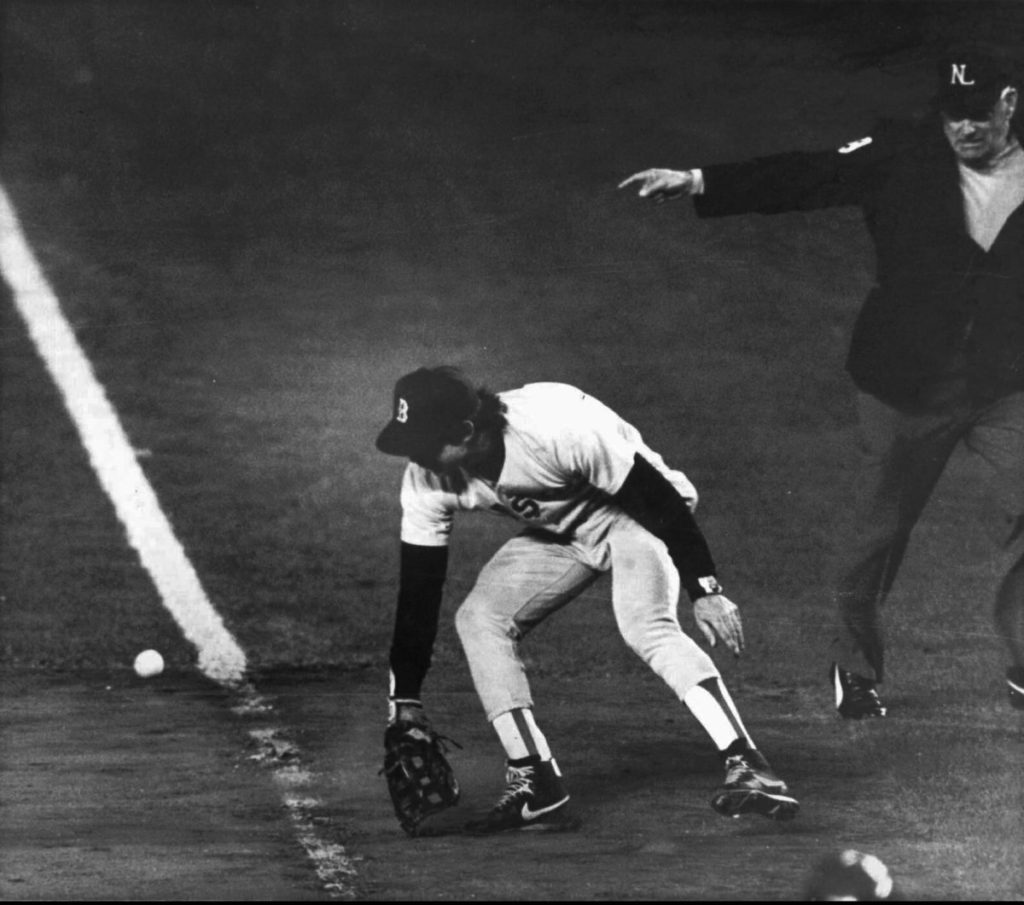
“The play,” however, became one of the most famous in baseball history. For Buckner, it became a moment of infamy he learned to live with, weathering discontent in Boston and a series of death threats.
In the aftermath of the error, the particulars were obscured. Buckner was playing on weary, damaged, 36-year-old legs. Then-Boston manager John McNamara had neglected to replace Buckner in the field with Dave Stapleton, as he had earlier in the series. And the Red Sox were only in this position because their pitchers had melted down, with Bob Stanley uncorking a game-tying wild pitch moments earlier.
No matter. It was Buckner who bore the brunt of the criticism. The headline in the Boston Herald the next morning read, “Buckner Boots Big Grounder.” As far as Boston fans were concerned, it was Buckner’s error that allowed the “Bambino’s Curse” to remain intact. For Buckner, it marked the beginning of near-constant criticism, heckling, and abuse. His name became synonymous with the derisive term “goat,” and the error was destined to be replayed on television ad nauseam. More than a decade later, Buckner remarked, “I’ll be seeing clips of this thing until the day I die. I accept that. On the other hand, I’ll never understand why.” Even though baseball experts acknowledged that Buckner’s error was only one of several mistakes, the blame remained on Buckner’s shoulders.
The Red Sox released him midway through the 1987 season. When he was released, Red Sox manager John McNamara acknowledged how difficult the decision was, “He has been one of the most competitive people I’ve ever been associated with. It wasn’t easy for him to get ready to play, but he had a tolerance for pain and did a great job for us. It was a difficult decision. There was a lot of sentiment involved.” Thereafter he spent time with the Angels and the Kansas City Royals before finishing his career in Boston.
On April 8, 2008, Bill Buckner returned to Fenway Park to throw out the first pitch at Boston’s home opener. The club was celebrating its 2007 World Series title, and Buckner received a four-minute standing ovation. After the game, an emotional Buckner reflected on the day’s events, saying “[It was] probably about as emotional as it could get. A lot of thoughts [were] going through my mind. I wish I didn’t have to walk all the way from left field, too many things. But just good thoughts, which is a nice thing. I really had to forgive, not the fans of Boston, per se, but in my heart, I had to forgive the media for what they put me and my family through. I’ve done that, and I’m over that and I’m just happy.” The Boston fans not only forgave Buckner, but accepted him back with open arms. Buckner too forgave them. “In my heart, I had to forgive the media for what they put me and my family through,” Buckner said after he made his pitch at Fenway Park. “I’ve done that. I’m over that. I just try to think of the positives, the happy things, the friendships.”
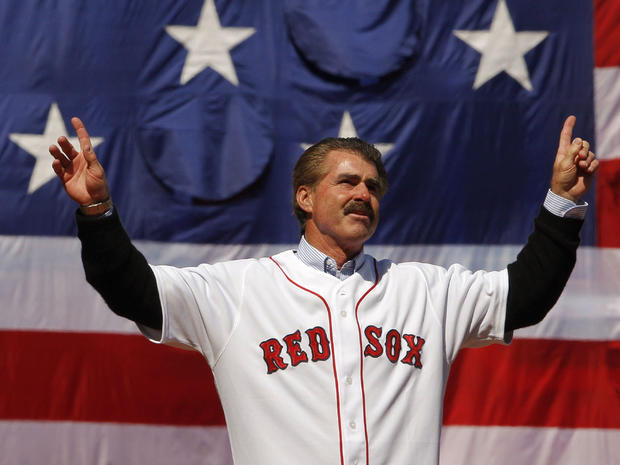
Billy Buckner died on May 27, 2019, in Boise , Idaho, after a long battle with Lewy body dementia. He was 69 years old. A few years prior to his death, Buckner in an interview with USA Today, had this to say: “Life is a lot of hard knocks. There are a lot worse things happening than losing a baseball game or making an error, so it puts things in perspective. You learn forgiveness, patience — all the things you have to do to survive.” Media and fans alike could take those comments to heart. We can be passionate about our teams, but a man’s legacy is not determined by a single moment in time in a game. Billy Buckner is a testament to that notion. He was, and will always remain, the epitome of a true “gamer.”
SOME RANDOM “WE ARE THE CHAMPIONS THOUGHTS”:
● Alex Wood’s performance in game six was stellar. I know he probably won’t return to the Dodgers next year, but was among his best performances as a Dodger.
● Likewise, Dylan Floro striking out Randy Arozarena on three pitches, was huge. It helped in turning the games’ momentum. I don’t imagine he’s had a bigger strikeout in his career.
● I “forgive” Max Muncy for having a sub-par year. He came to play in the WS, and performed as well could be expected.
● The Dodgers beleaguered bullpen clearly out pitched the highly praised Rays’ bullpen.
● Julio Urias was so cool and composed during the playoffs. He’s a pitching stud in the making! I would not be opposed to having him enter the game in the second inning and finish games out.
● The post game embrace between Kershaw and Roberts was a highlight of the celebration for me. Roberts telling him that “I’m so very happy for you!” brought tears to my eyes. Some questionable decision making aside, this symbolized what makes Roberts such a great manager in my opinion.
● Kershaw’s post game interview also showed that he is not only a future hall of fame pitcher, but he is a hall of fame man.
● While I have no complaints over his decision to pull Snell, I do feel sorry for Kevin Cash as to how it worked out.
● I guess we can finally put to bed the notion that Corey Seager can’t perform in the playoffs. What do you think?
● Fans can be so fickle. One day we’re ready to enshrine Will Smith in the Hall of Fame, the next he can barely carry Austin Barnes’ jock strap.
● I’m hoping that Bellinger’s struggles were merely the result of this being an even year. Perhaps in 2021, he’ll return to his monstrous ways of hitting the ball.
● Thank you Joc, Kike and Baez for what you meant to this team over the past years. While I would hate to see you move on, I don’t expect the three of you will return next year.
More from Dodger Talk

Enjoy it While You Can!
It was both surprising and not surprising to me that the Dodgers signed Kyle Tucker. That they can make it work is a tribute to the true genius of Mark Walter and Andrew Friedman. Enjoy it while you can, because it will end soon. In the upcoming CBA and talks among owners, MLB…

Dodgers Food Trailer
I did this interview a couple of weeks ago with Chef Mike, who runs the Dodgers Food Trailer for the Great Lakes Loons. They are there for every home and road regular season and playoff game. They prepare three meals a day for approximately 50 people (players and coaches). Since games end late most evenings, they do not prepare breakfast. Many of their hotels have a complimentary breakfast anyway. However,…

Meet LAD 2026 Draft Picks 1-12
3 picks were High School players (2 SS and 1 OF). There was a college OF, college catcher, college SS, and 10 college pitchers. Of all the talk for a need for a catcher, the only catcher the Dodgers selected was Luke Bard, son of LAD bullpen coach Josh Bard. Bard was a 4th year senior from Houston Christian University. He is not a prospect, so the Dodgers are still…

Interview with Paul Beachy – Team Bus Driver For The Great Lakes Loons (LA Dodgers Minor League Team)
It’s been a few days since I did this interview. We have evidently been working my son-in-law (the video guy) like a rented mule at US Water Systems. However, I am taking him to London with me in a few days, so maybe Watford will buy him a pint as a tip, but he’s a dang Red Sox fan, so there is that! I thought that it would be interesting…
Discussion (56)
Disagree, not disagreeable
I just posted a comment, edited it, and it disappeared.
Did I delete it?
Beautiful piece 2d.
Everyone who saw him play has a Buckner story. I saw him slide head first into the wall down the left field foul line. But my favorite Buckner story is not that one.
For those who may have heard it, bear with me please.
I was playing my first game for the Sutter Home Classics in Napa in 1997. We were on the beautiful old field at St Helena Veterans Home in the center of Napa Valley. What a setting. I was sitting on the bench with the player manager, a friend and neighbor of mine named Diz. I was just taking it all in as it was my first year with the team, an Over 30 MABL team, and a good one. Redwood Empire League Champions 2 years running. I was 49, the oldest guy on the field and I was reminiscing about the old fields I had played on in Orange County similar to this one and I casually said to Diz “I wonder how many Major Leaguers might have played on this field”. Diz paused a moment then said “I know of one. See that building out there?” and he pointed to a maintenance shed beyond the right field fence. “I was sitting right here when Bill Buckner hit a line drive over that building in an American Legion game. We were teammates.” That shed was a good 30-40’ beyond the wall in straight away right, so the building was about 400’ from home plate. He said when he hit it sounded like a shotgun blast and nobody in the park spoke as Buckner rounded the bases. Dead silence. One of those moments frozen in time. I could tell by the tone in his voice as he stared at the shed he was reliving it and it was clearly a moving memory for him. I told him I lived and worked in the LA area when Buckner played there and he was one of my favorite players. He then told me a few quick stories of what it was like to grow up playing ball with Bill Buckner. Football and baseball. They were even interested in the same girl but it was no contest. Buckner was a 17 year old god in Napa Valley in the 60’s. He could do whatever he wanted to do, in school and on both football and baseball fields. Everything came easy to Bill Buckner. He got A’s without even trying, he was in a class all by himself on the athletic fields and every girl in the valley loved him. He told me Buckner ran by every player on the football field as if he was a man playing with children. He said he hit .700 his senior year and did it hitting balls out of the strike zone because nobody would pitch to him. I will never forget that day and those few minutes talking with someone who grew up watching Buckner as a young kid.
In Orange County I played on fields that many old greats in the 30’s and 40’s played on. DiMaggio, Ruth, Gehrig, Walter Johnson, Honus Wagner, and others, played at one time in Orange County. On that day in St Helena I flied out to right, just about 150’ short of where Buckner hit his over the shed. Missed it by that much. Being on the same fields years later were moving moments for me.
I know who Bill Buckner was and his legacy is not one bad hop grounder between two old legs. Bill Buckner is a legend. If not for injuries, he would be in the Hall with those other names. He remains to this day one of my favorite Dodger players.
Rob, Great blog on Billy Buckner – he was always one of my favorites.
Thanks for taking the time. Robin Williams had the same thing Buckner died of!
Dodgers’ Mookie Betts, Kiké Hernandez win Fielding Bible Awards:
Open on www.dailynews.comhttps://www.dailynews.com/2020/10/29/dodgers-mookie-betts-kike-hernandez-win-fielding-bible-awards/I remember when some fans used berate Kike’s defense. In the article they wrote this:
The versatile Hernández, a first-time award winner, was the multi-position choice. He saved an MLB-high nine runs at second base, made three starts in right field, three starts in center field, two starts in left field, two starts at shortstop, and played seven innings at first base. He is arguably the Dodgers’ best defensive player at several positions and helped the team to the best regular-season record in the majors.
The Dodgers will miss Kike if he leaves, which is why I give it a 50/50 chance!
BTW, no fever or sweats yesterday. It was by far, my best day. I did some work in the garage and yard and some shopping. I am so eleted!