

What type of baseball are we to expect in 2020? I’m not talking about the Major Leagues in general, I’m talking specifics. The “baseball” as in the “ball” used in the majors this year. With historic offensive numbers in 2019, it was fairly certain that the 2019 ball had changed. Pitchers complained about it. Hitters loved it and the commissioner admitted that there was a bit of an issue:
“Our scientists that have been now studying the baseball more regularly have told us this year that the baseball has less drag. We are trying to understand exactly why that happened and build out a manufacturing process that gives us a little more control over what’s going on. But you have to remember that our baseball is a handmade product and there’s going to be variation year to year.” — Rob Manfred, August 2019
That last sentence is the key and the reason why many believe the ball was flying out of parks last year. MLB did all it could to make the baseball more uniform and less handmade than it already is. He didn’t say that, but it is important to understand that MLB took complete control of Rawlings in June of 2018 when they purchased the sporting goods conglomerate for $395 million. The baseballs manufactured by Rawlings after MLB took control of the process were for the 2019 season. The same season where 6,776 home runs were hit, 11% higher than the previous highest season total on record. Though MLB has been very tight-lipped about the manufacturing process that they oversee, I suspected that the quality control process that they manage may have produced a baseball that is more conducive to being hitter-friendly. I don’t think they attempted to create this result. In fact, I believe they were simply trying to make the baseball more uniform in nature. The result may be that removing human flaws in the baseball manufacturing process has resulted in a baseball that travels farther.
There was a time that the ball manufactured was a hand-tailored process from start to finish. Now it appears that the only remaining hand-made feature of baseball construction is the stitching process at the end. 2019 probably had the most machine manufactured ball in the history of the game. The result was a uniform ball that was flying out of ballparks. It wasn’t always that way.
At the turn of the 19th century, the ball in use was handmade without the current weight and size specifications in use today. It wasn’t completely rouge, they were close in size and weight and MLB would attempt to ensure that balls used for games were uniform, but there wasn’t a close adherence to quality control. Eventually, specific size and weight rules were put into place, but during the “dead ball” era, often a dirty smudged and marked ball would be used batter after batter, sometimes for what is estimated to be over 100 pitches straight. The leagues were cost-conscious, so even a ball that was hit into the stands would be returned to the field of play for more use. It wouldn’t be until a ball began to unravel (usually with stitching that was loosened or breaking apart), that it would be removed from play. A game would use an average of three or four balls per game, compared to the 75 to 100 balls used in today’s’ games.
In the dead-ball era, the balls themselves would be tobacco juice stained, blemished, darkened, and smudged. It could be difficult to see and it was the stark opposite of what we see today, where if the ball gets scuffed in any way, it is removed from play. They called it the “dead ball” era for a reason. Pitchers had the advantage. Runs were harder to come by and generating offense was a challenge. There is a reason that scruffy players like Ty Cobb excelled in that era. Home runs were a rarity and by the late innings after the pounding the ball would take, it could often be quite abused and softened by the constant bashing it had received.
A crazy thing happened though. This guy named Babe Ruth was a freak of nature. He was a pitcher that had 20/10 vision and the strength of Hercules and he started hitting that dead ball out of ballparks in the 1918-1919 seasons. His offensive prowess became the talk of the game and it was a sight to watch. So much so that fans clamored for greater offensive output. Suddenly the popularity of the game swooned. MLB realized this and offense was encouraged. Consequently, the spitball was outlawed, and the baseball used became livelier and shinier. In fact, the balls were manufactured for the first time with machine winders that would spin the wool strands around the rubber-coated cork center “pill” of the ball. This new process started in 1920. Though handspun before, now they were more tightly wound and the result was a ball that was stronger and traveled further when hit. The A.G. Spalding Bros. Company had the license to make balls for MLB. Their covers were made of horsehide at the time, and continued to be until 1976 when cowhide replaced it.
There were minor changes made to the ball over the years, but many were cosmetic in nature. Each league had a ball with their League President’s signature. The National league ball had red and navy blue stitching up until 1934 when it switched to all red like the American League ball. In that same year, both leagues agreed to standardize the size of the ball with the number of wrappings around the center pill that now had a coating of black and then red rubber. The weight was to be between 5 and 5 ¼ ounces, with a 9 to 9 ¼ inch circumference. In the World War II years, synthetic rubber was used to coat the pill and has continued to be used to this day.
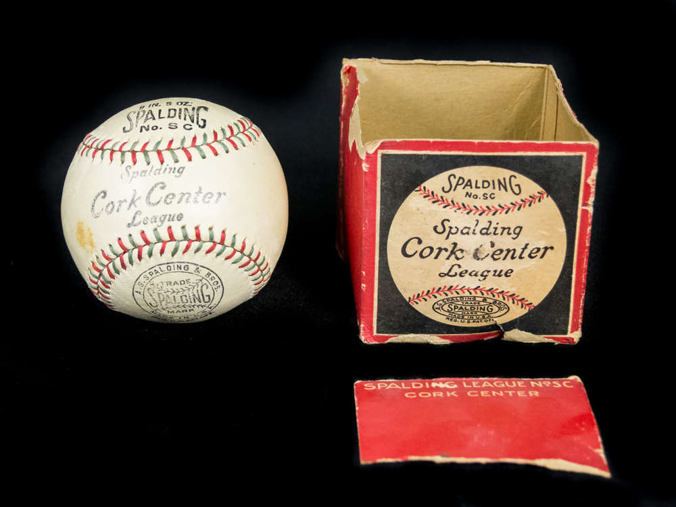
The same year that the cowhide replaced the horsehide, 1976, Spalding was replaced by Rawlings as the MLB manufacturer. The different stamped balls for each league became one uniformed Major League Baseball with the Commissioner’s signature in 1999.
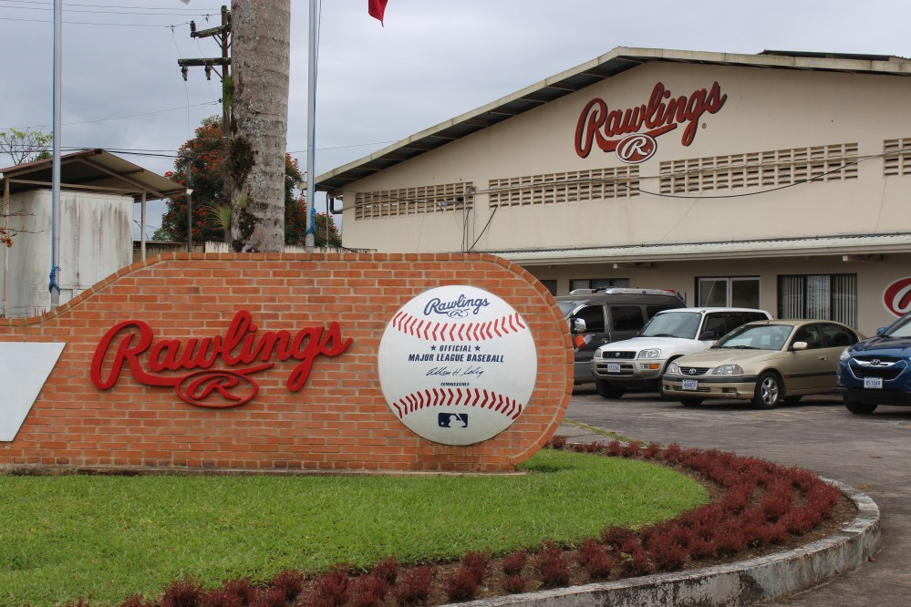
Over the years, there have been accusations that the ball was juiced. Especially during the steroid era. For the most part, those accusations were not well-founded. Haiti manufactured the baseballs from the 1950s up until 1990 when civil and labor unrest caused Rawlings to move their manufacturing process to Turrialba, Costa Rica where it continues to this day under very tight security. When MLB purchased Rawlings in 2018, they took complete control of the baseball manufacturing process. Their intentions were good. They wanted to streamline quality control and the manufacturing process to make sure the balls made would be completely uniform.

There is a Dodger element to this, though quite remote. Peter Seidler, the grandson of Walter O’Malley and Peter O’Malley’s nephew was appointed by MLB to oversee the process. Peter is currently a General Partner in the ownership of the San Diego Padres. He was groomed in the baseball business under the thumb of his uncle Peter, who had him learn it from the ground up in the minor leagues along with his brother Tom. In July 2018, a month after the purchase of Rawlings by MLB, Seidler said: “We’re going to methodically analyze every step of the (manufacturing) process.” By the time the 2019 balls were put in place, it was evident that any changes MLB had made were resulting in the balls flying further.
What has resulted is a ball that appears to be more pill centered and tightly wound and that flies a greater distance, more so than the balls of the past. Physicists have studied the balls for the past two years and come to these conclusions. Dr. Meredith Wills, a baseball fan and physicist has worked for the Baseball Hall of Fame and studied balls from different eras. Her conclusions found that the 2019 ball is slightly smaller, specifically around the seams with seam heights ranging from 0.23 millimeters to 0.41 as opposed to 0.45 millimeters to 0.68 with the 2018 ball. Though the changes in seam height are something that is difficult to see with the naked eye, these changes are significant in influencing the aerodynamics of the flight of the ball. Dr. Wills claimed that these changes probably occurred because of MLB’s attempt to streamline the manufacturing process and make a more perfect sphere.
MLB admitted that they have attempted to center the pill of the ball for uniformity purposes. The result is a ball that flies with less wobble, with smoother aerodynamics. With the pill more perfectly centered, Dr. Wills identified the 2019 batted ball as traveling with a near-perfect spherical deviation. It is close to zero when in the past, it wouldn’t approach that.
Lastly, Dr. Will’s study found that the 2019 ball had smoother leather that resulted in less friction while the ball was in flight. Her findings referred to that measurement as “static friction.” The more static friction, the more air impediments to its flight. In the case of the 2019 baseball, the smoother leather was providing lower readings of static friction.
Tighter seams, less static friction, and a spherical deviation at zero equals a more aerodynamic baseball with less drag. In other words, a swing with the same bat, same force and same angle with the 2019 ball produces a ball traveling further distances than previous iterations that were not made with so much uniformity and precision. How much further? I guess it depends on who you ask. Some are saying 5 to 6 feet. It all depends on the bat speed, launch angle, level of contact. There are a lot of factors.
MLB will not give the public any detailed information on the manufacturing process and/if any changes were implemented when they took over Rawlings. It appears that MLB attempted to streamline the process and in doing so, removed the human flaws that handmade balls often have. I believe those flaws kept the balls in the ballparks. An imperfect ball provided a more honest ball.
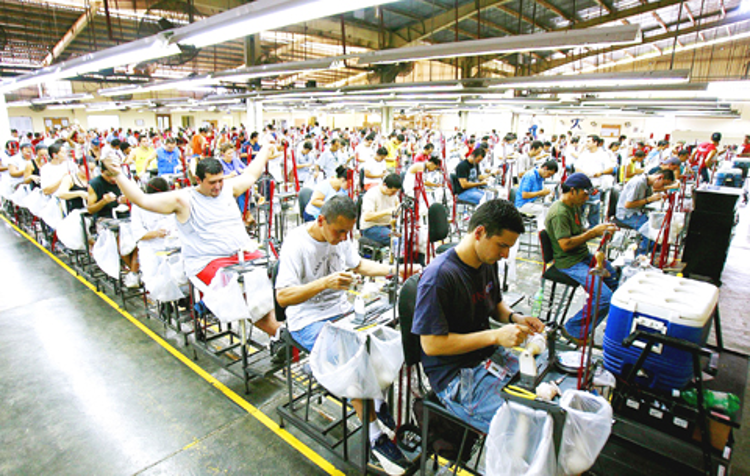
Why can’t MLB correct these issues mid-season? Well, it’s not so easy. Manufacturing batches of baseballs is quite time-consuming. In fact, the quota for workers at the Turrialba factory is approximately 156 baseball per week for each worker. That is about 4 baseballs per hour completed by those working in the stitching process at the final stage where 108 holes are sewn together to produce the completed product. The Costa Rica factory produces the batches of balls for the season well before April hits, so the batches of balls used for the season are in stock and ready to be smothered in Delaware River mud by then. Changing the ball production process in mid-season would be very difficult. There was talk from Seidler of starting a second manufacturing plant back in 2018, and minor league balls are made in China, so that possibility exists, well at least it did until Coronavirus issues surfaced in China. I suspect that option is probably remote at the moment.
So, for the 2020 season, the questions are out there. Has MLB uncentered the pill and gone back to handmade methods in doing so? Will the wobble be back that will impede the near-perfect aerodynamics that we witnessed last year? I guess we’ll find out around April.
The Athletic has been promoting The Baseball Top 100, highlighting a different player each day. Today it was Roberto Clemente, listed as their #40 of all time.
In my time of following baseball (60 years), I have found two players to be Clemente’s equal, Willie Mays and Hank Aaron.
I will certainly be curious to read about those 39 other players The Athletic deems to be greater than Clemente.
Well how about Babe Ruth and Ty Cobb for two. Clemente’s career was tragically cut short and that hurts his ranking for sure. And to think he should have been a Dodger!
I wonder how long it will take until the owners hate the new ball? Sure, it brings in a few more fans but, going forward, the exaggerated numbers will cost them millions in new contracts for what were perennially average hitters until the new ball came along.
I don’t think it’s all about the ball. In fact, I think the new approach to hitting: sell out, launch angle and 3 results plays the largest part. However, there is no denying the ball was juiced last year. Maybe this year it will not be so “juiced.”
Manufacturing baseballs now has less human flaws. Why should that be any different than where the sport is going? Instant replay, electronic balls and strikes, computer algorithms to determine who the better players are, video equipment to steal signs…What’s next droids actually playing the game. Technology has maybe made the world more efficient. But better? I prefer the human element. Sometimes they get it wrong, but most of the time they get it right.
All pitchers’ want is consistency. Greg Maddux and Tom Glavine made it to the HOF because of flaws in the umpire. They figured out where the strike zone was and exploited it, never being off more than a cm. Because they were so precise, umpires gave them the benefit of doubt and tended to expand the zone. Those were pitchers, not throwers.
You want to speed up the game? Get rid of instant replay. Sure, umpires get it wrong. But so do players, managers, coaches, and front office personnel. I would rather MLB punish cheaters rather than figure out how to speed up the game. Clocks on pitchers? Three batter rule? Now quality control over the manufacturing process of the baseballs? I absolutely love the game of baseball, and I will never let technology diminish my love for the game. However, as I get older, I find myself longing for the game of the 50‘s and 60’s more. That was the game I grew up with. I recognize and respectfully acknowledge that there is no turning back, and probably not with the manufacturing of the baseballs. Chicks love the long ball, and apparently so does MLB.
Classic Line:
“I would rather MLB punish cheaters rather than figure out how to speed up the game.”
Evidently Manfred digs the cheaters!
Bottom line here, Mark, Manfred is a spineless degenerate who made this whole Astro situation worse with his ‘so called’ punishments or really a lack there of. And that rodent owner named Jim Crane is as much to blame IMHO, especially if he was paying attention to the real arrogant and lack of remorse in those player’s sorted apologies. As Clevenger said a couple weeks ago, the Astro hitters should expect some very uncomfortable AB’s especially at the beginning of the regular season. Heck they might have those in ST games, wss
Stripling and Pederson discuss the “Almost Trade” and it appears there are no hard feelings… even getting beat in arbitration.
It turns out Friedman kept them in the loop.
https://www.ocregister.com/2020/02/15/joc-pederson-ross-stripling-discuss-being-dodgers-angels-then-dodgers-again/
There is this bunch of strange people around who don’t understand that baseball is all about pitching. If they’re gonna streamline the damn ball and decriminalize hi tech sign stealing they should at least bring back the spitball and help the poor pitchers make a living.
Thanks Evan for your article. It’s probably the first time I’ve read such an in depth story on baseball production over the years. Your comment about only 3 or 4 balls being used per game early in the 20th century struck a chord with me.
I was fortunate enough to be raised in a suburban area of Jersey. There was a school with a large grass field 1 block away from my home. We had pickup games almost every day. I don’t remember too many new base balls being used. Baseballs would be used for weeks or months. A couple of guys would bring their ball and we would use the best one. Sometimes the only ball we had was wrapped in electrical tape -lol. I’m sure many of you can relate to this. What a great time to grow up. Plus, I was able to watch “”the boys of summer” back then.
Sorry, there I go, lost in the 50’s again.
It’s cool hodges54, because the 50’s were great years as you know. But from what I gather, because many teams set their new franchise records for team HR’s in a season in 2019, the baseballs sure appeared to be somewhat different from earlier years.
The Athletic has a very good article on KJ. For those who believe that KJ is done, he has other thoughts, and he is making 2020 his new start. An excerpt from the story: “He described his visit to Driveline Baseball in Washington. There, he said, he participated in and listened to data-led assessments about what had happened to him over the last two years. “I’ve got to accept that I wasn’t at my best,” Jansen said. “I’ve got to push through it to become a better pitcher.”
“Roberts and Jansen’s teammates appreciated his sentiment. For the 2020 Dodgers to succeed, Roberts said, it is vital for Jansen to improve. Walker Buehler said he and his teammates love that Jansen was willing to give something different an honest try. Alex Wood, another recent Driveline convert, said Driveline and its devotees had ignited him to try to do better. He said it sounded like the same was true for Jansen.”
With credit to Ron Cervenka: “As a result of his extra offseason work and time at Driveline, Jansen says he is back to the Kenley Jansen of 2017.
“It feels like the ball has life on it. That’s what everybody’s telling me,” Jansen explained. “One thing I see, [the ball] doesn’t go down, it stays in one lane.”
As for the physical side of things, Jansen was equally explicit.
“To stop throwing and start it up again, sometimes you feel all achy,” he explained. “This time, I took the approach of continuing to throw [throughout the offseason] so my arm would stay in shape. Personally, I kind of feel better.”
Seeing is believing so we will need to see how KJ finds himself back, but I am choosing to be more positive about the 2020 version of KJ.
Thank you Evan for a very interesting article on a subject I, quite frankly, had never given much thought to before.
It was also nice to read the article about KJ spending some time with Driveline. Let’s see how that plays out, but certainly an “ol dog can learn new tricks!”
Question. A stress fracture in the back sounds serious and scary to me. Does anyone know when or how it happened?
I haven’t heard anyone say when Dugo sustained the injury but it can’t be considered all that serious as the Dodgers informed the Sox that he had it and they then looked at his medicals and still made the deal. Although I have absolutely no medical background, I would guess that these kind of injuries generally heal just fine and don’t tend to recur, contrary to the type of back problems which Kershaw has had, which could recur at any time. I repeat, I have no medical background, so others who know better, please feel free to tell me I have no idea what I’m talking about.
Thank you for responding, SingingTheBlue.
Boston also got the additional prospects they wanted by getting Jeter Downs and the catcher Conner Wong.
Thanks Evan,
Really enjoyed you post
Lower height on the baseball seams would also affect the grip for throwing the curve.
One thing that has come up repeatedly when I talk to people around minor league organizations is what effect the 2019 ball had on AAA. As I’m sure most or all of you know, AAA started using MLB balls last season. Lower levels in the minor leagues started using a standardized MiLB ball manufactured in china. No more balls that say “Carolina League” or “California League”. They all just say “Official Minor League Baseball”.
AAA saw a astronomical increase in offensive production in 2019. In 2019, the Pacific Coast League had six players with an OPS over 1.00. The previous 5 years? A total of 4. None in 2018 at all. In 2019 15 players hit 30 or more home runs in the PCL. There was a total of 10 in the previous 5 years, combined. Nobody in the PCL hit 30 hrs in 2018 and 2015.
This has created a problem where nobody trusts the numbers in AAA. Projecting a player’s abilities from AAA stats to MLB was difficult to begin with. 2019 became even more difficult.
Much of the discussions I have had with my friend in the Angels org was about this issue. I brought up that the Angels had two players in the top 5 in OPS in the PCL. Jared Walsh and Taylor Ward (former 1st round pick). I particularly like Walsh, I got to see him play in the CA league a few years ago. And the Angels have been toying with the idea of making him a two way player (he can hit the mid 90s as a lefty). Both just raked in the PCL in 2019. Both had OBPs over .420. Both slugged near or over .600. My friend said they simply “don’t believe any number coming from AAA in 2019”. AA stats are considered more reliable. To the point where teams intentionally left players in AA, as it appeared to be more of a challenge for position players in 2019. Which is really wacky.
I hope they fix whatever is wrong with the ball. It’s creating some issues beyond just record HRs in the big leagues.