
The State of Minor League Baseball
Late last week, I listened to a podcast on the state of MLB and MiLB from Baseball America’s Kyle Glazer and JJ Cooper. Baseball America has some of the best baseball journalists anywhere, and I have not yet found any baseball journalist who is more up on the subject of the state of MLB and MiLB than JJ Cooper. I try to read everything he publishes. The National Association of
Late last week, I listened to a podcast on the state of MLB and MiLB from Baseball America’s Kyle Glazer and JJ Cooper. Baseball America has some of the best baseball journalists anywhere, and I have not yet found any baseball journalist who is more up on the subject of the state of MLB and MiLB than JJ Cooper. I try to read everything he publishes.
The National Association of Professional Baseball Leagues (NAPBL), which trademarked itself as Minor League Baseball (MiLB) in the 1990s, was founded in 1903. NAPBL was the governing body directing minor league baseball operations. MiLB has always been independent of MLB, which has provided players and coaches to minor league teams through affiliation agreements. Under this arrangement, MLB teams pay the costs of the players and coaches, and minor league teams handle the business of operating games and providing facilities.
As it happens, after decades, that contractual system of Professional Baseball Agreements (PBA) between MLB and MiLB came to an end on September 30, 2020, when MLB declared they would be taking over the management of MiLB.
Under the proposed system, MLB would take over governance and all aspects of the day-to-day operations of the minor leagues. The current PBA system would be replaced by one in which MLB operates the minors. MLB would deal with individual minor league owners on a franchisor-franchisee system, similar to how many hotel and restaurant chains operate.
MLB is dictating policy changes that MiLB owners need to comply with or move on. With an antitrust exemption that protects it from allegations of anti-competitive behavior, as one minor league owner explained before an Aug. 27 negotiation session: “This isn’t a negotiation. It’s the terms of surrender.”
What is the next step?
The two sides need to design and agree on the economics of a new development system. These discussions are considered a Best Alternative Negotiated Agreement (BATNA). MLB will have their BATNA and the MiLB owners will have their BATNA. MLB has already laid out a system in which it would run the minor leagues at a guaranteed lower cost to minor league teams. Where have I heard that empty promise before? MLB is also promising the expectation of higher revenues for minor league clubs. Words have meanings. You might be able to promise an expectation, but that expectation is not a promise.
●Under prior PBAs there was a Ticket Tax system whereby an 8% tax on ticket sales was allocated to MLB and a .5% tax on ticket sales went to the NAPBL offices in St. Pete. Under the new proposal the tax will not change, but since there will no longer be a separated MiLB governing office, the full 8.5% will be allocated to MLB. What will go away will be the per-level fees paid to MiLB’s national office as well as assessments and shared expenses. That is how MLB is “promising” lower costs. But there is another side that we will get to.
●There will be some sponsorship/broadcasting/licensing/digital rights changes granted to MLB on a national basis. The MiLB club will still retain those rights locally. The revenues generated via MLB will be split 50/50 with minor league clubs.
●MLB would be responsible for handling scheduling, umpire assignments and development, league governance, dispute resolution and the many other day-to-day tasks that MiLB and individual league offices previously provided.
●MLB’s proposal does include a minor league executive council which would have representatives from MLB as well as minor league owners. The executive council would have significant power to drive rules changes for the minors, but it would be in an advisory role. It would make recommendations for adoption by the MLB commissioner’s office, but the commissioner’s office would have final decision-making authority. We now know that the executive from the Commissioner’s office will be 44 year old Ivy League educated (Harvard) Peter Woodfork. At least Woodfork did play baseball at Harvard. Woodfork will report to MLB executive vice president Morgan Sword in the baseball economics and operations department. Woodfork will oversee the player development system, including licensed affiliates, partner leagues and club player development departments. He will have responsibility for governance, scheduling, umpiring, license compliance and administration of affiliated teams.

●No on to how those operational savings will be spent. MLB will dictate that the quality of travel and hotel accommodations must be enhanced. This is a plus for the players, but the cost will be borne entirely by the MiLB affiliated licensee, and it will get costly.
●Also under the new plan, each of the minor league facilities will need to meet updated and upgraded standards. It is still under negotiation as to who pays for those facility enhancements. Lighting, HVAC, trainer rooms, clubhouse, pitching & hitting tunnels…will all need to meet more stringent standards, and that will cost. Again this is good for the players, but at what cost, and who pays? Under the new MLB proposed plan, capital improvements at MiLB parks paid for by MLB teams would be permitted. MLB clubs also could become minority investors in teams. Those two aspects could be linked, as it is conceivable that MLB teams would in some cases fund facility improvements (which benefit the MLB club’s minor leaguers and allow the minor league club to be in compliance with facility standards) and in return receive an equity share in the minor league team. But if the MLB team does not want to pay for the required upgrades, and the MiLB owner cannot afford the costs, they will not be granted a license, and they will be out of the affiliated system.
●License agreements would replace current affiliation agreements, which have led to affiliation swaps every two years. The licenses would run for a maximum of 10 years which is shorter than the 15-20 years the MiLB owners wanted. The licenses could run shorter depending on the required facility upgrades. MLB’s proposal would have terms as long as 10 years for many teams, but for other clubs, the terms would be shorter with automatic renewals to lengthen the term if certain upgrade requirements are met.
●The maximum 10-year term is a concern for many MiLB owners, who note it would be difficult to get municipal help on funding stadium upgrades without longer terms that stretch closer to the length of municipal bond terms. Such an issue could likely be resolved by simply allowing MLB teams to waive their rights to opt-out until 20 years or longer has passed. If MLB parent teams do not want to pay for the upgrades, the MiLB owners need the municipalities to assist with the cost of the upgrades.
●Just like MLB, MiLB affiliates are value driven and not operationally driven. Under the proposed plan, if the licensee is in compliance and loses its affiliation at the end of a license agreement, that MiLB owner will receive a guaranteed buyout. The new affiliate will be required to pay compensation as part of their license agreement.
●While it is not cast in stone, the overall consensus is that the decision is to create a Minor League Baseball Program consisting of 120 teams and one team owned complex rookie league team. This 120 affiliated teams will consist of:
- AAA – 30 teams (Dodgers currently OKC – Pacific Coast League)
- AA – 30 teams (Dodgers currently Tulsa – Texas League)
- A+ – 30 teams (Dodgers currently Rancho Cucamonga – California League)
- A (full) – 30 teams (Dodgers currently Great Lakes – Midwest League)
The Dodgers would have their complex rookie league team play in the Arizona League.
●It is almost an absolute that all MLB teams will have a cap on MiLB players at 150.
●JJ Cooper believes that the framework of a final agreement can (and should) be made this month. The 120 affiliates need to be identified and licensed ASAP so that schedules can be drawn, and teams can sell tickets and sponsorships. With reduced 2020 revenues at the MLB level, and projected reduced revenues for 2021, there will be less financial support coming to MiLB teams from MLB owners.
●MLB will not compensate non-affiliated MiLB club’s for the players/coaches compensation if they are not part of the proposed 120 affiliates. If the owners want to compensate minor league clubs not part of the 120 affiliates they are free to set up a system. Do not see this happening.
Now the question as to why has it taken so long to get an agreement. Cooper surmises that they had to wait for the election. It had nothing to do with the Presidency, but more to do with local municipalities and to where the candidates fell on the subject of their local MiLB team. The local legislators may not have wanted to chime in on their views of local MiLB ownership and whether those municipalities needed to help fund the facility upgrades. It might also require state legislators to chime in. Regardless, MiLB stadiums were not going to be topics for local politicians.
Of course Manfred is saying all of the right things by advising that it is MLB’s INTENT to ensure that “some sort of baseball” will remain in the communities that are not part of the 120. Again, words have meanings. Intent does not mean absolute.
Below is the podcast I listened to, and it is a very good discussion on the State of MLB and MiLB.
https://www.baseballamerica.com/stories/podcast-the-state-of-mlb-minor-leagues-negotiations/
Baseball America has a couple of excellent articles on the subject.
https://www.baseballamerica.com/stories/mlb-lays-out-proposal-to-run-minor-league-baseball/
More from Dodger Talk
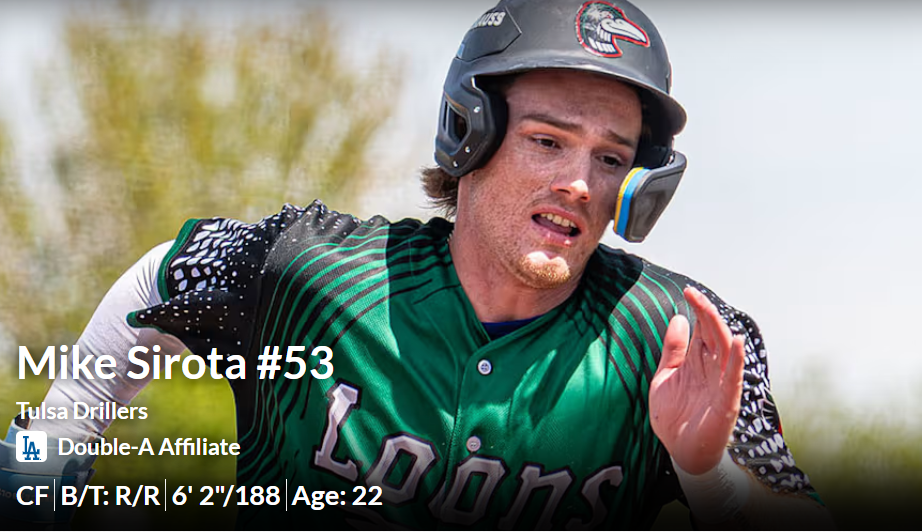
Mike Sirota has AA Breakout Night
Tulsa CF Mike Sirota went 4-for-5 with two homers, a double, and a steal on Tuesday — his loudest professional night yet. The Northeastern product has been climbing fast.
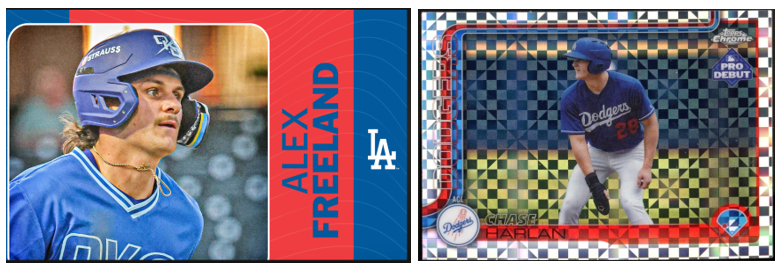
Freeland and Harlan Lead Affiliates Sweep
All five Dodgers affiliates won on Friday. OKC's River Ryan was filthy, Tulsa's Freeland threw seven shutout, and Great Lakes' Harlan went 4-for-4 with a triple.
Who is Jahmai Jones… REALLY?
Fans all over the Dodger Blogosphere are talking about Jahmai Jones as the second coming. Is he? Is he a prospect or just a suspect? Jahmai is 25 years old (he will be 26 on August 4, 2023). He was drafted in the 2nd Round of the MLB Amateur Draft in 2015 out of High School…
Speeding Up the Game
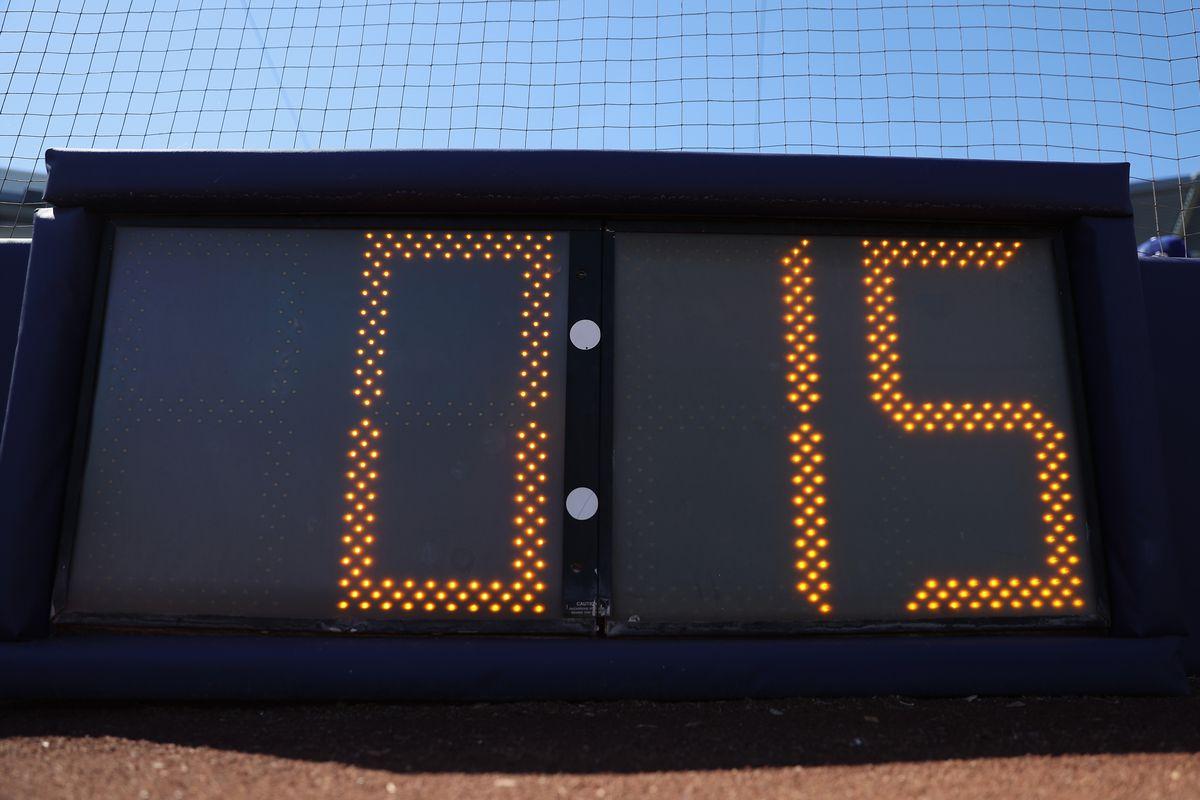
The jury is still out, but early reviews this spring training are showing that MLB has succeeded in speeding up the game significantly with the pitch clock in place. Even with other new rules that primarily address beefing up offensive numbers, the pitch clock has had the…
Discussion (35)
Disagree, not disagreeable
Bear you mean the ex UCLA football coach. Coming soon!
The Dodgers are the 2020 WS champions! I know, I’m a little late, but I had not posted it on this site and I had to let it out.
I was thinking about how long that 32 year wait was. The Dodgers won their 1st WS in 1955 and they won their 6th WS in 1988. That is 6 titles in 34 years. It helps put that 32 year wait in proper perspective. Horrible! I hereby decree that no wait for a Dodgers WS title will be any where near that long ever again. 🙂
I remember the ’55 series win against the Yankees well. I was taunted by Yankees fans constantly back then. They let me know that even though the Dodgers made it to the WS in ’41, ’47, ’49, ’52 & ’53 They still lost every one of those series to the Yankees. So, besides being the Dodgers’ 1st WS win, it also gave me a chance to talk smack to those Yankees fans. But, alas, the Yankees beat the Dodgers again in ’56. Is it any wonder that I was a true Yankees hater? Then in the 1963 WS the Dodgers won 4 straight games. That was the 1st time the Yanks had been swept in a WS and it was a great year for me.
The Lindor to LA debate continues……he is not coming to LA. That’s my story and I am sticking to it. At least not in a trade. AF does not need a switch hitting SS. He needs a RH power bat and some back end relief. Mookies new house in Encino was bought from Chip Kelly, the UCLA coach.
Just watched a video on Twitter that has to be the greatest golf shot ever. I do not even know crap about golf other than the fact I suck at it. This guy hits the ball that skips across the water hazard 3 times, hits the green off of the water and then curves around the green all the way into the cup. I was flabbergasted. My best shot ever came off of a couple of swinging logs, banking off of the concrete and into the hole.
Baseball Digest https://ballparkdigest.com/200905261902/minor-league-baseball/news/affiliate-dance-2012covered is providing updates on ballpark affiliations. The biggest change so far is the realignment of Low and High Class A leagues.
“Here’s what we’re looking at today in terms of Class A alignments:
LOW A
California League (8 teams)
Florida State League (10 teams)
Sally League (12 teams)
HIGH A
Midwest League
Northwest League
Carolina League
New Mid-Atlantic League
Well we know for sure that Stroman won’t sign with the White Sox. He stated today that no amount of money could get him to play for LaRussa. Sox getting a lot of backlash for hiring him knowing about the DUI. And 2 weeks after his hiring, he has still not contacted Tom Anderson, the teams player rep. I have my doubts that the Hall of Famer is going to connect very well with these kids. Friedman said that 9 members of the organization had tested positive. He did not say how many were players. Just how BAD are the Jets? Wow……pitiful…and they still almost beat the Brady-less Patriots.
Great stuff Jeff. I will admit I am not as knowledgeable as I should be about the minors. I just usually check to see how the Dodger kids are doing. I do think the contraction of 40 teams is going to impact some communities more than MLB wants to admit. Having attended some games when I have been in those communities there is quite the attachment for many. I just hope they get baseball in some form to compensate them for the loss.
It’s the uncertainty that is making everything so difficult in all walks of life. Tough times.
Read this earlier and although it means little I thought I’d share it as I personally would love to see it happen even if it were at the expense of re signing JT.
Open on fansided.comhttps://fansided.com/2020/11/09/dodgers-lineup-would-be-unstoppable-if-nolan-arenado-interest-is-real/?utm_campaign=FanSided+Daily&utm_source=FanSided+Daily&utm_medium=emailAwesome information Jeff. Lots to process here for my little brain. So you report the structure being:
AAA – 30 teams (Dodgers currently OKC – Pacific Coast League)
AA – 30 teams (Dodgers currently Tulsa – Texas League)
A+ – 30 teams (Dodgers currently Rancho Cucamonga – California League)
A (full) – 30 teams (Dodgers currently Great Lakes – Midwest League)
The Dodgers would have their complex rookie league team play in the Arizona League.
So it appears, if I’m looking at this right, that short A is being eliminated? That would be the 42 teams set to be chopped? This level used to be the landing spot for newly signed high school and college players signed in June. While I guess the plan is to sign less kids, would all of the June signees now start in the Arizona League?
Maybe someone above my pay grade can help my understanding.
Thank you, AC, for this very informative and well-researched article on the minor league situation.
Made me curious about the protection of MLB from anti-competitive behavior. Not sure what that means. Interesting information on the 10-year licence. Hope they are correct and the quality of travel and hotel accommodations improve.
Wishing and hoping to see minor league season next year.
I would guess you will not have many HS kids drafted. This will force HS kids into a college program. This may be good for the young kids. They can play college baseball and summer baseball. Also they may get a college education. This may be a win/win for the kids. If they go college, when can they be drafted? Is it after the second year in college?
Thanks Jeff for such an informative article. It seems if a 21 season is anything like the 20 season without fans then the whole system could come tumbling down
It seems to me that we really know very little about how this is going to come down. Evidently, the pandemic has slowed things, but I wonder if all of this can be done by the start of the season in 2021.