
Potential New Strategy in Looming CBA Negotiations
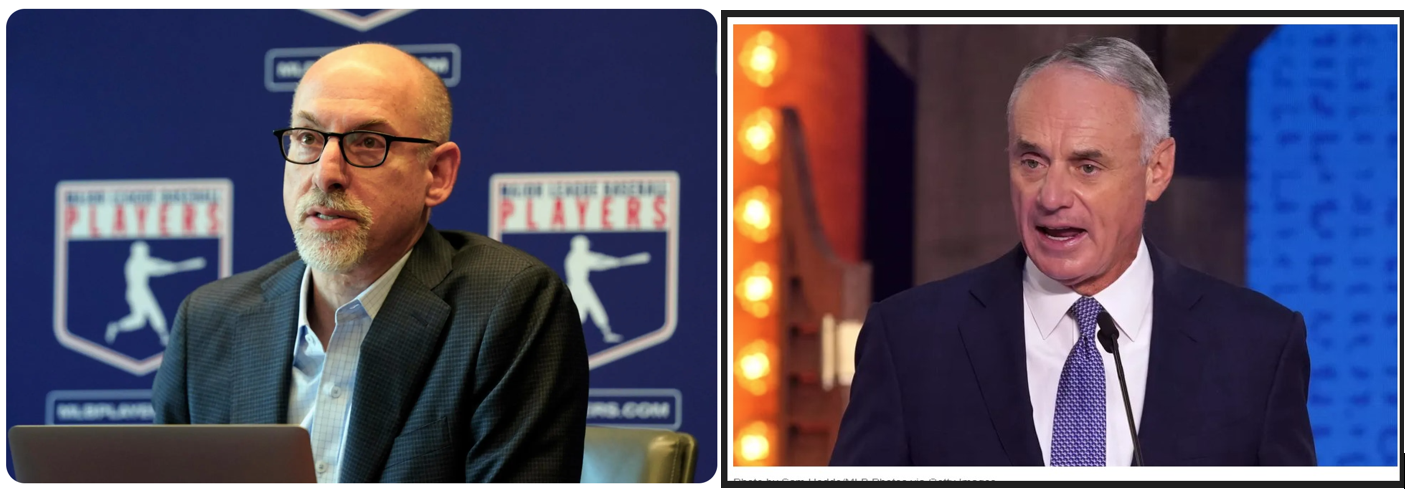
The labor negotiations could be moving into an untenable situation for the owners, and MLB is now preparing to take their argument to federal courts to combat the players proposed action of initiating what is referred to as a disclaimer of interest. This action effectively ends the MLBPA acting as a Labor Union negotiating labor issues. Instead, the MLBPA would move from a Labor Union to a Trade Association.
In effect, this strategy would decertify the Union allowing the players to sue MLB on antitrust grounds, and argue that outside of a collective bargaining framework, the lockout is an illegal group boycott. The owners could very well lose that antitrust exemption. Losing that exemption and allowing individual players to sue MLB, could require the owners to pay treble damages, or three times the players’ proven losses.
MLB has had their antitrust exemption since 1922. The 1998 Curt Flood Act partially revoked that immunity, allowing the players to utilize this strategy.
Will the players actually use this strategy? Many believe they will because the legal advisers to Bruce Meyer have successfully used it in prior Sports League labor issues, including the NFL. Many of those involved with the NFL negotiations have been Meyers’ mentors over the years.
While decertification can theoretically help small market teams relocate without the 75% supermajority of MLB team approval, MLBPA decertification also removes the non-statutory labor exemption, exposing the entire league to player-led antitrust lawsuits that would hit small-market teams the hardest. This was one of the key components of the Curt Flood Act.
The Labor Exemption Is the Real Shield. The only thing stopping the MLBPA from suing MLB over the amateur draft, six years of team control, and arbitration rules is the non-statutory labor exemption, which applies strictly because a union exists and bargains in good faith.
Union decertification eliminates the Shield. If the union decertifies, the labor exemption vanishes instantly, allowing players to sue MLB for anti-competitive labor practices.
Teams suing MLB could eliminate certain cost controls currently enjoyed by small market teams.
· The Draft and Pre-Arbitration Keep Payrolls Low. Small-market teams rely heavily on drafting young talent and paying them league-minimum salaries for three years, followed by three years of below-market arbitration salaries.
· Unrestricted Free Agency. If the union decertifies and sues to abolish the draft and service-time rules, every young star becomes an unrestricted free agent from day one.
· Outbid by Big Markets. Without draft picks or six years of team control, small-market teams could never retain young superstars like Paul Skenes or Bobby Witt Jr., as rich teams like the Dodgers or Yankees would immediately outbid them.
Under current federal antitrust statutes provided by the Sherman Act, successful plaintiffs are awarded three times their actual financial damages. If players sue over suppressed wages from the draft or service-time manipulation, MLB owners would face billions of dollars in penalties, which small-market franchises with thin profit margins cannot easily absorb.
Because of the limitation of potential larger market cities without a current MLB team, perhaps a couple of teams could relocate, but many if not most of the small market teams would suffer. Cities considered include Nashville, Charlotte, Salt Lake City, and Portland, plus some international cities.
Perhaps two or three teams could increase their value by relocating, many of the lower market teams could not afford the hundreds of millions of dollars of relocation costs and stadium financing. The remaining small-market clubs would be stuck in smaller cities facing skyrocketing player payrolls, zero roster control, and crippling antitrust legal fees.
Would you like to look at how NFL and NBA union decertification played out during their 2011 lockouts, or how the Curt Flood Act specifically changed MLB labor law?
As long as the owners are insisting on a salary cap, something the MLBPA absolutely refuses to consider, the two sides are headed for a logjam in negotiations. The NFL Union officially decertified, while the NBA lockout ended by the Union using the disclaiming interest strategy. This forced both parties back to the negotiating table. The NBA actually settled without having to decertify.
Neither union actually wanted to permanently abolish the draft or salary cap. Instead, the threat of treble damages and prolonged antitrust discovery forced owners to compromise on revenue splits and player benefits quickly.
Because MLB really does not want deal with the consequences of Disclaimer of Interest, ending the antitrust exemption, and opening MLB to player movement chaos and treble damages, this might preclude protracted negotiations. The owners are not going to give up without a fight, so I expect them to lockout the players effective midnight December 2. After that, the legal strategies start to focus, and that will determine if games will be lost. The owners are more concerned about losing team value because of a major loss of a season which would take years to recover from more than their fan base concerns. IMO, the disgruntled fan base of the small market teams is driving the discussion points of the owners. But once teams begin to devalue, that should curtail the owners’ desire to prolong the lockout, and the fan base is not as much of a priority.
Yes, IMO, the continuation of the amount of value that has been added to the franchises over the last few years will be the primary motivation of the owners in these negotiations. The fan base will get lip service in the end.
Discussion (0)
Disagree, not disagreeable
Be the first to weigh in.
Disagree, but don't be disagreeable.
Join the discussion