
Pedro Guerrero: The Backstory Behind the Dodgers' New Hitting Coach
And no, this isn't the legendary Pedro Guerrero who starred for the Dodgers in the 1980s. Same name, same Dominican hometown, different generation.
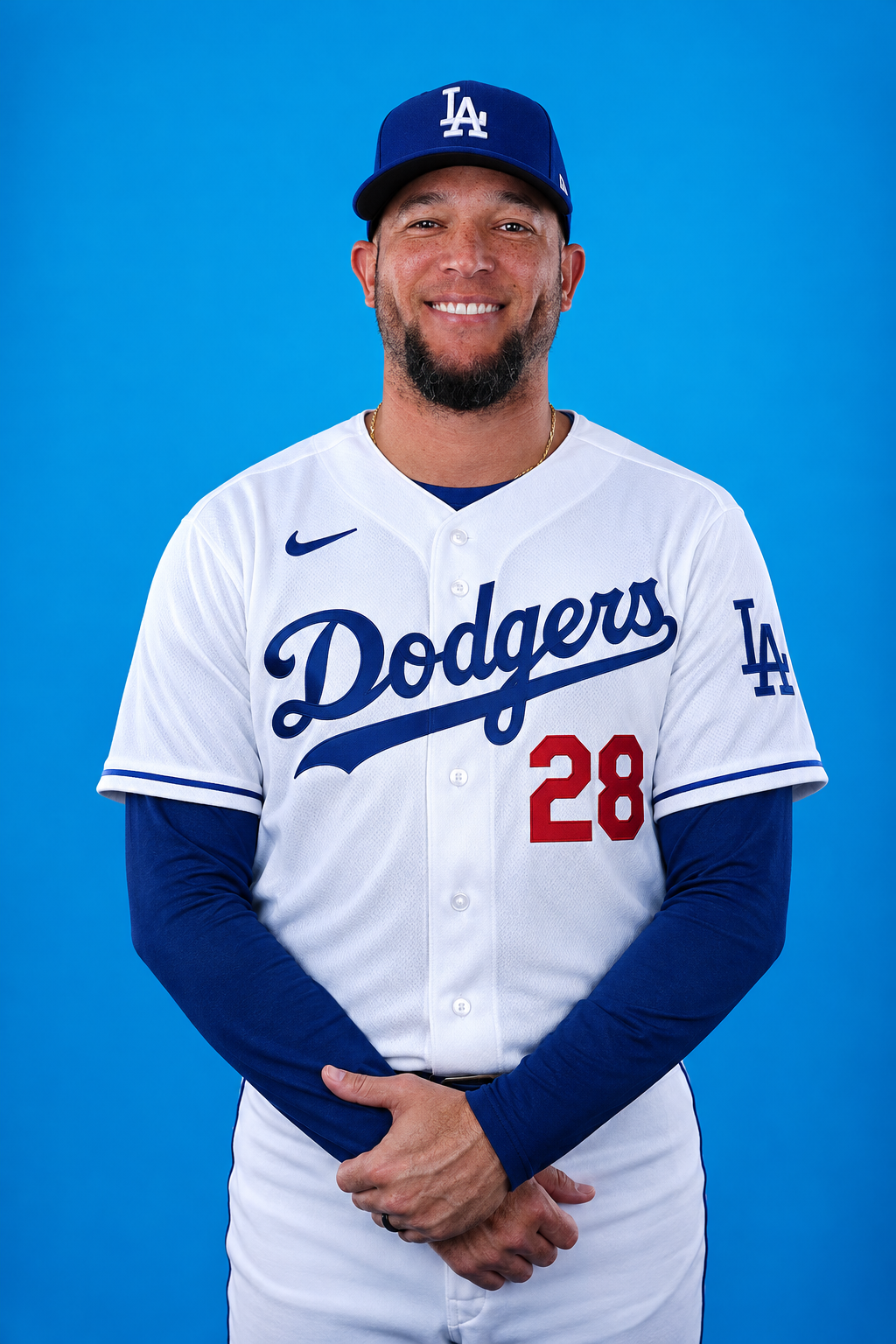
And no, this isn't the legendary Pedro Guerrero who starred for the Dodgers in the 1980s. Same name, same Dominican hometown, different generation. There are some interesting backstories here, including a reunion with the organization that developed him, a coaching connection to Gabe Kapler, an intriguing departure from Miami, and evidence that his hitting approach could complement Robert Van Scoyoc.
1. He's coming home to the Dodgers
Guerrero signed with the Dodgers in 2006 out of San Pedro de Macorís, Dominican Republic.
His playing career never really took off. In 411 minor-league games between 2006 and 2013, he hit .236 with 23 home runs and 163 RBIs. He reached Triple-A briefly but never played in the major leagues. Sometimes these guys who never made it are some of the best coaches... sometimes!
In 2016 and 2017, he returned as a bench coach at Ogden, where he helped work with young players, including Will Smith and Gavin Lux.
That means Guerrero knew the Dodgers' player-development system long before becoming a major-league hitting coach.
2. The Gabe Kapler connection
This is one of the more interesting stories.
Gabe Kapler served as the Dodgers' director of player development from 2015 through 2017, overlapping with Guerrero's coaching years at Ogden.
When Kapler became the Phillies' manager in 2018, Guerrero joined Philadelphia as an assistant hitting coach at just 29 years old, making him the youngest major-league coach at the time.
When Kapler subsequently managed the Giants, Guerrero joined him in San Francisco in 2022.
That is a pretty strong professional endorsement. Kapler had firsthand experience with Guerrero's coaching abilities and brought him into two separate organizations.
3. Miami let him go, despite improved offensive numbers
This is the biggest question surrounding the hiring.
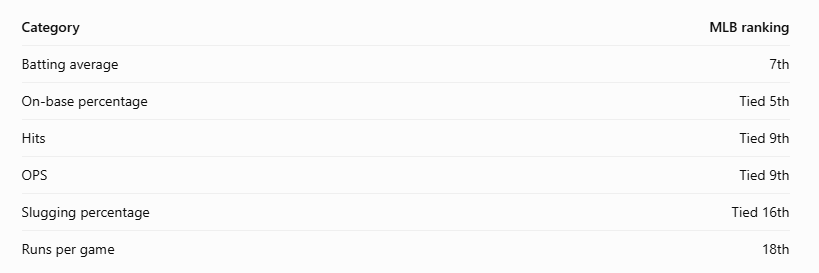
The Marlins did not retain Guerrero after the 2026 season, despite several encouraging offensive results.
The Marlins' 2026 rankings included:
Marlins president Peter Bendix praised Guerrero's work but said the club wanted a different voice in its hitting department. He also emphasized alignment between the hitting coaches and the director of hitting.
My interpretation: This sounds less like an outright rejection of Guerrero's abilities and more like a difference involving organizational structure or philosophy. But Bendix did not publicly identify a specific disagreement.
4. His uncle is former MLB manager Manny Acta
Here's a backstory that hasn't received much attention.
Guerrero is the nephew of Manny Acta, the former manager of the Washington Nationals and Cleveland Indians and a longtime major-league coach.
In an August 2025 interview with Latino Sports, Guerrero described his uncle as a consistently supportive influence on his career.
That helps explain how a former minor-league infielder developed into a major-league coach before turning 30. Baseball coaching runs in the family.
5. What is Guerrero's hitting philosophy?
This is where things get particularly interesting in light of the Dodgers' recent discussions about Aaron Bates and Robert Van Scoyoc.
Guerrero has publicly discussed patience, keeping the hitting process simple, and preparing for individual opposing pitchers. But there isn't enough public evidence to label him strictly a contact-first or power-first instructor.
Here are two interviews worth examining:
Hitting coach Pedro Guerrero joins the broadcast | 04/19/2026 | Miami Marlins
Guerrero discusses keeping the approach simple and demonstrating patience at the plate.
Pedro Guerrero on the Marlins' hitting performance | 05/10/2025 | Miami Marlins
Discusses Miami's approach to hitting against Logan Webb and his return to San Francisco.
These interviews suggest an instructor who is comfortable discussing situational preparation, but they don't clarify exactly how he'll influence the Dodgers' offensive strategy.
6. The Dodgers wanted Guerrero before Bates departed
This may be the most significant revelation of all. Dodgers GM Brandon Gomes said the organization had already been discussing bringing Guerrero back in some capacity before Aaron Bates departed. That changes the narrative somewhat.
Guerrero wasn't simply a last-minute replacement. The organization already valued him and was exploring a role. Gomes also emphasized a collaborative coaching structure, rather than a rigid hierarchy between Guerrero, Van Scoyoc, and the other hitting personnel.
Given Bates' description of receiving what he considered a noncompetitive contract offer, it's reasonable to ask whether the Dodgers were preparing to change their hitting department regardless of how Bates' negotiations ended. That remains a question, not an established fact.
7. What this means for the dodgers
I see three compelling angles:
Bates versus Guerrero: Will Guerrero bring a genuinely different philosophy, or will the Dodgers largely continue their existing approach?
Development of young hitters: Guerrero has coached in several organizations and worked with younger major-league lineups. That could matter for prospects such as Josue De Paula, Alex Freeland, Mike Sirota, and James Tibbs III as they approach Los Angeles.
Hitting for average versus hitting for power: Miami's strong batting-average and on-base rankings provide an intriguing contrast with its relatively ordinary run production. Can Guerrero help the Dodgers create a more adaptable offensive approach without sacrificing power?
The Dodgers Hired Pedro Guerrero, but Did They Hire a New Hitting Philosophy?
The story isn't necessarily that Guerrero is a better coach than Aaron Bates. Nobody can establish that yet. The story is that the Dodgers lost a respected longtime instructor, immediately hired somebody they already knew, and paired him with Robert Van Scoyoc. The real question is whether they intend to change how their hitters approach at-bats or simply change who's delivering the message.
And one final piece of irony: Miami let Guerrero go because it wanted a new voice. Los Angeles hired him because it wanted his voice.
Discussion (2)
Disagree, not disagreeable
What I thought was interesting when researching Guerrero was that there really isn't going to be a hierarchical structure with Guerrero and Van Scoyoc. Guerrero won't be underneath Van Scoyoc. They will be coequals.
I think they'll complement each other. Yeah, I read, too, that Guerrero emphasizes bringing a situational approach to a plate appearance against an opposing pitcher, and excels at simplifying the process of refining a swing in a way players understand. The Marlins praised his personality and Guerrero as a person.
I found it interesting, too, that the Dodgers approach to hitting as "approach focused" coaching is not really attributable to Van Scoyoc. Brandon Gomes is the bridge between the front office and the day to day operations. If you're going to blame someone for "SLUG! SLUG! SLUG!", I don't think it's Van Scoyoc. My impression is that Van Scoyoc is more the scientist looking at the data, analyzing video and motion capture stuff, and looking for strengths and weaknesses to work on at the field level, and that information is communicated to a Bates or Guerrero in a collaborative way. Gomes oversees the overall approach, and he reports to AF.
Guerrero was hired in part because of his understanding of the Dodgers approach, and of an "approach focused" method of coaching, which is a part of the Dodgers hitting philosophy. Gomes explains it thusly (quoted from Grok): .... ....
“Approach-focused” coaching, as described by Dodgers GM Brandon Gomes, centers on how a hitter takes an at-bat rather than just swing mechanics in isolation. Guerrero emphasizes decision-making, game planning, and building quality at-bats that help the team.
From his time with the Marlins and prior interviews, this typically looks like:
Managing the at-bat and reducing over-aggressiveness: Especially with younger hitters, he stresses learning not to swing at everything and “settling in” during the at-bat. The goal is to see pitches, understand movement, and avoid the trap of chasing early because “I have to get a hit.”
Team at-bats and connecting the lineup: He prioritizes stringing together quality plate appearances to work pitchers, force early exits from starters, and create opportunities—not just individual power or first-pitch swinging. Game plans are treated as living documents that adjust based on what the pitcher is doing in real time. Keeping it simple: He and his staff deliberately avoid overcomplicating things with too much data or information that can freeze hitters. Analytics are used to clarify strengths/weaknesses (e.g., bat speed, swing characteristics, pitch-type tendencies) and inform adjustments, but the on-field cues stay straightforward.
Situational and adaptive approach: This includes plans for different pitchers (aggressive early against certain profiles), focus on reducing chase while prioritizing contact on strikes in the zone, and targeted work on areas like runners in scoring position.
Mechanics as a supporting tool: He does work on simplifying or refining swings (e.g., increasing bat speed via programs like Stack, fixing head position or natural movement for specific players like Xavier Edwards or Otto Lopez), but these are in service of better decisions and contact quality rather than a one-size-fits-all mechanical overhaul.
In short, it is a collaborative, process-oriented style that pairs mechanical understanding with plate discipline, in-game adaptability, and team-oriented at-bats. It fits the Dodgers’ existing collaborative hitting environment alongside Van Scoyoc." -- --
Sounds pretty good to me. I don't know what the problem is, and I don't read anything here about monomaniacally focusing on pull side power or "waiting for home runs."
Can he teach? Can he problem solve?
He’s worked in the minors, so hopefully he’s a good teacher….