


When you think about the great outfielders who played the game, many come to mind, Mantle, Ruth, Aaron, Mays, Trout, Robinson, Griffey Jr., and Clemente. When you talk about great outfield arms, the list narrows some especially from the RF position. But some players are known for those cannons they possess. And the Dodgers had two of the best, and almost a third, Furillo, Mondesi, and then Clemente. Yep, he was almost a Dodger. You can add Betts, who has shown off his gun a few times in the last couple of seasons, and the more undisciplined Yasiel Puig, who had a gun, but sometimes misfired the wrong way.
Roberto was born on August 18, 1934 in Barrio San Anton, Puerto Rico. He was the youngest of seven children. His dad worked in the sugar cane fields as a foreman. Because the family’s resources were limited, Roberto and his brothers worked in the fields alongside their father loading and unloading trucks. As a youth, Clemente was a track and field star and an Olympic hopeful Before deciding to pursue baseball.
Roberto joined Puerto Rico’s amateur league when he was 16 playing for the Ferdinand Junco’s team which represented the municipality of Juncos. His professional career started at 18 when he was signed by the Santurce Crabbers, a Puerto Rican winter league team. He was a bench player most of his first season, but was a starter the rest of his time there and hit .288 his first year. In 1954 a scout from the Brooklyn Dodgers offered him a contract with one of Brooklyn’s AAA affiliates.
After signing with the Dodgers in February of 1954, Clemente was assigned to Montreal to play with the Royals. Affected early by the climate and language barriers, he received assistance from bilingual team mates like Chico Fernandez, Tommy Lasorda and Joe Black.
Black was the original target of a Pirates scouting trip to Richmond by Clyde Sukeforth. His focus quickly changed when he watched Clemente throw and hit in pregame drills. Clemente barely played during Sukes 3 day visit. But his suspicions arose when manager Max Macon said dismissively ,” Your interested in that guy?” Macon admitted 12 years later that he had been ordered by management to use him sparingly. We tried to sneak him through, and we failed. Clemente was a bonus player, and as thus, he was supposed to be kept on the active 25 man roster. Pittsburgh selected him first in the rule 5 draft on Nov, 22, 1954.
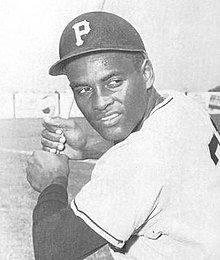
1954 was the only season Clemente would spend in the minors. For the next 18 seasons he would patrol RF for the Pirates. In the first 7 weeks of his career, he wore # 13. Team mate Earl Smith was wearing # 21. Later it was assigned to Clemente. Clemente had to sit out several games in 55 because of a back injury suffered in a car accident when his vehicle was rammed by a drunk driver. He managed a .255/.284/.382 mark with 5 HR’s and 47 RBI’s. Not what one would expect from a future Hall of Famer. But the best was yet to come.
In 1956, Clemente, who was still having problems with certain types of pitches, on July, 25, 1956, hit the only documented walk-off inside the park grand slam in MLB history. It was hit at old Forbes Field in Pittsburgh. This early in his career he was disturbed and frustrated by racial and ethnic tensions with sniping by the media and some of his team mates. He responded by saying, I do not believe in color. He also noted that while being brought up he was taught to never discriminate against someone because of ethnicity.
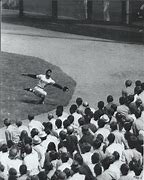
Clemente slashed .311/.330/.431 in 56. But his HR production dropped to 7. He slipped under .300 in 57 slashing .253/.288/.348, but he only played in 111 games, again his back was bothering him. Clemente, at a double disadvantage because he was Latin American with his first language being Spanish and his heritage was also part black. When he arrived in Pittsburgh, the Pirates had signed Curt Roberts, their first black player. The 5th team in the NL to do so and the 9th in the majors, 7 years after Jackie broke the color barrier. Roberts befriended Roberto and helped him adjust to the majors and the Pittsburgh area.
Roberto rebounded some in the 1958 season as the Pirates had their first winning season in ten years slashing .289/.327/.408. Power numbers rose a little, but still in the single digits. In September, after the season ended, Clemente joined the Marine Corps reserve and went to basic training at Camp Lejune in North Carolina. He served his 6 month commitment at Lejune and Parris Island. He would serve in the reserves until 1964 and rose to the rank of PFC.
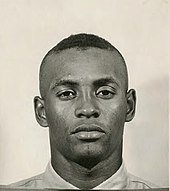
Clemente credited the rigorous Marine training with helping his back. He gained 10 pounds and and a lot of body strength. Clemente was due to be released from service in April of 59, but Pennsylvania state Senator John Walker wrote US Senator Hugh Scott requesting an early release so he could join the Pirates for spring training on March 4th. His slash line in 59 was .296/.326/.396 but he only hit 4 HR’s and drove in 50. In 1960 that would all change.
Clemente was leading the NL with a .353 average and drove in 25 in May alone. He would stay above .300 the entire year. On August 5th at Forbes Field, Clemente made a pivotable play on a drive hit by Willie Mays crashing into the right field wall, depriving Mays of a lead off extra base hit in a game the Pirates would win 1-0. The injury resulted in 5 stitches to the chin and a 5 game layoff for Clemente. Roberto had a very good year hitting .314/.357/.458 with 16 HR’s and 94 RBI’s. He also was elected and All Star for the first time. He would earn that honor 11 more times. In the series against the Yankees he hit .310, and was on base every game. He was also getting a lot of notice for his defense.
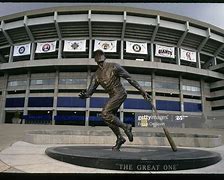
Most every winter, Roberto would play in the Puerto Rican Winter league for teams like Santurce, Criollos De Caguas and the San Juan Senadores. He also was deeply involved in humanitarian efforts in the Caribbean. In 1961 he recieved his first gold glove. He won the batting title for the first time hitting .351. He would win 3 more in his career. He won the MVP in 1966 beating out Dodger pitcher Sandy Koufax by 10 points. It was his only MVP. He would dip below .300 only once the rest of his career, 1968, a year in which he also missed the All Star selection. He stayed in double digits in HR’s the last 13 years of his career.

1970 was the Pirates last season at Forbes Field before moving to Three Rivers. Clemente noted he was sad to be leaving. He had played his entire career there. Three Rivers, like Riverfront in Cincinnati, was the new style multipurpose stadium that was in vogue. They were basically all the same, used for football and baseball alike. And they had about as much character and atmosphere as an air conditioned outhouse. Clemente was 35, slowed some by nagging injuries, but still a highly effective player. He hit .352 the last season there. July 24 was Roberto Clemente night. Several Puerto Rican fans traveled there and cheered Roberto on wearing traditional Puerto Rican attire. After the game a scroll was presented to him with 300.000 signatures collected in Puerto Rico plus several thousand dollars donated to charity in his name.
In 1971, the Pirates finished first in the East, beat the Giants in the NLCS and faced the Orioles in the World Series. Baltimore was in the series for the third straight year, had won 101 games. Their third season in a row with 100 or more. They were also the defending World Champs. They won the first two games. The Pirates would win 4 of the next 5 for the Championship. Clemente hit .414 for the series and had a solo HR in the deciding 7th game. After it was over, he was selected the World Series MBP. It was his second championship with the Bucs.
In 1972, although frustrated and hamstrung by injuries, Clemente hit .312 in 102 games. He made his 12th All Star roster, and garnered his 12th Gold Glove. One September 30’th he hit a double off of John Matlack for his 3,000th hit. It was his last regular season at bat of his career. He played one more game in RF and tied Honus Wagner for the most games played as a Pirate, 2433. In the NL playoffs he went 4-17. His last game was Oct 11, 1972 in Cincinnati at Riverfront. He and Bill Mazeroski were the only holdovers from the 1961 Champs.
Clemente had married Vera Zabala in 1964. The couple had 3 children, Roberto Jr, Luis Roberto, and Roberto Enrique. Vera would pass away in 2019. In the winter of 72, Clemente did what he did almost every offseason, he was committed to charity work. On the 23rd of December, the capitol city of Managua in Nicaragua was struck by a massive earthquake. Clemente, who had visited there three weeks before immediately started setting up relief flights.
But when he found out the first three flights had been diverted by corrupt officials of the Somoza government, he decided to accompany the 4th shipment himself. He hoped his presence would ensure delivery of the goods to those who needed it most. He chartered a Douglas DC-7 cargo plane. The plane had a history of mechanical problems and a insufficient number of flight personnel, missing a flight engineer and co-pilot. It was also over loaded by 4200 pounds.
The plane crashed immediately after take off due to engine failure off the coast of Isle Verde, Puerto Rico. A few days after the crash the body of the pilot and part of the fuselage of the plane were found along with a empty flight case apparently belonging to Clemente, the only personal belonging found.
Team mate Manny Sanguillen was the only Pirate team mate who did not attend the funeral. He chose instead to dive in the waters and try to find Clemente’s and the others remains. Roberto’s and three others who were on the plane were never recovered. Expos pitcher, Tom Walker, who had helped Clemente load the plane and was single, was told by Clemente not to join the flight, but to go have a good time. Vera his wife mentioned that Roberto had told her several times that he was going to die young. He was just 38 at the time of the crash.

On the 23rd of March, 1973, the Hall of Fame held a special election voting to waive the waiting period for election to the Hall and Clemente was elected with 393 out of 420 possible votes for posthumous election, 92.7%. What I would like to know is what those 27 who did not vote for the guy were thinking. His original plaque read, Roberto Walker Clemente instead of the proper Spanish format, Roberto Clemente Walker. It was recast in 2000 to correct the error.
Clemente has been honored in many ways. His number 21 was retired by the Pirates in 1973. He was given the Congressional Gold Medal by Richard Nixon in 1973 and also the Presidential Citizens Medal. George Bush awarded him the Presidential Medal of Freedom in 2003.
Outside of being in the hall, the Commissioners Award was changed to the Roberto Clemente Award. This award is given to players who have outstanding baseball skills and are personally involved in community work. A trophy and a check to the charity of the players choice is presented during the World Series. A three man panel makes the final choice from a selected list of players. The first to get the award under Clemente’s name was Willie Mays. Two Dodgers have won, Steve Garvey in 1981 and Clayton Kershaw in 2012. Justin Turner was the Dodger candidate in 2021.
Baseball also has a Roberto Clemente day on September 9th. All Pirates wear # 21 on that day. MLB players of Puerto Rican decent can also wear the number. There has been a push by some Latin groups to retire #21 across the majors, but as of yet, it has not happened.
Amazing to me, this is the 120th article I have written for LADT. Wow. Think I will celebrate with a cold Sam Adams Octoberfest! I just wish I could have seen a Dodger outfield with Clemente, Snider and Furillo. That would have been one of the greatest outfields to ever play the game. Try to get sneaky, you often lose.
Branch Rickey brought Roberto over to the Pirates. How ironic is that?
Very, and he was told about him by Clyde Sukeforth, the coach who scouted Jackie Robinson. Sukeforth had moved to the Pirates around the same time Rickey did.
What goes around comes around.
It sure does. But what an outfield that would have been.
That would have been an exceptional outfield both hitting and fielding. Three top arms in one outfield.
I always thought Carl Furillo was vastly underrated. d
Clemente has always been my favorite player I never saw play.
Bear, the reliever is Nick Robertson. Good sleuthing.
Waiting around until 3pm, when the UFC fights begin.
Slow sports day . . .
Yeah I remember that kid from a couple of spring games last year. He was pretty impressive.
MLS Cup championship game still playing.
Am I the only one who feels like we have about a 5% chance of re-signing Jansen? I think the writing is all over the wall and he is gone gone gone.
(Unless his market craters and he comes crawling back for a cheap one-year deal.)
I never really know what will happen but I think perhaps it will depend on how long a contract he will settle for. He is 34 and the Dodgers have other options. They might sign him for a one or two year deal but no longer.
I do not think he is going to get what he thinks he should get. And I have felt all along that LA feels comfortable without him.
This from last January re: Nick Robertson.
https://ladodgertalk.com/2021/01/13/nick-robertson-a-look-back-updated/
He had a troublesome July but was quite good in August and very good in May, June and September.
On the season 3.53ERA/ 1.23 WHIP 39 games, 58.2 IP, 63 K, 17 BB.
I would not be surprised to see him return to Tulsa in 2022 and make his way to OKC by mid-season.
K to BB ratio is 3=1. Not too shabby. I just remember him in spring bringing some serious stuff into the game.
Does the lockout affect the Winter Leagues, or can players sign and play during the off season with a team in Caribbean? Only if on 40 man roster?
Winter leagues are not affiliated with MLB so players can play if they want to. Pujols is playing in the Dominican winter league.
Hola Oso bonito artículo sobre un ícono del beisbol latino, extraordinario jugador y mejor persona. No conocía muchos detalles que usted menciona en su ilustrativa narración de Roberto, felicidades.
Una pregunta cuando se vuelven a sentar a negociar la directiva sindical y Manfred y los propietarios?
He’s on the roster for a reason.
He looked very good at times last season so he should have a shot.
Nationals signed Dee Gordon to a minor league deal.