

In 1947 Jackie Robinson broke the color barrier by becoming the first person of color to play in the major leagues. But it almost happened in 1901. John McGraw wanted to sign a light-skinned Negro named Charlie Grant to play for the Giants.
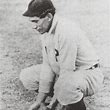
Now baseball back before the 1900s was filled with white players who had a deep-seated prejudice against blacks. And for years there had been a so-called, gentleman’s agreement to keep black players out of the game. This agreement was fueled by the game’s first real superstar, Cap Anson. Before there was an AL and NL, the American Association was a major league.
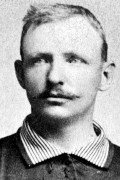
Anson’s career began in 1871, six years after the end of the Civil War, he was 19 years old. He was born in Iowa. He was also a racist and a segregationalist. Since he was the prominent player in the league, his bigoted opinion carried a lot of weight. He played for the Chicago White Stockings, the fore runner of today’s Cubs. They were in the National Association. In 1883, the Stockings were to play the Toledo team of the Northwest League. Anson learned that Toledo had a black catcher named Moses Fleetwood Walker and refused to take the field if Walker were allowed to play. Walker was not scheduled to play that day, but upon hearing Anson’s demands, Toledo’s manager, Charlie Morton decided to play Walker in the outfield. Anson eventually agreed to play so he would not miss out on his share of the gate.
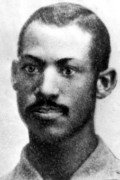
When Toledo moved to the American Association in 1884, they were scheduled to play the White Stockings again. Chicago requested assurance that no player of color would take the field against them in the exhibition. Walker had not played the previous three games, so the request was really not needed. But the end result of the Anson-Walker ordeal was the most shameful period in the history of the game. For the next 63 years, MLB conspired to keep black players out of the game. While it is true this Gentlemen’s agreement denied many players the chance to compete at the highest level of the game, it does not fully encapsulate the injustice and moral indignity it caused. Despite that, a handful of black players played in organized white baseball before Robinson broke the barrier in 1947.
Walker played in 42 games for Toledo in 1884 slashing .283/.325/.316, which was good for a 107 OPS+ second on the team. Walker was praised for his defensive capabilities behind the plate, and despite his rough debut behind the plate, he fashioned a pair of makeshift wooden shin guards years before Roger Bresnahan developed his.
It was not just Walker’s opponents who did not want blacks playing, some of his own teammates were against it and disliked him. Toledo pitcher, Tony Mullane would intentionally throw pitches in the dirt trying to injure his battery mate. Walker was injured several times including fractured ribs. This also led to him leading the league in passed balls with 72 in 41 games. He played one game in the outfield. Mullane also refused to respond to his signals, so Walker would catch him without knowing what was coming. Mullane would later say, he was the best catcher I ever worked with. High praise from a devout racist.
Walker’s post-baseball career is pretty fascinating. College-educated, after playing some minor league ball, he retired and became a businessman and inventor. He had several patents. In 1891 he was charged with second-degree murder after he stabbed and killed a white man who had attacked him. He was acquitted by an all-white jury. After the turn of the century, he became a supporter of Black Nationalism and in 1908 published a widely read pamphlet called ” Our Home Colony” which predated Marcus Garvey’s rise to prominence in the movement.
Although Walker is remembered by historians, he was not the only black player on the Toledo team. His brother, Weldy Walker, was signed in July as a roster filler. He only played in 5 games, and they never appeared on the field together. Weldy was also highly educated and after his retirement from baseball, he became a businessman and political activist. He later became a bootlegger and ran a gambling house. Most of what is known of Weldy comes from a book written about his brother by David Zang in 1995 titled, Fleet Walkers Divided Heart. The Walkers would be the last pair of black teammates until Hank Thompson, and Willard “Home Run Brown” teamed together on the 1947 St. Louis Browns.
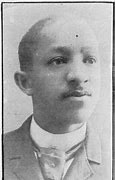
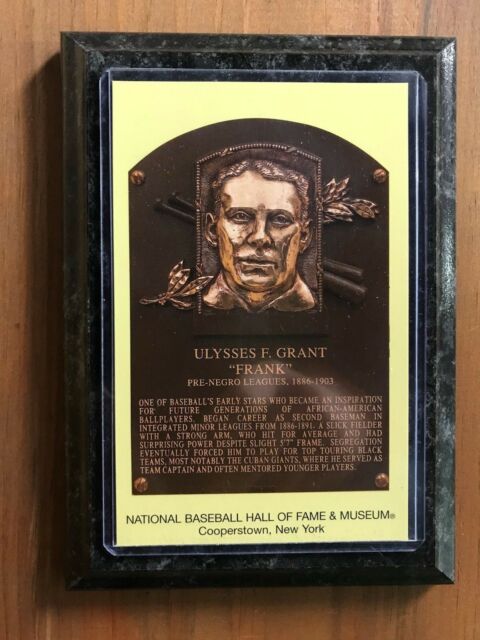
While the Walker brothers were the only black players in the major leagues, some blacks played in the white minor leagues while the “Gentleman’s Agreement” was in place and before the color line became firmly established. The most notable of those players was second baseman and Hall of Famer, Frank Grant.
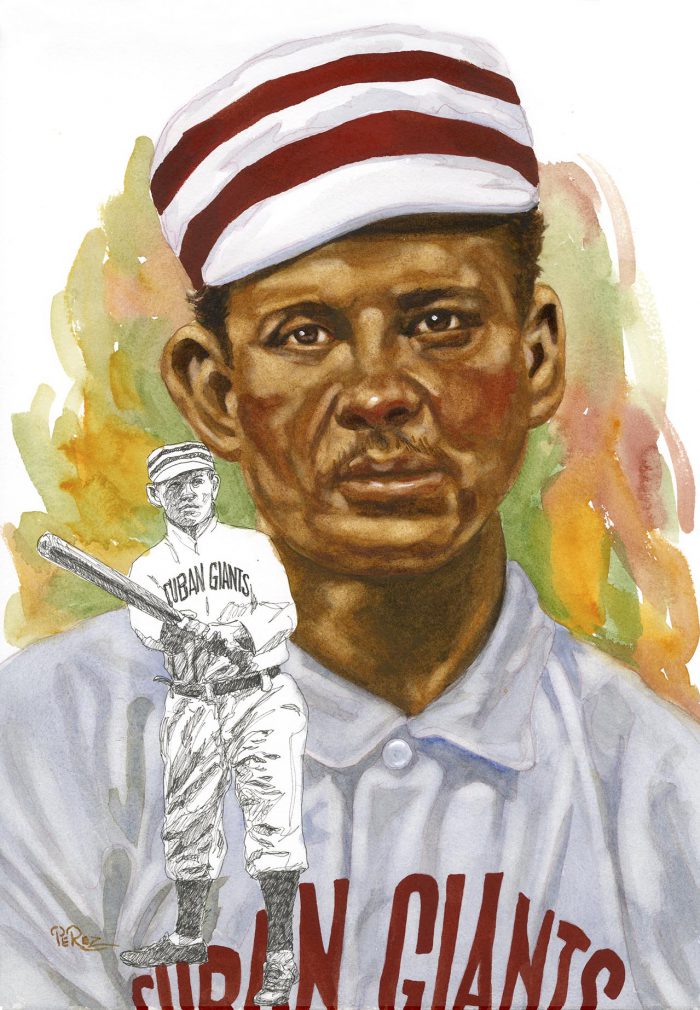
Grant played three seasons for the Buffalo Bisons from 1886-1889 and was the only black player in organized white baseball to spend three seasons with the same team until the 1940s. Grant who originally tried to pass for a Spaniard was a very good ballplayer. He was called the “Black Dunlap”, drawing comparisons to Fred Dunlap who was white and also a second baseman. Minor league records being what they are, there are no career stats for Grant, but Baseball-Reference has him as hitting .346 with 11 HR’s in 347 at-bats in 1888 as a 22-year-old.
While Grant was with Buffalo, the tipping point was reached in terms of blacks being formally banned from organized white baseball. On July 14, 1887, the International League voted to ban any additional signings of black players by it’s clubs. Black players in the league, George Stovey, Bob Higgins, Grant, and Walker, were allowed to stay with their teams. That same day, there was a third incident with Walker and Anson. Walker and Stovey were scheduled to be the battery for the Newark Little Giants against the White Stockings. Once again, Anson refused to take the field with black players, but unlike Walker’s former manager, Charlie Morton, who had stood up for his player 4 years earlier, Newark’s manager caved into Anson’s demands and removed his players from the game.
Grant resigned with Buffalo in 1887 and even held out for a while for a raise to 250$ a month. He was popular with the team’s fans, but not so much with his teammates who refused to sit with him for a team picture. After 1888, Grant left Buffalo and played in the Negro Leagues until 1903. Unlike the Walkers, Grant stayed out of the spotlight and worked various service and labor jobs until he passed away in 1937. One of the best ballplayers, black or white of his generation was buried in East Ridgelawn Cemetery in Clifton New Jersey in a grave that remained unmarked until 2011
John Montgomery Ward tried to get the owner of the Giants to sign George Stovey after the 1887 season. Stovey, a dominant LH pitcher had impressed Ward. But when opposing players and owners, led by none other than Cap Anson got wind of it, the Giants owner, John Day backed down. Stovey would continue playing in the minors until 1897 and then umpired in his native Williamsport PA until at least 1913. He worked odd jobs and like Weldy Walker dabbled in bootlegging. He passed away in poverty in 1936 of a heart attack.
One of the stops along the way for Grant and Stovey was the Middle States League in 1889 which was a mostly white league that featured two all-black teams, the New York Gothams and Trenton Cuban Giants. The league’s status as being a part of organized baseball is in question, and it has been called an outlaw league.
Over the years there were several black players who tried to pass themselves off as Cuban, Native American, or dark-skinned whites. Most of the time, the ruses were found out and the signings nixed. One that did play was George Treadway.
Treadway claimed Native American ancestry and lasted in the National League for 4 seasons, 1893-96. Toward the end of his rookie season with Baltimore, the Louisville Courier-Journal published an article saying he was black. Treadway denied the allegations, and two separate investigations, one by the team and the other by the Baltimore Afro-American determined the story was untrue. But that did not stop fans from hurling racial insults.
Before the 1894 season, he was traded to the Brooklyn franchise for stars Dan Brouthers and Wee Willie Keeler. He played two years for the team that would become the Dodgers hitting .330 with 102 RBI’s in 84 and slipping to .259 in 85. He then finished his career in the majors with the Louisville Colonels. Although his MLB career was over, Treadway played in the minors until 1904 when he retired at 37. His disappearance from the majors was definitely because of the rumors. Another innocent was tried in the court of public opinion.
Those rumors were supposedly started by a former teammate who felt slighted when he went to the majors and tried to discredit him. Those rumors destroyed his career. But he was not the only player accused of having black ancestry, Babe Ruth had unsubstantiated rumors spread about him being black. Ty Cobb refused to share a room with him because of the rumors.
John McGraw’s attempt to pass Charlie Grant off as an American Indian named Tokohoma died a quick death in 1901. When the story broke that Grant was black, McGraw and Grant denied it, but White Sox owner Charlie Comiskey was not buying it knowing Grant had played for a black team in Chicago, the Columbia Giants. Comiskey declared, if McGraw plays his Indian, I am putting a Chinaman at 3rd base.
The eventual demise of the “Gentleman’s Agreement” had its seeds sowed in the early 1940s with several events. In 1942 Bill Veeck supposedly tried to buy the Philadelphia Phillies and fill the team with the best black players. But that went south when he told commissioner Mountain Landis, a known racist. Anyway, the story goes that the league refused to sell the team to Veeck.
Various other teams in the minors tried to sign some black players, but either the owners or the league disallowed the signings. Jackie Robinson, Sam Jethroe, and Marvin Williams all worked out for the Red Sox coaches in 1945. But it would be 14 years before Boston had their first black player, Pumpsie Green. Jackie signed in 1946 and played his first game in 1947. Others soon followed with Lary Doby the first black in the American League with Veeck’s Indians in July of 1947. Both Jackie and Doby are of course in the Hall of Fame.
The number of blacks in the majors has always fluctuated, but it has become a point of contention since the number has dipped and is at its lowest point in years. Young blacks would rather chase the riches earned early than labor in the minor leagues for who knows how long before getting the call. MLB’s salary for rookies is about 565,000$ a year. Rookies in the NBA and some high football draft picks to make a lot more money than that. Plus it takes 6 years to reach free agency in baseball.
This article is to remind us that all players have roots they come from. Most fans and players alike have no clue who these guys were and what they went through to play a game we all love. They loved it too, and they were pretty good at it. And they were belittled, shunned and then banned simply because they were different. Unfortunately, baseball is not the only place where that happened.
Another great history lesson OldBear! Very sad and dark bit of history that’s hard to conceptualize in today’s frame of reference. I’m very proud that Jackie and the Dodgers got it right and finally stood up for the black players. I admire Jackie more than perhaps any Dodger ever because of his courage to go out there and the way he handled it with class and character and the greatness he displayed on the field. A lot of credit goes to the organization and teammates as well for accepting him as a teammate and standing behind him and supporting him through the start of such a huge change that was bigger than baseball.
Thank you BP, I really appreciate it. I had read years ago about black players who tried to make it in the early years and decided I really needed to research it and get the story. One of my favorite baseball movies is 42. It sticks to the facts and does not glamorize Jackies trials as a player that first season.
Great article! Makes me want to do a little more reading on Fleetwood.
Branch Rickey and Jackie Robinson both displayed a lot of courage …and they did it the right way. Robinson changed hearts and minds by suppressing the natural impulse to react with anger and retribution and grievance. He earned respect and won people over by displaying dignity and restraint. That wasn’t his natural temperament, either. He had a strong sense of moral indignation and was not afraid to be combative. I don’t think I could’ve done it.
Rachel Robinson, amazingly, is still alive.
Thanks. After he established himself and won his team mates over, by the second season he had some real confrontations with his tormentors and he never backed down.
Nice job, Grizzley!
You are the consummate historian!
Thank you Mark, I try.
From Houston Mitchell (free stuff):
Hi, and welcome to another edition of Dodgers Dugout. My name is Houston Mitchell and let’s take a look at free-agent activity because there might not be any more signings for a while.
The big news: Max Scherzer signs with the New York Mets for three years, $130 million and Corey Seager signs with the Texas Rangers for 10 years, $325 million.
The reaction here: Yawn.
Let’s take them one at a time.
Max Scherzer is a great pitcher. Finished third in NL Cy Young Award voting. A future Hall of Famer. But he’s 37 years old, is coming off a “dead arm” and is not worth $43 million a season. He signed with a team desperate to make a splash. The Dodgers are not a desperate team. He came here, did what he was supposed to do, wore out in the playoffs and we wish him well in the future against everyone other than the Dodgers.
Corey Seager leaving hurts a little just from the standpoint that he started here, we watched him mature into a solid player and it’s sad to see him go. At one point during spring training, the Dodgers offered him eight years, $250 million. He said no.
Seager is really good when he plays, but the question is how much he will play. He’s injury-prone. The Dodgers played 546 games over the last four seasons. Seager played in 307 of those, or 56.2%. He was injured almost as much as he was healthy. He is average at best on defense. And the Dodgers have someone ready to replace him: Trea Turner.
Let’s compare Turner and Seager since 2016, which is Seager’s first full season in the majors. In parentheses will be where they rank among the 23 shortstops who had at least 2,000 plate appearances in that time.
Batting average
Seager: .295 (3rd)
Turner: .304 (1st)
OB%
Seager: .364 (1st)
Turner: .359 (3rd)
SLG%
Seager: .501 (2nd)
Turner: .495 (3rd)
Home runs
Seager: 100 (9th)
Turner: 102 (8th)
Stolen bases
Seager: 10 (23rd)
Turner: 201 (1st)
WAR
Seager: 19.7 (10th)
Turner: 24.5 (5th)
Defensive WAR
Seager: 2.3 (17th)
Turner: 4.3 (12th)
Fielding %
Seager: .969
Turner: .973
They are pretty evenly matched. And while it would be better to have Seager and Turner in the lineup, the writing was pretty much on the wall as far as Seager goes when the Dodgers acquired Turner. They must have seen this coming.
The Dodgers don’t win the 2020 World Series without Seager. He deserves a hearty ovation when he returns to Dodger Stadium one day. But the Dodgers will be fine without him.
For those of you upset, thinking the Dodgers aren’t nearly as good as they were, you are correct. As of this moment, they aren’t as good as last year’s team. But the offseason isn’t over yet, and you can bet they don’t begin spring training with the roster they have today. There are still a couple hundred free agents out there. Before we throw in the towel on next season, let’s wait and see what the team looks like in spring training.
The good news is the Dodgers did re-sign Chris Taylor to a four-year, $60-million deal. This brings back one of their most valuable players. The importance of his return can’t be overstated.
That leaves us with Clayton Kershaw and Kenley Jansen as the big Dodgers names still out there. Kershaw is deciding between the Dodgers and Texas Rangers. Jansen is in talks with the Miami Marlins.
Let’s look at a potential starting lineup if the season started today:
C-Will Smith
1B-Max Muncy
2B-Chris Taylor
3B-Justin Turner
SS-Trea Turner
LF-AJ Pollock
CF-Cody Bellinger
RF-Mookie Betts
Here’s the problem area: The rotation. Let’s look at the official depth chart on dodgers.com:
Walker Buehler
Julio Urías
Tony Gonsolin
And that’s it. That’s a little thin. You can round it out with Andrew Heaney, David Price, Andre Jackson and that’s about it. Dustin May should be back after the All-Star break.
But again, keep in mind the big takeaway: It’s the first week of December. This is not the roster the Dodgers will have when the season begins. No reason to panic or worry. Yet.
Another reason Seager might have taken the Texas deal: Texas has no state income tax. California has the highest state income tax in the nation. In order for Seager to sign with the Dodgers and make the equivalent money he is getting with the Rangers, the Dodgers would have had to give him $401 million. An extra $76 million. There’s no reason to blame Seager for taking the money and running. There are cries of “disloyal” out there. Loyalty is a two-way street. The moment a player has no more value to a team, they release that player. It’s a business, might as well realize that and accept it for what it is.
The collective bargaining agreement expired at 9:01 p.m. PT on Wednesday, and the owners voted to lock out the players. That means no more free-agent signing or trades until a new collective bargaining agreement is reached. No contact between players and teams at all. Players can’t work out at team facilities.
Again, not a time to panic. No one is really losing that much money when there’s a lockout during the offseason. If the lockout extends to spring training, then there’s trouble.
A couple of things that will probably be agreed to with the new contract: Expanded playoffs (either 12 teams or 14) and a DH in the National League.
Here’s the big problem with a lockout though, especially if it extends into spring training or the season. We are (hopefully) nearing the end of a global pandemic. Almost a million people have died in the U.S. alone. Tens of thousands of people lost their jobs when businesses shut down, and many of those jobs didn’t return. People have been struggling with trying to make ends meet and with the loss of loved ones. The last thing most people want to see are billionaires and millionaires fighting over who can make more money. Yes, the baseball dispute is far more complex than that, but that is how the majority of fans view it.
Baseball is supposed to be a distraction from life’s struggles, not a reminder of them. Let’s hope there are people on both sides who remember that and that a fair and equitable solution is reached soon.
Turns out Max Muncy, who injured his elbow on the final day of the season, was hurt more than he was letting on. He had a torn UCL in his left elbow. “Torn UCL is a slow process,” Muncy said during an MLB Network interview with Alanna Rizzo. “But we’re coming back, everything’s going according to plan, and thankfully, it is the offseason, so we can come back from that.”
If Muncy is out an extended period of time and misses the first part of the season, that would open up some playing time for Gavin Lux.
Gonsolin should not be listed as #3 on any SP depth chart. If he’s lucky, he’ll be given the chance to be a #5.
Gonso healthy is a solid 3. The problem is he’s never healthy.
My feeling is that if Gonzo is the Dodger #3 this year we are in big trouble. I view him more as, hopefully, a #5 .
I agree with a lot of this. This is practically the same lineup as last season with Trea instead of Seager. I think Seager is a better hitter overall with all those doubles and with Trea’s speed boosting his batting average, he doesn’t seem to make as much hard contact as Seager. But, Trea adds a lot of value over Seager on the bases and is a bit better defensively. I call that a wash overall.
With Chris Taylor back in the fold, it will allow the Dodgers to bring Lux along without having to bank on his success. Lux can sit against lefties and CT3 can play all over the field against righties. Belli can play first if Muncy comes along slowly and Lux and CT3 can each play Center Field in that scenario.
Eddie Rios isn’t getting any ink, but I think he’s primed for a breakout. He hit with average and power his entire minor league career and worked hard on his defense. I can see him getting some time in LF, 3B and 1st base especially with Muncy nursing an injury. I choose to completely ignore last year’s numbers due to that bum shoulder that ultimately cost him the season. We saw what the shoulder issue did to Belli and saw Belli start to get back to normal towards the end of the season. I don’t think the recovery will be as much of a problem for Rios since he had his surgery at the beginning of year. Belli didn’t even start swinging a bat until Spring Training. Eddie has already began swinging and thinks he’ll be ready to go by Spring Training.
AC is right that most players don’t break out at age 28. But, that doesn’t mean there aren’t enough examples to contradict that notion. Eddie had two very good years in limited action as a 25 and 26 year old. I don’t think a Jason Werth type breakout is out of the realm of possibility. Mitch Haniger and Brian Giles started later, but had more opportunity and paid huge dividends. So, not only can you get a late start, but you can also become star players after a late start. I’m sure there’s many more examples, those are just off the top of my head. I would also look to Jacob DeGrom, but I chose just to consider other position players to compare to Eddie.
I find it particularly odd that Houston Mitchell didn’t even mention Bauer anywhere in the article. It strikes me even more so because I was listening to a David Vassegh interview about Freddie Freeman when the hosts of the show turned the subject over to the pitching staff. The only mention of Bauer was when one of the hosts ever so softly mentioned his name at the end of the interview. No further comments. It’s like people are instructed not to talk about him.
Muncy having a torn UCL is another offseason dilemma that’s hard to put a finger on. I wonder if he got a platelet rich plasma injection. There’s no coverage on his injury except a quote from Muncy that seemed to surprise everyone. The curious thing about his injury is that it’s on his glove side, so it won’t affect his throwing and since he’s a lefty hitter, it’s also not on his lead elbow. That seems ideal to me, but I’m not a physiologist. But, it seems like 5 months should be enough time to recover especially since it wasn’t deemed necessary to perform any kind of surgical procedure.
The biggest thing in the Labor Agreement that will hurt the game, IMO is the potential for expanded playoffs. As we all know, baseball is a marathon of season with the Dog Days of summer a real thing where players start to burn out with fatigue and the build up of minor injuries that seem to compound. When the Dumbass in charge reduced September rosters to 28 players, there was a ripple effect of unintended consequences and the biggest being that 1) Minor Leaguers didn’t get call ups which add to their service time and 2) MLB players got that much less rest down the stretch. Both of these outcomes were bad for the players and what did this new rule actually resolve?
The same will be true with expanded playoffs. Looking ahead, teams with the best record that get a bye will lose their first series against inferior teams due to getting iced by not playing for a week or so. Baseball players don’t like multiple days off. Starting Pitchers don’t like their routine being altered and hitters lose their timing during long layoffs. There will also be even more injuries due to the longer seasons with more games played and the consequential shorter offseasons. And for what? Just to give worse teams more showtime? This will also kill one of the most interesting times of the year, the trade deadline. Again, what problem does this solve?
If you want to give small market teams a better chance to get to the playoffs, you should let them keep their players longer and give them more revenue sharing so they can afford to pay their players during arbitration years. But, this is possibly just about money. Playoff series get higher ticket prices, parking and national broadcast revenue in the short run until interest naturally subsides when the best teams aren’t ultimately playing in the championships.
I’m keeping my fingers crossed that the decision that are made don’t ruin the game. Unfortunately, I don’t think they’re going to improve things based on recent performance.
Excellent analysis by Houston Mitchell. Thanks for posting this, Mark.
Although no mention of Bauer in the roster analysis, his availability or even his suspension will help the Dodgers roster. Ozuna received only a 20 game retroactive suspension when his wife called 911, he is on video grabbing his wife’s throat, he was actually arrested, charged with crimes, and pleaded guilty. Bauer was placed on administrative leave on July 2, for 80 games in the regular season and 12 playoff games. With no charges filed after 6 months by Pasadena police, and a judge denying the restraining order request, it would seem that Bauer has to be reinstated with at most a retroactive suspension similar in length to Ozuna.
If the Dodgers simply resign Kershaw, add Bauer to the rotation, and sign Kenley Jansen or another reliever, I think they have the best roster in the League.
Also, wouldn’t be surprised if Dodgers add another pitching reclamation project like Duffy, Nelson, or even Greinke as an insurance policy. And strengthen the bench with another corner infielder or utility player.
While I would love to have Freeman, I don’t think it is reasonable for him to leave Atlanta.
Overall, the Dodgers are still in a good position to compete for a World Series title, despite the losses or Seager, Scherzer and other free agents.
I think I might finally be falling under MT’s spell. I’ve been thinking about this hollowed-out rotation of:
Buehler
Urias
Heaney
Gonsolin
and wondering if we couldn’t somehow sneak Bauer back into the middle of it. Honestly, knowing LA, he’d have to apologize, pledge a donation to battered women’s clinics and just shut up and pitch.
But, it would solve some roster issues.
This team has underachieved for years and years. Screw giving them a comfortable dugout. Time to go for the jugular.
Agree with this – and Houston Mitchell. I’m with you on Bauer. I’ve been saying pretty loudly that Bauer would/should be gone, but as time goes by and there is nothing from the Pasadena DA, and Ozuna gets a 20 game suspension for chocking is wife on video in front of police, I don’t see how Bauer gets a suspension.
As I said yesterday, I will eat crow and acknowledge Mark was right and I was wrong if Bauer is reinstated.
That said, from a PR perspective, there are still impediments to Bauer pitching for the Dodgers again. The Molly Knights and Dustin Noslers will go insane. Still, if he is NOT suspended without pay by Manfred, and if the Dodgers really want to eviscerate the depth of the starting rotation that badly to avoid some bad publicity, they now are in the position of having to trade him and his 35 million dollar salary to some other team that wants to assume that PR headache. The only way that happens is if the Dodgers eat so much of his salary that they are basically giving him away to another team and picking up the tab.
So we wait. If the DA decline to press charges, with the Ozuna precedent (still no stare decisis in baseball, Mark), it will be hard for Manfred to suspend him, and if he does, Bauer will no doubt take legal action himself, which will create all kinds of new PR headaches that both Manfred and the Dodgers will want to avoid.
Kershaw would be a nice cushion, but with Bauer the Dodgers are not in the position of having to rely on CK and his bad back, dodgy elbow, reduced velocity and age. It’s beyond time to be relying on Kershaw. If he stays, I’m ok with it. If he goes to Texas, I’m ok with it. If he retires, I’m ok with it.
yeah, it’s all PR at this point
but it’s amazing what time does
hell, i’d be ok if he was suspended by us or the league for half the season and we got him and May back in time for the postseason
… and you have to kiss my signet ring!
The Cap Anson/Fleetwood Walker story was very interesting, had no idea.
“Baseball is suppose to be a distraction from life’s struggles, not a reminder of them.”
Mark pretty much nailed it with those words. But I seriously doubt that means much to either side. The players obviously want the best of all worlds. A chance to become a free agent sooner and more pay for second and third year players or a quicker road to arbitration.
Then they want the chance to land the $200 to $300 million dollar deals, the best of all worlds from a player perspective. I agree with Rob Manfred that earlier free agency would create greater harm to small market teams. Even for a team like the Dodgers, how many monster contracts can you absorb? Not sure any of this is good for fans. I’m guessing MLB holds firm on the original pillars, free agency and a player’s early years.
Offering to remove compensation when a player reaches free agency would seem to remove an obstacle which could benefit mid level players. The shake up in terms of moving to a new system with the draft would seem to add another benefit in terms of competitiveness issues.
As to why Corey Seager took the Texas deal, doubt it had much to do with taxes, more like the Dodgers didn’t budge and were nowhere close to the $325 million the Rangers offered, according to a story in the Times. I believe state taxes relate to where games are played so it’s somewhat more complicated and harder to calculate.
The contract for Seager is beyond a bad deal for the Dodgers and as much as I will miss his bat, the Dodgers were smart to pass. The Rangers seem to be a few years and a pitching staff away from competing, while the Dodgers are in the hunt every year. If the Dodgers win the World Series next year, Seager will be sitting on the couch, watching them celebrate.
I think in Andrew Friedman’s mind, the Dodgers made a huge offer in spring and no doubt Scott Boras urged him to pass, the Dodgers will up the the deal. They apparently didn’t and now he gets to play in Texas, probably not his first choice. The Dodgers obviously took the steam and urgency out of making a long term deal for Seager with the trade for Trea Turner.
Looking at the comparison, I wouldn’t mind seeing them sign Turner long term. He’s one of the reasons I still enjoy going to Dodger Stadium, just a fun player to watch.
Interesting some of the takes from baseball writers on Max Scherzer signing with the Mets, all about money, driving baseball contracts higher. Another interesting tidbit is Scherzer making a big deal why he ran out of steam in the playoffs, blaming Dodgers for not allowing him to pitch more. Had to be some questions moving forward, right? How about he’s 37, going on 38, the stamina has to fade at some point.
Two good articles in the LA Times today, one on what the team needs to do moving forward —- sign Clayton Kershaw, build depth in the rotation and perhaps come up with a left handed bat. A trade is the most likely avenue to the pitching issue. But a healthy Kershaw could make a big difference. The other about the labor agreement.
Interesting history today, Bear.
how about a veteran lh hitter who can play 3b/1b and would probably be a good clubhouse presence?
he’s a FA with no chance of returning to his team and his little brother is the hero of our last championship
Not all Seager’s are the same. LOL. Kyle would be a good bench role player if he would be willing to do so. At 34, I am not sure that he is. But LAD could do much worse with Kyle Seager. His all or nothing batting style sure fits the Dodger way. However, Seager has not played 1B at the ML level. I like Edwin Rios, but with other potential 3B’s on the horizon, I would not mind packaging Rios for some pitching help. Not alone of course, but with Seager, Rios is no longer necessary.
But my guess is that AF will stay with Rios. If he wants 3B help, Josh Harrison is a better option IMO, and he is absolutely bench help.
A healthy Kershaw is about as likely as catching a unicorn in your back yard. Time to move on. 121 inning of 3.55 ERA is rather pedestrian. I would rather see them try to fix a guy with upside like Heaney than to try to count on Kershaw pitching for most of the season and be effective in the post-season.
As predicted by their toxic relationship since the players felt screwed by MLB with the last agreement, both side seem determined to kill the Goose that laid the Golden Egg through death by paper cuts. Both sides have positions that could be compromised it seems to me. But for the fans were don’t follow the details and don’t care, fighting for compensation is a hard sell when a 37 year old makes $43 million a year, 9 players make $300 million plus while they argue about adding 4 million to a salary cap (opps, not a cap). The perception of billionaires in a pissing contest with millionaires, doesn’t lend much sympathy for either side. Somebody with vision needs step up and ask both sides WTF are we doing? I for one, took a long vacation from the game after the 1994 strike and I’d do it again, unlike many sheep who will go along with any selfish nonsense.
Great stuff again Bear. I knew much of this, especially early guys like Fleet Walker and blacks posing as Latin players. Ken Burns offered good information in the area. But you filled in lots of gaps. Good work and thanks.
I have upmost respect for Jackie Robinson but I have always felt Larry Doby gets short changed. Nobody remembers who comes in 2nd. Larry is 2nd player to integrate baseball by a matter of months and the 2nd Manager to Frank Robinson. Yet there are no Larry Doby movies, no retired number or national recognition days, outside of Cleveland. I’d love to see that change.
Thanks Phil. You could add Clemente to that list. He was the first Latin star.
Who was the first from Asia?
Bobby Balencia. Balencia was a Philipino-American who played for the Reds in 1956. First Japanese player was Masonori Murakami who pitched for the Giants in 64-65. First Korean was Chan-Ho Park. Kim Ng is the first woman and the first Asian to become a GM.
Nice list. Jim Abbott has always been an underrated legend to me. I’d like to watch his complete no-hitter someday. It might be second to Hideo Nomo in terms of favorites.
I liked Abbott. He was fun to watch.
Stop that Metaphor!
I really thought that bringing Corey back was a no brainer. He was drafted and developed by the Dodgers and won a ring with them. They stuck with him at SS even though the outside world of reporters and broadcasters questioned his ability to stick at the position. They brought in another SS and made him play second base. They did everything they could except match the contract and I don’t blame them for not matching. This is how it generally works.
If you want more money, you’re generally going to have to pick up and leave the job you’re currently in in order to get it. He could have taken a little less to stay here, but he ultimately decided to go after the cash instead. It’s his prerogative to do so and I don’t really care too much about those kind of guys. Money isn’t everything. His lifestyle wouldn’t have change one bit by making 31.5 million a year instead of 32.5. If he values the money over his team and teammates, don’t let the door hit you in the ass on the way out.
Of all our free agents, he’s the one I wanted to keep the most. After losing him, I have no problems with losing the others including Clayton Kershaw. Sure, it would be great if he stuck around and retired a Dodger. But, there’s a lot of risk involved with that scenario as well. IMO, Clayton has been in steady decline over the last 4 years and I cringe watching him scared to throw his fastball in the zone at 89-91 MPH. He’s been effective tricking everyone with his slider and curve, but that fastball is horrendous and it shows by his homer rate. I’ve honestly come to the point where I want him to accept a deal with the Rangers so I don’t have to suffer through his continued decline.
Ditto with Kenley. He had a nice comeback season last year in his free agent year. I don’t feel so comfortable that he will continue last year’s success going forward. I can’t remember ever seeing a pitcher sit 95 one day and barely break 90 the next. Some team that’s desperate for a closer will overpay him, just like Corey and probably Clayton.
I’m ready to embrace the change and get some new blood and new life on the team. It did wonders bringing Mookie in and I’m excited about the possibilities of some of the bats that are still on the Market. Rizzo, KB and Freeman are at the top of my wish list and I probably wouldn’t say no to Castellanos or a possible trade for a guy like Mancini or Suarez or Hanniger.
Padres are kicking the tires on Castellanos. But I find it hard to believe they could keep him and Myers along with Hosmer.
Looks like DJ Peters is getting ready to sign with a KBO team. He is just 26. So a couple good years down there could see him back in the bigs. Seager is trying to help the Rangers lure Kershaw to Texas. Poor Neuse in DFA limbo. I have a little more faith in Gonsolin than most simply because when he is healthy, he is pretty good. May is not due back until at least after the all star break, and even then he is not going to get thrown right into a starting role. He will have to build his innings up. That did not work out all that well last season. Might be a moot point if they do not end this BS quickly. MLB cannot afford another lengthy work stoppage. My thinking is that AF has a lot more moves up his sleeve. Buster Olney thinks the Dodgers, Red Sox and Yankees will be very active once everything is back to normal. I think AF might trade for a starter and he definitely is going to be looking at some bench guys for both the MLB roster and AAA. One thing that surprised me when I watched ESPN’s baseball tonight show the other day was how much the mid range player’s salaries had decreased over the last several years. Joc’s 7.5 last season was a little over what the average player with his amount of service time gets, down from 11 mil in 2014. Kids with high upside and star players are forcing the midrange guys into accepting less money. MLBPA not really happy about that.
Hudson’s deal has a 6.5 mil option for 23 with a 1 mil buyout. Dodgers could target some starters from other teams. Both Oakland and the Reds look like sellers. Montas, Gray and Castillo have been mentioned. Rodon is still a free agent as is Kersh. But I think Kersh would not be an every 5th day guy again. Boston tried hard to get Stallings from the Pirates but the deal fell through. Hard to understand the Renfroe-Bradley Jr. deal. Bradley Jr. was the worst hitter in the majors last year hitting even lower than Bellinger with a .163 mark.
i like rodon’s upside
let kersh pitch at home
I could live with him being in Texas. Dodgers play the AL Central in 22 so they won’t see Seager or Kersh if he signs there except maybe in a spring game. As a matter of fact, they do not play the AL West again until 2024. Kersh and his wife just welcomed child #4. Congrats to Kersh.
it’s time to move on
anyone have any news on the new Japanese player Suzuki which team has the better chance of signing him