
A LOOK AT THE NEGRO LEAGUES AND ITS PLAYERS
The other night I watched a few innings of the Dodger intra-squad. Even though they added piped in music, and “fan noise” it was still difficult for me to get excited about the game. One thing I did enjoy, however, was watching Josiah Gray pitch. He is a good one folks! And, if baseball ever returns to some semblance of normalcy, I can see great things ahead for him. Both

The other night I watched a few innings of the Dodger intra-squad. Even though they added piped in music, and “fan noise” it was still difficult for me to get excited about the game. One thing I did enjoy, however, was watching Josiah Gray pitch. He is a good one folks! And, if baseball ever returns to some semblance of normalcy, I can see great things ahead for him. Both he and Dustin May have that “something special” that all good pitchers have. Buehler, Gray and May. Sounds like an exciting 3/5 of a starting rotation.
For the most part though, watching intra-squad games does no more than become an easy vehicle for my mind to wander. This night was no different as within an inning or so, on cue, my mind began to do just that. Typically, when my mind begins to wander, it will revisit the past. Which is exactly what it did it this time. There was a mention of Jackie Robinson during the telecast, and watching Jo Jo Gray, I began thinking about the lack of black athletes playing major league baseball. It’s been 73 years since Robinson made his debut with the Dodgers. Much has happened in our society and baseball since that time to improve race relations, but as the events of the past month or so have shown, we still have a ways to go.
On opening day, 2019, there were 68 African-American players among the total of 882 players on opening-day rosters, injured lists and restricted lists, according to research by USA TODAY Sports. That’s a dismal 7.7%. There are several reasons that have been given for this low, number. It’s not the point of this article, to figure out the reasons why. What I do know, is that baseball’s history for the past 73 years has been filled with wonderful black players: Willie Mays, Hank Aaron, Bob Gibson, Ernie Banks, Frank Robinson, Ken Griffey, Jr., Tony Gwynn, Rickey Henderson, Derek Jeter, J.R. Richards, and on and on the list goes. They are among the greatest to have ever played the game.
Among the list of great African American players, was Roy “Campy” Campanella(even though his parents were a mixed race marriage, I consider him as such). My biggest “regret” as a Dodger fan, was that I never saw got to see Campy play (other than a few old highlight reels). Campanella made his major league debut with the Dodgers in 1948 (when he was 26 years old). Campy played for the Dodgers from 1948 through 1957. He was named the league’s Most Valuable Player three times, in 1951, 1953 and 1955. He finished his career with a .276 batting average, 1,161 hits, 242 home runs and 856 RBI. Campanella was an exceptional player. I couldn’t even begin to imagine how good he was and how good he would have been, had he not lost control of his car on that icy roadway; and had he not lost 5 or 6 of his best years to the color barrier? Campanella began playing professional baseball at the age of 15 and went on to star for the Baltimore Elite Giants of the Negro National League. He spent eight years in the Negro Leagues before the Dodgers signed him to a contract in 1946.
Thinking of Campanella led my mind to wander to the many great black baseball players we were never able to see perform on the big stage, merely because their skin was black. This caused me to pick up my copy of “We Are The Ship, The Story of Negro League Baseball” by Kadir Nelson, to revisit the history of the Negro Leagues. For those of you that are interested in this subject, Nelson’s book is a “coffee table” type book of under a 100 pages that contains stories, told in a first person style, that are equally entertaining and informative. This book also includes some of the most fantastic paintings of these black athletes that I have ever seen. You would be well served to obtain a copy. Unless prohibited from doing so by copyright law, I have provided Jeff with some of these pictures to include with this article.
I have always been fascinated by reading about the players who played in the Negro Leagues. Their stories of barnstorming across this land, to play a sport they loved in conditions that were more often than not deplorable, truly inspire me. Let me tell you about some of these men and their attempts to play baseball.
Records exist of an abbreviated game between two black teams as far back as 1855. By the end of that decade there were several African American clubs in the New York area. Some of the top black players of the era, included infielders Frank Grant and Bud Fowler and pitcher George Stovey. Bud Fowler, was the first known professional black baseball player. He appeared in a handful of games with a Chelsea, Massachusetts club in April 1878 and then pitched for the Lynn, Massachusetts team in the International Association. In 1884, catcher Moses Fleetwood Walker and his brother Welday Walker became, possibly, the first African Americans to play in what was then considered a major league, playing for the Toledo Blue Stockings. In 1886 second baseman Frank Grant joined the Buffalo Bisons of the International League, which was then the strongest minor league. He would go on to hit .340, third highest in the league. In 1887, George Stovey and Robert Higgins also joined the International League. But, as could be expected, Grant, Fowler, Walker and Stovey regularly faced outright hostility and physical intimidation from both teammates and opponents.
While blacks were seeking to integrate into society after the Civil War, things were taking a different approach in “white” baseball. In 1867, the National Association of Amateur Base Ball Players elected to reject applications from African American clubs. In 1876, the professional National League was formed by owners intent on keeping it a white man’s game. During the mid-1880s, baseball drew its color line when all-white professional teams refused to take the field against integrated clubs. By 1899, baseball owners did not allow a single African American to play in the major or minor leagues. In 1899, Bill Galloway appeared in five games for Woodstock, Ontario, of the Canadian League. Other than a few attempts to pass off African American or Latin players as Native Americans, there would be no black players in white professional leagues for over 40 years. MLB’s unofficial policy of segregation (team owners never publicly acknowledged the color line’s existence) remained in effect until Jackie Robinson joined the Brooklyn Dodgers in 1947.
But African Americans still loved playing baseball. For 20 years or more, they continued to play on independent teams and there were some attempts to create their own leagues. Most of these leagues did not last for any significant period of time. That is until Rube Foster began to have the dream of a Negro Baseball League.
In February 1920, Rube Foster, owner of the Chicago American Giants, along with several others, created the Negro National League. It would last from 1921 through 1931, when it could no longer function due to the Great Depression. In 1923, the Eastern Colored League was formed. Initially, these two leagues were not “friendly” rivals, as the newly formed league often raided the Negro National League of its best players. They did make some peace in 1924, and decided that they would play each other in the “Colored World Series.” They did this for 4 years until the Eastern Colored League shutdown after the 1927 season. In 1937, the Negro National League was formed and it stayed in business until 1962. Among the more famous teams that played in these leagues were the Kansas City Monarchs, the Homestead Grays, the St. Louis Stars, the Baltimore Elite Giants, the Newark Eagles, and the Pittsburgh Crawfords, among many others.
Travel conditions for these teams were not great. Travel was by bus, and as Roy Campanella put it,“We never bothered to take off our uniforms going from one place to another. The bus was our home, dress room, dining room, and hotel.” Pitcher Hilton Smith described it as follows” “It was a rough life – ride, ride, ride and ride.” Many times they would travel all day and all night, just to play a game. But play they did. There were so many great players that played for these teams. Because of baseball owners’ deplorable shortsightedness, not only were African Americans deprived of the to compete at baseball’s highest level, it also robbed major-league fans of the opportunity to see some of the game’s most amazing talents.
Several players who played in the Negro Leagues first, would go on to play in Major League Baseball, have successful careers, and were inducted into the MLB Hall of Fame. They include, Hank Aaron, Larry Doby, Monte Irvin, Roy Campanella, Jackie Robinson, Don Newcombe, and Ernie Banks. Despite the success of these players, there were many who never had the opportunity to play in the majors or were given that opportunity late in their careers. Some of these players, would, in all likelihood, have joined these players in the Hall of Fame. Some have been voted into the Hall of Fame, on the basis of their Negro League Careers. Ted Williams is arguably the best hitter to play Major League baseball. A normally reticent man, he had the courage to speak up at his Hall of Fame Induction . . . “I hope that some day the names of Satchel Paige and Josh Gibson in some way could be added,” said Williams, “as a symbol of the great Negro [Leagues] players that are not here only because they were not given the chance.”
The most famous of these players, is of course Satchel Paige. Paige, arguably, may have been the greatest pitcher of all-time. In 1948, when Paige was 41, he was signed to pitch for the Cleveland Indians in the midst of a grueling pennant race. All Paige did for the Indians was go 6–1 with a 2.47 ERA. He even pitched two shutouts. Joe Dimaggio called Paige “the best and fastest pitcher I’ve ever faced.” Statistics weren’t kept like they are now, but it is estimated that he may have won as many as 600 games during his 30-year Negro League and barnstorming career. A showman, Paige once reportedly made his entire outfield sit down while he pitched to Josh Gibson with the bases loaded. He struck Gibson out on four pitches. He would warm-up by throwing over a bottle cap. He laughed at the modern day pitcher, throwing only once every 4 or 5 days. As he put it, “for me that would be a vacation!” He would routinely pitch day after day.
My favorite all-time Vin Scully story involves Satchel Paige:
https://www.mlb.com/video/scully-s-story-about-satchel-c112871483
A whole article can be written about Satchel Paige. But, because of time constraints, I’ll leave it with this short capsule.
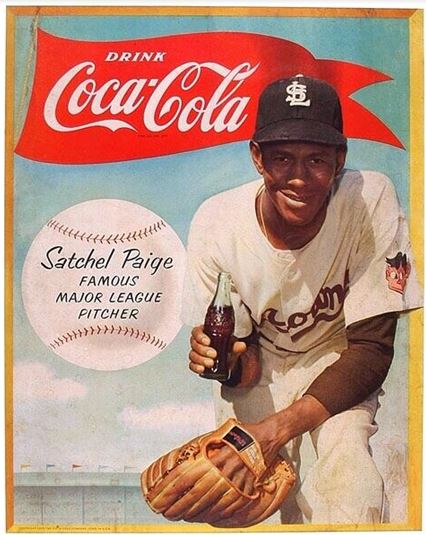
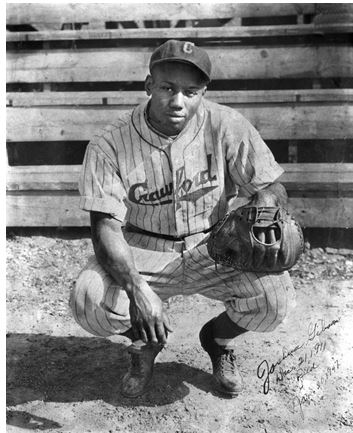
Josh Gibson was referred to as the “Black Babe Ruth.” Though some opined that Babe Ruth should have been referred to as “the white Josh Gibson.” Many sportswriters and big leaguers who played against Gibson believe he was the greatest all-around catcher ever. Gibson, who played for the Homestead Grays and the Pittsburgh Crawfords, was a superb defensive receiver. Hall of Fame pitcher Walter Johnson once said, “He catches so easily, he might as well be in a rocking chair, and he throws like a bullet.” Gibson was also a power hitter with few peers; Negro League and semi-pro box scores credit him with 75 home runs in 1931 and 69 in 1934. During a 17-season career, he batted .359, topping .400 on three occasions. His career slugging percentage was an eye-popping .648. Sadly, Gibson died of a brain hemorrhage in 1947 when he was 33. As a result, we never found out what he could do in MLB
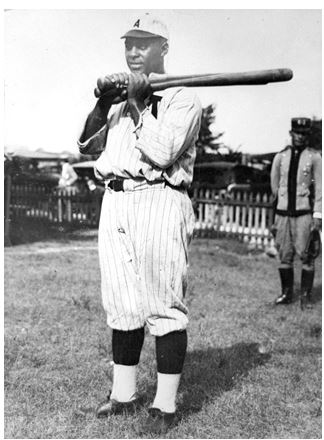
Many of his contemporaries cite Oscar Charleston as the greatest player in Negro League history. He was favorably compared to Willie Mays, with some saying he was better. Charleston had great speed and was a powerful hitter. He won at least four batting titles and several home-run crowns. He is among the top five Negro Leaguers in batting average (.339) and home runs, as well as the all-time leader in stolen bases. Writer/analyst Bill James named Charleston the fourth-greatest player of all time. When Brooklyn Dodgers general manager Branch Rickey wanted to break major-league baseball’s color line, he hired Charleston as a scout. It was Charleston that brought both Jackie Robinson and Roy Campanella to Rickey’s attention
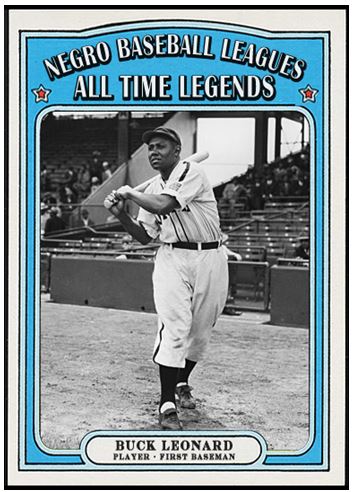
John Henry “Pop” Lloyd is considered among the greatest shortstops to ever play. He was in his early 30s when the Negro Leagues were founded. He was still able to play for 12 years and in that period he compiled a career batting average of .344. In 1929, the 45-year old shortstop batted .370. The next season he hit .369.
Walter “Buck” Leonard combined with Josh Gibson to give the Homestead Grays one of baseball’s great home-run tandems. Buck Leonard won three batting titles. In 1939, he enjoyed his best season as he led the Negro Leagues in hitting with a 417 batting average. Over a 17-year career his lifetime stats show a .341 average in league play Leonard was also considered a Gold Glove–quality first baseman. In exhibition games against big leaguers he had a .382 average.
Cool Papa Bell was fast. It was told of him that he was so fast he could turn off a light switch and slip under the covers before the room got dark. Muhammad Ali would later steal that story as his own. While he probably wasn’t that fast, Bell was once clocked circling all four bases in an astounding 12 seconds. Cool Papa often went from first to third on bunts and scored from second on sacrifice flies. On at least three occasions, he stole two bases on a single pitch. A line drive hitter, Bell hit .316 over a 21-season career.
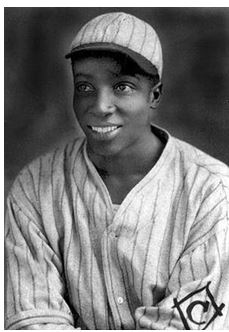
Ty Cobb once said that Smokey Joe Williams would have been a sure 30-game winner had he been allowed to pitch in the Major Leagues. Williams may have been the fastest pitcher of his time, regardless of league. Chicago Giants owner Frank Leland would boast, “If you’ve ever seen the speed of a pebble thrown in a storm, you have not yet seen speed the equal of this wonderful giant from Texas.” Little is known about his statistics, but he is believed to be among the best ever.
Charles “Bullet” Joe Rogan was probably one of the best two way players ever (with apologies to Babe Ruth). He was 5’7″ tall, but weighed a solid 180. Frank Duncan, who caught both Paige and Rogan, said,
“Satchel was easier to catch. He could throw it in a quart cup. But Rogan was all over the plate—high, low, inside, outside. He’d walk five-six men, but he didn’t give up many runs. Bullet had a little more steam on the ball than Paige—and he had a better-breaking curve. The batters thought it was a fastball heading for them and they would jump back from the plate and all of a sudden, it would break sharply for a strike. I would rank him with today’s best. I have never seen a pitcher like him, and I have caught some of the best pitchers in the business.”
Rogan went 119-50 in his pitching career, completing 128 of the 153 games that he started while striking out 882 batters. Splitting his time between the mound and the outfield, Rogan also had a career batting average of .338 to go with a .515 slugging percentage and a .905 OPS. He hit 45 home runs, stole 99 bases and scored 361 runs. Rogan also notched 199 RBI and led the Negro National League with 13 homers in 1922.
William “Judy” Johnson was considered one of the better third baseman to play the game. He was also a consistent .300 hitter. Hall of Fame manager Connie Mack once said Johnson could “write his own price” on a Major League contract if he were white.
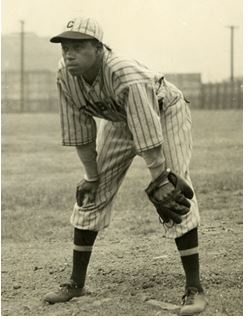
When the great Negro League catchers are listed, Biz Mackey’s name should always reside next to Josh Gibson and Roy Campanella. Mackey was a defensive wiz and a gifted hitter as well. It was he that taught Roy Campanella the nuances of catching. Campanella said of Mackey: “In my opinion, Biz Mackey was the master of defense of all catchers. When I was a kid in Philadelphia, I saw both Mackey and Mickey Cochrane in their primes, but for real catching skills, I don’t think Cochrane was the master of defense that Mackey was.” He added, “I couldn’t carry his glove or his bat.” The legendary Cool Papa Bell said: “Actually, as much as I admired Campanella as a catcher, all-around, and Gibson as a hitter, I believe Biz Mackey was the best catcher I ever saw.” Mackey was a pitcher’s dream in his ability to receive, call the game and throw out base runners with his rifle arm. He was also — and he was plenty gifted as a hitter, too, typically hitting above .300.
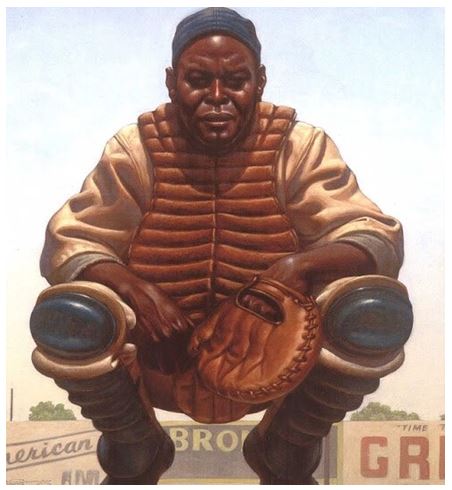
These are just some brief introductions to some truly great players. I have so much more that I want to write but, but due to time and space constraints, I’ll stop for now. Plus, I need to get myself back to work. Perhaps I’ll write more about this subject in a later article.
I also wanted to add a shout out to AC. Folks you have no idea how tirelessly Jeff works to keep this blog relevant and to keep you provided with articles. I should have had this article to him by Wednesday. I encountered computer issues all week and couldn’t get it done until Saturday afternoon. Not to worry, Jeff steps up to the plate and gives you three great articles in the interim. He’s been doing a wonderful job keeping this blog going.
More from Dodger Talk

The Greatest Pitcher EVER – 1 Season!
Yesterday, it was said that Sandy Koufax was the greatest pitcher ever…. and I agree with that IF YOU JUST LOOK AT HIS LAST 5 SEASONS! However, in his first 7 seasons, he was really bad, then bad, then pretty good. Then, in his last 5 seasons, he became GREAT! However, what if…

Mouth Breather
DISCLAIMER: I swore long ago that I would never write this… BUT, here I am doing it! I could not resist. Also, I am truly sorry if I offend anyone. Many years ago, when my wife had a series of ice cream shops, she hired a new girl, and I asked how she was doing. Her response…

The Bullpen Shakedown… ‘er Shakeout
Just like every season, especially in the Spring, things never turn out the way you think… especially due to injuries, and the Dodgers have quietly had quite a few on the pitching side. Here’s the short list of injuries that will shape the Dodger’s Opening Day Roster: Bobby…

How Many Innings Will the Dodgers' Starters Pitch?
There are 1,458 innings in a 162-game baseball schedule. Of course, games will inevitably go into extra innings, so let’s call a season 1,500 innings (give or take). I have stated before that I would not be surprised if no Dodger starter pitched more than 125 innings. For…
Discussion (34)
Disagree, not disagreeable
Great to see the game. Loved seeing Mookie and Belli in form. Muncy, too. Most of the Dodgers are looking good including Mitch White and up and coming Victor Gonzalez. It was an effortless win.
The players that still have to prove to me that they belong are Kolarek and AJ Pollock.
Here is my first look at him while he was still Mitchell White.
Open on www.thinkbluela.comhttps://www.thinkbluela.com/2016/07/mitchell-white-makes-great-lakes-loons-debut/Mitch White would be starting for the D-Backs.
The game was awesome, but the best part may be reading the boxscore this morning.
Amazing that the Dodgers have the depth that Mitch White isn’t even going to be one of their starters. I didn’t even know he was part of the conversation. Sweet to see baseball again!
Mitchell White was very impressive and efficient. If he can pitch consistently like tonight he’ll play a long time. He kind of has a funky release that appears to be deceptive.
I am not sure Mitch White will be a starter, but I am sure he is a hell of a pitcher!
What the hell happened in that first inning?
After the grand slam I was distracted for a couple of seconds and then …
Arizona at bat?
That’s the way you do it.
Grand Salami!
Hopefully, the Dodgers watched this today:
Outstanding article 2D2… My wife and I drove thru MO a couple years back and I really was thinking of 2 things…Trying out some KC BBQ and especially getting to the Negro Lg. HOF …
The museum was small but had a lots of history of the Negro Leagues. From Satchel Paige to Josh Gibson to Cool Papa Bell, and the many more greats of the game, the museum was filled with a number of stories on the games and players from this era. Finished off our MO run with a game in St. Louis and the usual tourist things…
I like this lineup against the DBacks. Just curious about Smith not starting is all. Was hoping to see him.
Old friend Scott Schebler DFA’d by the Reds.
I noticed some new posted Dodgers transactions today.
Assigned to Alternate Site (n=24)
From AZL (n=5):
Diego Cartaya
Clayton Beeter
Landon Knack
Bobby Miller
Carson Taylor
From GL Loons (n=3):
Michael Busch
Kody Hoese
Ryan Pepiot
From RC Quakes (n=6):
Gerardo Carrillo
Brett de Geus
Michael Grove
Andre Jackson
Devin Mann
Zach Reks
From Tulsa Drillers (n=4):
Omar Estevez
Josiah Gray
Marshall Kasowski
Edwin Uceta
From OKC (n=6):
Rocky Gale
Anthony Garcia
Terrance Gore
AJ Ramos
Edubray Ramos
Cody Thomas
These 40-Man Roster players are still listed as “Optioned” to OKC (transactions were in March 2020) (n=7):
Victor Gonzalez
Zach McKinstry
DJ Peters
Luke Raley
Keibert Ruiz (IL)
Josh Sborz
Mitchell White
Amazing article 2D2. Thanks. There were so many great black players who never got the chance to play MLB.
Outside of the Dodgers two of my favorite MLB players were Ernie Banks and Tony Gwynn. I was also a Bob Gibson fan except when he pitched against the Dodgers.
I second the shout out to Jeff with some guilt attached. I too missed a deadline this past week but AC picked me up.
Starting line up tonight vs the D’backs
Betts RF
Muncy 1B
Turner 3B
Bellinger CF
Seager SS
Pollock DH
Pederson LF
Hernandez 2B
Barnes C
White P
Mays, Robinson, Campanella, Aaron, Ernie Banks.
Aaron, Paige, Robinson, J., Minoso, Gibson, J.
Excellent article. Thank you, 2D2.
Great stuff 2D2. I am a huge fan of the history of the Negro Leagues. I’ve read lot and loved my visit to the HOF in Kansas City. If you haven’t been there, I would suggest a visit. I also had the opportunity to talk with and listen to Buck O’Neill who was the Ambassador of Baseball. If I could climb into the Wayback Machine with Sherman and Peabody I’d go back to the 40’s and Havana Cuba where I’m told Latin Players, Negro League Players and MLB players all played together in the winter. I’d drive around in a big convertible from the casino, wearing a Panama Hat, sipping on a rum and coke and waiting for game time. I hope to catch Satchel Page facing Joe D with Josh Gibson catching. Maybe Cool Papa Bell makes a game saving catch.
Can you name the 5 players who started in the Negro Leagues and played in MLB who were voted into the HOF by THE WRITERS ? (that’s important).
Well I caved. I ordered MLB.TV, but I got the single team option. Because I am a vet, I got a 35% discount. So I got the package for 37 bucks. I guess I just needed my baseball fix.
Thanks for the great read this morning 2d2. Some thoughts about the the inter squad games and how approaches will change as we get closer to real games. The pitchers have not been challenging the batters inside not wanting to hit them. As a result we saw a lot a batters going the other way going with the pitch. I hope this is partially due the hitting coach Van Scoyoc. Hitting to the opposite field is going to cut down on strike outs and defeat the the shift big time. Seager, Smith, Kike, and Mookie to name a few have been doing this. This will force pitchers to pitch inside.
The Rockies released both Brian Shaw and Jake McGee. Two of their big 3 in the pen that they signed a couple years ago for big money. Trayce Thompson was sent to the D-Backs minor league camp allowing Jon Jay to make the D-Backs roster.
Great article 2D2. I have always been interested in the Negro Leagues, and have read a great deal about them over the years. There actually is a decent movie about that. The Bingo Long Traveling All Stars and Motor Kings. It is a comedy, but has some great actors in it and shows how they traveled. They are more of a barnstorming team than members of the NNL. Billy Dee Williams, James Earl Jones, who’s character loosely is based on Josh Gibson, and Richard Pryor. Also I was surprised when I recognized one of the players as a former major leaguer, Leon, (Daddy Wags) Wagner. Former Giant and Angel outfielder. Jones and Williams are also former members of the Star Wars family. I live close enough and have been thinking about a trip to Kansas City to go see the Negro baseball museum. I remember when they first started electing some of the players to the hall. Shamefully, too late for many of them to see. But hearing the stories from some of those players, wow. Tough life and existence. And they often beat the teams that barnstormed after the season with players like Ruth and Gehrig. They also had such great nick names. Cool Papa Bell, Satchel Paige. Ya didn’t think his parents named him Satchel did ya??? His first name was Leroy. Satchel came from moving around so much. Another good Negro League movie is Soul of the Game, with Delroy Lindo as Satchel Paige, Blair Underwood as Jackie, and Mykelti Williamson as Josh Gibson, You would remember him as Bubba in Forest Gump. Edward Herrmann plays Branch Rickey. Set right after WWII it chronicles Rickey’s search for a player to break the color line. It was a made for TV movie. It is available on DVD. One other movie I would suggest is, It’s Good To Be Alive. This movie is about Roy’s fight after he was paralyzed. Paul Winfield and Lou Gossett Jr. are the stars. Gossett is one of my favorite actors. One thing about James Earl Jones. He is among the best there is, and he has been in 3 of the better baseball movies ever made. The on I listed above, Field of Dreams, and The Sandlot. In The Sandlot he plays a former ballplayer who is blind and calls Babe Ruth, George instead of Babe. Great movie, and when the kid tells him what happened to his baseball with the Babe’s autograph on it, he trades the kid a baseball autographed by the 1927 Yankees for his destroyed Ruth ball. Thanks for the trip down memory lane 2D2. Well, today it starts. Dodgers-Dirtbags…..Oh yeah, one of the cards in my collection is porcelain. It is a card of Satchel Paige. And it looks just like it’s cardboard brother. I also have porcelain cards of Jackie Robinson, Whitey Ford and Roy Campanella.
Loved the article, 2D2. Thank you for sharing the stories of these great players, in particular, about Satchel Paige and Josh Gibson and all the others you wrote about. A shame that they were so held back but kudos to them for loving the game and playing it so well to levels that should have been given more recognition.
Wow, that was awesome, thank you! I do know several of these names, as I used to read about the Negro leagues in high school. You did a great job listing so many great players!