
More Minor League Information
A while back Daniel asked if there was a limit to the number of players and minor league affiliates an MLB team can have. There are limits at each level but other ways to store players. Minor league rosters according to MiLB. AAA -25 active players AA – 25 active players A+ – 25 active players (35 players under control on roster) A – 25 active players (35 players under
A while back Daniel asked if there was a limit to the number of players and minor league affiliates an MLB team can have. There are limits at each level but other ways to store players.
Minor league rosters according to MiLB.
AAA -25 active players
AA – 25 active players
A+ – 25 active players (35 players under control on roster)
A – 25 active players (35 players under control on roster)
Rookie (Pioneer League) – 35 players on active roster
AZL – 35 players on active roster. Dodgers have two teams
DSL – 35 players on active roster. Dodgers have two teams
The bigger numbers are at the entry levels. I believe teams could have more affiliate teams if they wanted but I don’t think most teams would have the developed players to compete effectively at the higher levels with more teams, certainly not above Class-A. I am sure in terms of numbers there is a point of diminishing returns and the drafting, international signing regulations govern how many players can be acquired. Most MLB teams do not sign many undrafted free agents or players from independent leagues.
The last three statements in the MiLB letter to Rob Manfred:
3. Appalachian League
MiLB acknowledges that MLB owns the 10 Appalachian League (“AL”) teams and that MLB regrettably has the authority to unilaterally decide the future of the AL. MiLB strongly encourages MLB to work with MiLB, as it has in the past, to allow for the continued operation of the AL as a league with affiliated teams playing professional baseball.
4. Dream League
MLB’s position that its “Dream League” concept would save the contracted communities from losing their professional teams is simply wrong. The economic realities of operating affiliated and non-affiliated professional baseball teams are very different. MiLB owners have extensive knowledge and experience in operating teams in both circumstances. There is little doubt that very few currently affiliated short season. franchises would have any realistic hope of surviving under this seriously flawed concept. The actual history of independent franchises in similar markets that were started (and folded) in the modern era emphasizes the point. For these reasons, MiLB believes that MLB should stop promoting this “Dream League” concept, which serves no purpose other than to provide false hope to communities that will most certainly suffer the loss of their professional teams.
5. Minor League Economics and the Question of Subsidies
It is simply not true that MLB “heavily subsidizes” MiLB. MLB teams do not pay MiLB owners and their partner communities that supply the facilities and league infrastructure that enable players under contract to MLB teams the opportunity to compete at a high level and establish whether they have the capability to play in the Major Leagues. MLB just pays its OWN player/employees and other costs directly related to their development. MLB does not fund or subsidize MiLB’s business operations in any form and, in fact, the amounts funded by MiLB to assist in the development of MLB’s players far exceed anything paid by MLB to its players, managers, or coaches at the Minor League level. Through the payment of a ticket tax to MLB, it is arguable that MiLB is paying a subsidy to MLB. Either way, talk about subsidies isn’t helpful or beneficial to the industry. The fact is that we are business partners working together to grow the game, entertain fans, and develop future MLB players.
We look forward to the opportunity of re-engaging with your representatives in a constructive manner that reflects both the positive spirit of the partnership relationship we have enjoyed with you and your predecessors for so many years, and our mutual responsibility to ensure the continuation of the game of Baseball, in both small and large communities across the country, as our National Pastime.
Sincerely,
Minor League Baseball
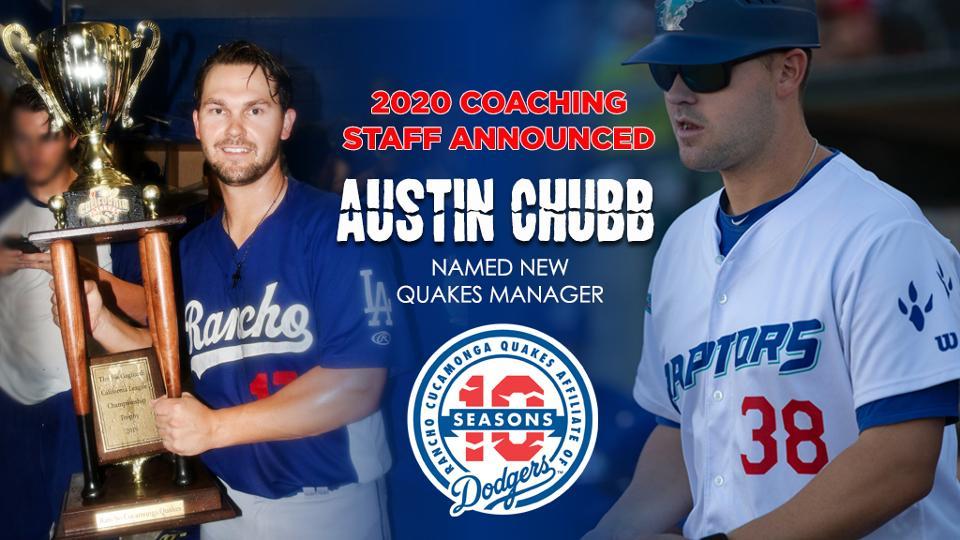
Austin Chubb
As previously mentioned Austin Chubb had been a mover and a shaker in the Dodgers minor league coaching ranks. He will start his fifth year in the system moving up as the manager of the Rancho Cucamonga Quakes.
Chubb was born in Lake Mary, Florida and attended high school in his home town. Following his graduation, he attended State College of Florida in Bradenton, Florida playing for the Manatees for two years. He then transferred to Florida Southern University for his junior and senior years.
Perhaps one of the better-known baseball alumni out of FSC is Matt Joyce who has had a 10-year MLB career, last year hitting .295 with the Atlanta Braves.
As a junior, Chubb hit .295 with five home runs and 26 RBI. In his senior year, he hit .291 with eight home runs and 33 RBI. He had a team-high 17 doubles.
Following his senior year with the Moccasins, he was selected by the Washington Nationals in the 21st round of the 2012 First-Year Player Draft.
Chubb had a four-year minor league career in which he played 91 games and hit .213. On January 6, 2015, he was released by the Nationals and signed by the Dodgers on January 23. Chubb played only 10 games with the Rancho Cucamonga Quakes in 2016 while spending four stints on the 7-DL list which limited his playing time to that hand full of games.
Chubb elected free agency following the 2015 season and was subsequently signed as the hitting coach for the Ogden Raptors of the rookie-level Pioneer League.
Since then the now 30-year-old Chubb has served two years as a manager in the Dominican Summer League in 2017 and 2018 and returning to the Raptors as a manager in 2018. During the 2018 season, the Raptors compiled a 54-22 record.
Gabe Kapler was perhaps instrumental in bringing Chubb into the Dodgers system upon which he commented, “So proud of Austin Chubb. Watching him hit for the Great Lakes Loons is inspiring. Grinder, great teammate, valued in our organization.” That was the only game he played with the Loons before moving on to the Quakes in 2015.
Austin Chubb returns to Rancho Cucamonga in 2020 replacing Mark Kertenian as manager of the Quakes and very pleased for the opportunity.
“It’s a little surreal to come back to Rancho as a manager just five years after playing there,” said Chubb. “I’m excited! We’ll do our best to continue the winning tradition for the fans.”
In his first stop in Rancho Cucamonga Chubb played under former big-league backstop Bill Haselman, who managed the Quakes to their second title in franchise history in 2015. He credits Haselman with helping guide his path into coaching.
“Has continues to be an incredible mentor for me and is one of the reasons why I’m coaching in the Dodgers’ system today. He’s a great resource and I’ve learned a lot from him.”
The next Austin Chubb
The Dodgers minor league coaching staff has undergone quite a transformation in the past few years. It has become much younger and saturated with coaches and managers who have what we call a high baseball IQ, and are driven not only to develop players on the field but also help them grow as young men in a minor league baseball culture. Most are themselves young men who have played minor league ball but did not make it to MLB and it doesn’t hurt to have been a catcher.
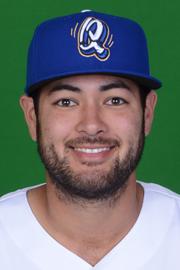
AC has mentioned a number of times that catcher Steve Berman is a favorite of mine. He is not high profile, backed up behind a number of catchers, but is a player. Unfortunately, like Austin Chubb, his playing time has been limited by injury having missed a major portion of 2018 and significant time in 2019. He is rarely ever mentioned when team officials and others discuss the catchers in the Dodgers minor league system.
I think it is too soon to write Steve Berman off as a possible back-up catcher in MLB. I do think 2020 at age 25 is a significant season for him as he must stay healthy to demonstrate what he’s got over a longer period of time. Looking down the road following his playing career, whenever that might be, he has coach and manager written all over him.
He was born in Mountain View, CA and attended Saratoga High School before heading off to Santa Clara University where he was a teammate with Mitchell White during the 2015 and 2016 college seasons. He was selected by the Dodgers in the 31st round of the 2016 First-Year Player Draft, the same draft in which White was selected in the 2nd round.
During his three years at Santa Clara Berman posted a .319/.432/.472 triple slash along with 12 home runs and 72 runs batted in over 141 games. He walked 74 times and struck out 71.
Often referred to as, “Stevie”, he did not have a great start offensively with the Loons in 2016 and 2017 but it was apparent in watching Loons games that he was a significant part of the team. He did play a significant part in the Loons 2016 play-off run catching two consecutive shutouts.
“We trust our pitchers and we know what our strengths are,” said Steve Berman, who caught both games after sitting out the opener. “We studied their hitters a little bit, so we just tried to work our way around that.”
“We are feeling awesome right now,” said Berman, who went 2-for-2 with an RBI. “We got things going today. It was a great outing by all the pitchers and the hitters came through. It was just exciting to be here playing in front of this kind of crowd. It was something else.”
As mentioned he was limited in playing time in 2018 and 2019 but hit well with the Quakes and Drillers. In 33 games with the Quakes in 2018 he posted a slash line of .302/.442/.500 while in 2019 he maintained a batting average of .295 with Rancho Cucamonga over 21 games and .310 over 15 games with the Drillers. Among his accomplishments was a five-RBI game.
So why does Stevie Berman appear to be a candidate for a coaching/managing career following his playing days? Tim Rogers of Dodgers Nation who observed him in Rancho Cucamonga posted this observation.
“Berman might be someone you’ve not heard of but I was impressed with him. Drew Saylor called him a “glue guy” who was excellent for the team culture. As I observed, the team culture for the Quakes was amazing and Berman was a big part of it. He seemed to be the funniest guy on the team also.
Offensively, Saylor spoke of his knowledge of the situation, taking professional at-bats and was well prepared. From a defensive perspective, he receives well and calls a good game. He’s a student of the game and showed great improvement from 2017 to 2018. With some health, he will get a lot of playing time in 2019 and will make some big strides. Given his personality and preparation habits, he can be in this game for a long time past his playing career. “
More from Dodger Talk
Enjoy it While You Can!
It was both surprising and not surprising to me that the Dodgers signed Kyle Tucker. That they can make it work is a tribute to the true genius of Mark Walter and Andrew Friedman. Enjoy it while you can, because it will end soon. In the upcoming CBA and talks among owners, MLB…
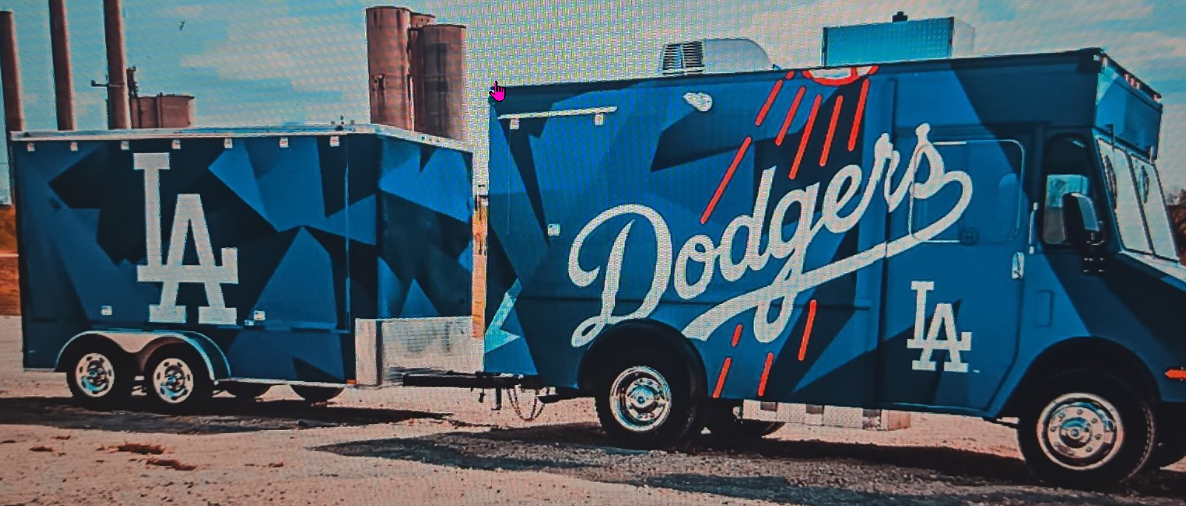
Dodgers Food Trailer
I did this interview a couple of weeks ago with Chef Mike, who runs the Dodgers Food Trailer for the Great Lakes Loons. They are there for every home and road regular season and playoff game. They prepare three meals a day for approximately 50 people (players and coaches). Since games end late most evenings, they do not prepare breakfast. Many of their hotels have a complimentary breakfast anyway. However,…
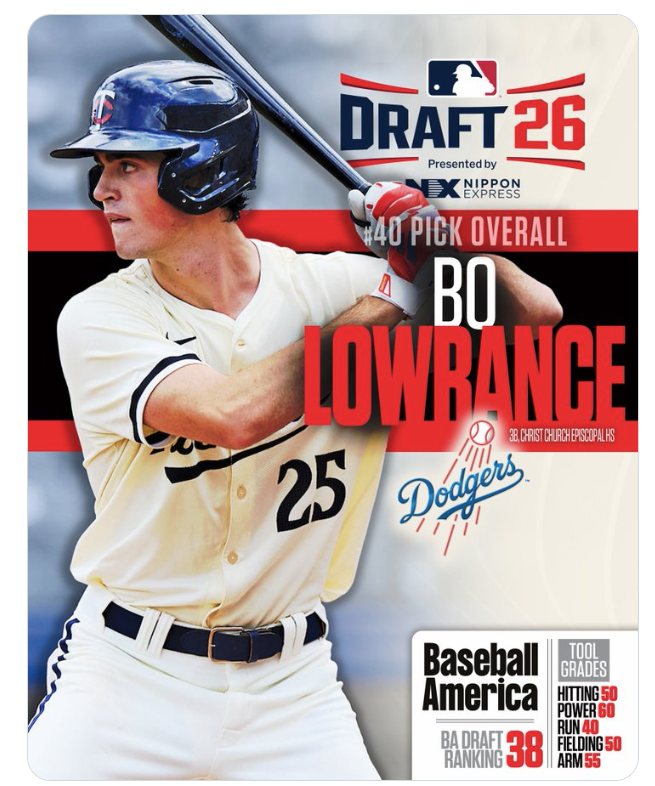
Meet LAD 2026 Draft Picks 1-12
3 picks were High School players (2 SS and 1 OF). There was a college OF, college catcher, college SS, and 10 college pitchers. Of all the talk for a need for a catcher, the only catcher the Dodgers selected was Luke Bard, son of LAD bullpen coach Josh Bard. Bard was a 4th year senior from Houston Christian University. He is not a prospect, so the Dodgers are still…
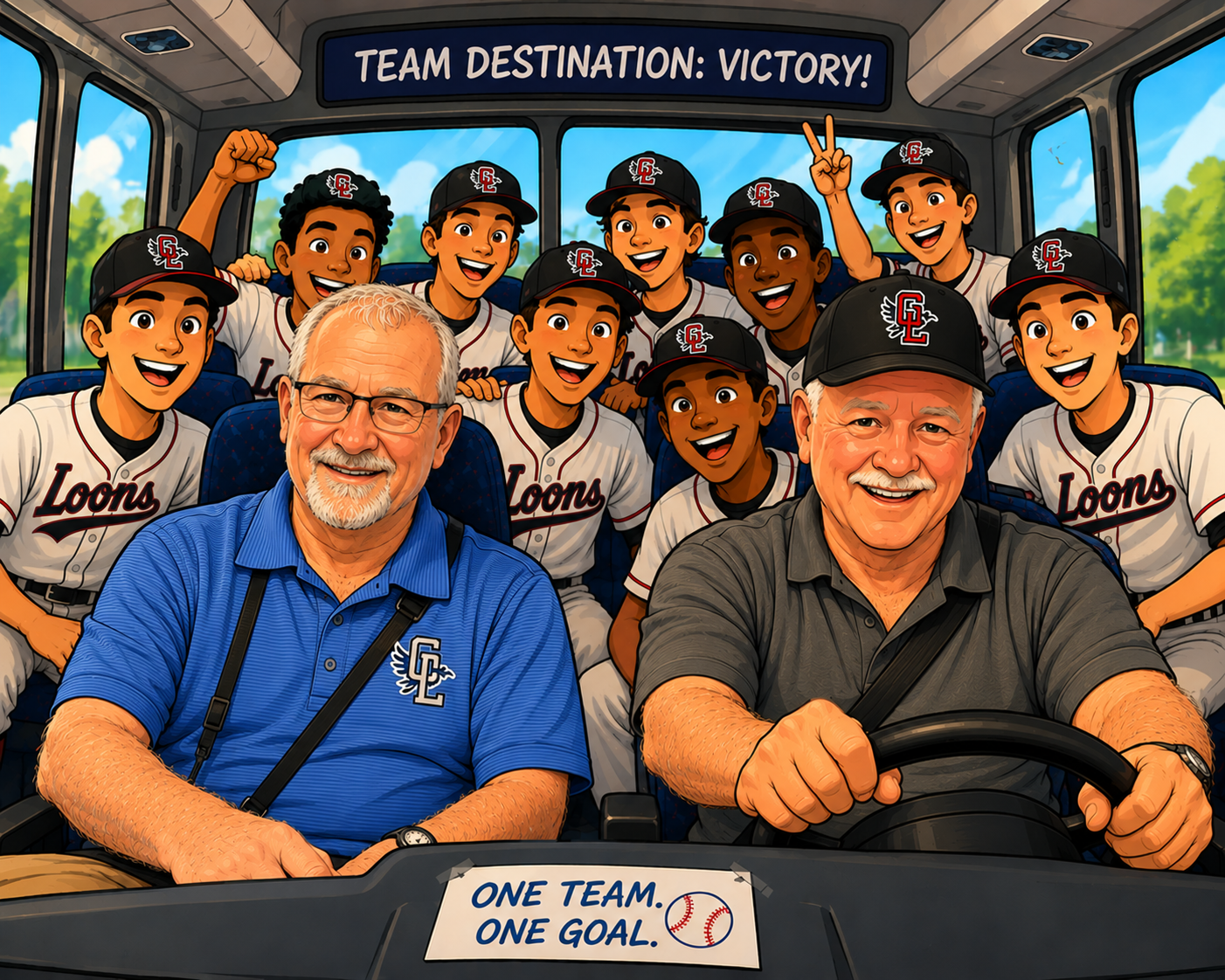
Interview with Paul Beachy – Team Bus Driver For The Great Lakes Loons (LA Dodgers Minor League Team)
It’s been a few days since I did this interview. We have evidently been working my son-in-law (the video guy) like a rented mule at US Water Systems. However, I am taking him to London with me in a few days, so maybe Watford will buy him a pint as a tip, but he’s a dang Red Sox fan, so there is that! I thought that it would be interesting…
Discussion (55)
Disagree, not disagreeable
bplunkett@scng.com Dodgers get Betts, Price from Boston. Verdugo to Boston. Maeda to Twins. Twins pitching prospect Brusdar Graterol is reportedly going from the Twins to the Dodgers in exchange for Maeda and then on to the Red Sox.
Outfielder Joc Pederson is reportedly going to the Angels in exchange for infielder Luis Rengifo. Other players may be involved.
The Red Sox-Dodgers agreement (pending medical reviews) to send Betts and Price to the Dodgers, with OF Alex Verdugo and another prospect (Brusdar Graterol?from the Twins) coming to Boston and a Dodger (Maeda?) going to Minnesota
Joc Pederson to the Angels!!!
Betts to dodgers!!!!! Hes a dodger
I hate seeing Verdugo going to another team. I guess you have to give up something good to get something good.
Word is Mookie and Price to Dodgers ? $ ? 3rd team – details/medicals pending
It’s a great article, great information about minor leagues …. I didn’t know that this is, again, about Betts, I thought it was about minor leagues
If you’re expecting a guarantee then you would never make a move! Betts is the kind of player who could carry a team in the post season. Something Belly and Seager haven’t shown so far. Let’s wait and see what the deal is before we nix it!
Guys let’s make something clear. Betts will be a free agent after this season, he is on record saying he’s looking forward to free agency. There is no way the Dodgers are going to extend him, they would have to out bid other teams in free agency. Friedman never offers what Betts is asking for or even close to what Betts is asking for and that is 12 years 420 million.
Betts is a 1 year rental PERIOD. So now what are you willing to give up for a 1 year rental? Did you ever consider Betts could get injured in 2020? If so where does that leave the Dodgers? And especially after a trade?
I think most of you are hanging a world series championship on the head of Mookie Betts, but in reality that’s not the case. Betts does not guarantee a world series championship.
Any reason to think that the Price proposal wouldn’t include sending them Pollock, which would basically pay for half of Price’s contract?
Good points on the TV contract SoCal. The Dodgers TV revenue increases each year, per the contract. It is shared by MLB (34 percent, if I recall correctly). More people can see the Dodgers now than when the deal was first done because Charter bought out TW, creating Spectrum. Major increase in viewers. The biggest issue has been with Direct TV. Ultimately, streaming may be the only way to reach those viewers.
Regarding Pollock, I don’t think the Dodgers would trade him. He’s owed $15 million this year, $18 million next year and $13 million in 2022. There is a $5 million buy out in ‘23. Any contract is obviously movable, but always with a price. The Dodgers need Pollock, his right handed bat. He had a good second half and from what I’ve heard the Dodgers are expecting him to be part of the solution this year.
I read the Dodgers have something like three or four different trade proposals on the table for Betts, one includes Price. Time for the Red Sox to pick one or move on. The Price proposal has some significant money coming back.
The Mookie negotiations are becoming somewhat reminiscent of 1983-84, when the Dodgers and Al Campanis were negotiating a trade with the Oakland A’s for Rickey Henderson. The Dodgers were reported to be giving up Alejandro (slo) Pena, among others. As the negotiations drug on, Campanis made the public proclamation that it was high time for the A’s to “pee or get off the pot.” The A’s chose to get off the pot, pulled the plug on the deal, and traded Henderson to the Yankees.
Sometimes waiting is okay.
When Mookie Betts gets to free agency he will likely be seeking a mega-deal. I don’t see how Boston can re-set their payroll to compete in that arena given their current problems. Seems like they would be setting themselves up for further problems.
I guess if Boston can reset their CBT payroll for the 2020 season then they can be competitors for Betts when he is a free agent in 2021 and have whatever they get from the Dodgers. Do the Dodgers want to help set up Boston to compete with them for Betts?
Great post DC! Very informative. I have thought that Berman maybe one to watch as a potential coach/manager. It appears that there’s something in a catcher’s DNA that moves them up the manager/coach prospect list.
For those of you interested, “The Battered Bastards of Baseball” is an interesting documentary about the Portland Mavericks, a now defunct minor league baseball team in Portland, Oregon. They played five seasons in the Class A-Short Season Northwest League, from 1973 through 1977. They were owned by actor Bing Russell, who is actor Kurt Russell’s father. The Mavericks were an independent team, without the affiliation of a parent team in the major leagues. The story gives a better understanding of how MLB “controls” MILB.
Do we have any salary experts here? I was wondering about Pollock’s salary and how that would be computed in case of a trade. He was originally guaranteed 60 mil over 5 years so that was computed at an AAV of $12MM. What if he’s traded tomorrow? He was only paid $4MM last year (1 mil salary/3 mil signing bonus). He is now left with $56MM over the next four years. Is the AAV calculated as $56MM/4 = $14MM or does he carry the original AAV with him to the new team, so $12MM AAV. I realize in the grand scheme of things $2MM isn’t a big difference either way, but I was just wondering.
AF must be up to something complicated. This has to be more than a straight 2team swap. Just a feeling
Another great writeup DC. Berman strikes me as another AJ Ellis in the making.
DC, thanks again for your great article. I hope MiLb can solve their differences with MLB and both work together to improve the minor league system. I enjoyed the write-ups on Austin Chubb and Steve Berman. What greater mentor could a young player, like Chubb have than Bill Haselman, himself to go on to be a very successful coach with the Quakes and the AAA team. Wish Chubb and Berman good luck.
Hopefully Betts is turned off by that San Diego lifestyle!
I was just reading Dylan Hernandez’ article in the LAT about Betts and the Dodgers. I did not realize that the TV deal that the Dodgers made with Time-Warner was for 25 years. It is for approximately $8..35 . billion. Rounding off, that means they get about $330 million per year. So I guess that they have a little money, and that going over the luxury tax from time to time isn’t the financial hardship that they would like the fans to think it is. And we have no t even considered the fact that the deal has meant that many people are not able to see the games. I can, but if I did not, I probably would not even follow the Dodgers, since the games won’t be shown for another 20 years. When you think of that, it is really appalling that they would do that to the fans. And as Hernandez notes, they have raised ticket prices every year.
What the Dodgers should be giving to their fans, the almost 4 million who go through the turnstiles each year, is the best franchise in baseball. They should not be missing the championship every year, and then making various excuses as to why they just couldn’t offer enough to this or that star player. Yes, Cole didn’t want to come here, blah, blah. Harper did, but he’s not worth the money. So what about Betts? Too expensive for the Dodgers? Why can’t they just make the deal, and work out a seven-year or so contract with him, thus giving the Dodgers and their fans one of the best players in baseball? Why is it, as always, so excruciating for them to consummate one of these deals?
I’ve known people who had money but were cheap, driving around for half an hour to avoid parking in a lot, looking askance at menu prices. I know a guy whom I went to college with, who inherited a lot of wealth, and who, when I run into him at the fruit market, keeps looking for the cheapest fruit available; $4 a pound for peaches is too much for him, he wonders why I am paying it. It is because it is a short season, the better stands have better peaches, and I know that it costs money to grow things the right way and to pick them just before market. He has a perfect right to save money in that way, but with the money he has, it is rather embarrassing, I think. So are the Dodgers, but they have their own priorities. Maybe the owners want to buy islands in the Pacific, or go to Mars on Elon Musk’s rocket ship, and get away from the climate change and the pollution.
The Dodgers are in it to make money, a lot of money. More than anyone else, probably. Rather than spend big, be like Steinbrenner’s Yankees, they now have taken on the role of frugal shoppers, never wanting to do anything which would cut into those immense profits. My feeling is that they should sign Betts long term, they are not going to get another chance soon to land a player of that caliber. But that is not how they operate. Hopefully, they will finally get him and for a long term, and I will issue a mild apology for having doubted it. But I would not be surprised if they bail out, let San Diego sign him, and then give us more of their excuses as to why they just could not attain a top player. Wouldn’t be prudent. Maybe the way to follow the Dodgers is to buy shares in them, and forget about the games that you likely can”t see, anyway. Then one could root for the profits, even if other teams are winning the titles.
Announcing the Betts trade is a phone app away pending QC checks.
Thanks for that info. I’m amazed at how in-depth you go, especially compared to other sights whose reporting leaves too many questions unasked and unanaswered.
I have a follow-up question re minor leagues. If a AAA team has a 25 man roster is that including some of those players who are on the 40 man? And could an organization hide players in an overseas league, like in the Dominican?
Great Blog, DC!
FYI: Drew Saylor joined the Royals’ organization as the Hitting Coordinator in 2020. He spent the 2019 season as the Assistant Hitting Coordinator and Manager at West Virginia (A) in the Pittsburgh Pirates’ organization.