
Player Development: Part 3 (Communication)
I am spending a couple of weeks with my family in the beautiful Pacific Northwest. Spending time with my grandchildren is one of the greatest joys I have ever known. It doesn’t take long though for me to realize that I speak another language than they do. In order for me to convey “adult” concepts it is extremely important that I know how to communicate effectively with them to get
I am spending a couple of weeks with my family in the beautiful Pacific Northwest. Spending time with my grandchildren is one of the greatest joys I have ever known. It doesn’t take long though for me to realize that I speak another language than they do. In order for me to convey “adult” concepts it is extremely important that I know how to communicate effectively with them to get my message across. It also takes a collaborative effort between me and their parents, as we have to agree on what we are communicating to maximize their development.
Any sort of self‑help or leadership book almost always talks about communication. Communication as a whole is incredibly important—just ask your spouse; relationships don’t work without communication.
Baseball development is no different. The amount of information that is now available to players from youth ball to the major leagues is absolutely astounding. For those that are interested, you can check out the following which provides a good primer on sabermetrics and analytical material: I won’t take the time to cover that in this post.
The BtBS guide to analytics tools and resources
Jack Harris of the LA Times discusses Josiah Gray and illustrates the point I want to make:
Gray credits the Dodgers’ farm system with speeding up his development. Between stops in Great Lakes, Rancho Cucamonga and Tulsa last year, he played for three teams, three managers, three pitching coaches. But the organization’s collaborative approach, as he called it, kept the message consistent. He was able to “smooth out” the rough edges of his game and develop his fastball‑slider‑changeup arsenal. Now, he looks like a potential gem.
“Everyone is really all in for you, no matter if you’re a first‑rounder, 40th‑rounder,” Gray said. “Everyone is really trying to make you the best player you can be. Having that system makes guys want to come to the ballpark every day, really want to get better.”
This pretty much says it all for me. Communication must involve collaboration. A teams collaborative approach keeps the organizational message consistent. The Dodgers pride themselves on having a united scouting and development group. Both departments sync up and draft the correct guy and then develop him correctly. It requires a good baseball development department to be able to interpret the data and communicate it to the scouts, coaches, and players. It starts with a scouting department who can take the information provided by the analysts to find athletes that fit the culture desired by the team. As they watch a player, scouts can provide the information requested by the nerds who can interpret (communicate) it to those involved in selecting players for the draft. This information is also communicated to the coaches and those involved in training the incoming players. This involves more collaboration, as it involves not only the baseball coaches but the strength coaches, the nutrition team, the psychological team. Mind you, there is no replacement for talent, and talent is still required to develop major league players. You could communicate all the data in the world to me and no matter how well it’s communicated, my 5 year old grandson is still going to whip me in the backyard, as they posses very little talent and I have tremendous physical limitations (I’m old and stiff).
Exit velocity, launch angle, and spin rate are descriptive measurements, just like pitching velocity and a player’s 60 times. These terms, like other data baseball teams, have available (via analytics and sabermetrics)) help fill in specific gaps. Filling in gaps in what was previously unknown can help players develop and end up performing better on the field. Of course, some of the data just serves as background data justifying the “why” you want to do something, rather than something you would repeat word for word to the players. When you accumulate data, you must first interpret it; then it must be communicated, and then you have to persuade the listener that there is a reason to accept it and adapt the information. It must also be decided what data is worth exploring. One truth is certain, the teams that learn how to understand and utilize it typically know how to communicate the analytics and statistical trends in a reliable way to management and players reign supreme.
Baseball, especially player development, is difficult and still has a lot of unknowns. After a player is drafted and signed, whether out of high school or college, he will suddenly find himself in a strange environment. While growing up in his baseball life he has experienced mostly success and adulation. Now, however, he finds himself surrounded by many players that are equally as good or significantly better. And, while being drafted in the 15th round of the baseball draft may be big news with his buddies back home, no one on their rookie ball team really cares what round they were drafted in. Players soon learn they must adapt to a higher level of competition. The players must also learn to play virtually every day and they must learn how to take care of themselves (i.e., how to get to and from the ballpark, learning to live with individuals they don’t know and how to eat well). The Dodgers have a player development system that focuses on developing the whole person. In order to be successful, it is what a player development department must do. As we explored in an earlier post, the. Dodgers have a staff that works with each area of a player’s life and baseball development, whether teaching baseball fundamentals, nutrition or mental toughness. They have an analytical team that accumulates as much data as possible in each of those areas. That data is interpreted and then it is individualized and communicated to the players, throughout the organization, to create an atmosphere wherein they can be the best player they can become. The player must still buy-in, but he wouldn’t have a chance unless great efforts are made to communicate the information to him as effectively as possible.
Just a couple of quick random views of the passing season:
• No matter what the perceived weaknesses are of this team, I like the Dodgers chances in the playoffs as well as any other team
• I’m not sure who would serve as a better alternative, but Kenley makes me nervous.
• The Dodgers are a better team with a healthy Justin Turner.
• Corey Seager is a good player.
Arizona Fall League – Day 5
The Dogs were beaten by Mesa 7-6 as Mesa scored 4 runs in the bottom of the 9th. Marshall Kasowski had a hand in the loss as he gave up 2 runs before being lifted. His ERA is currently 81.00. The only other Dodgers who played were Jeren Kendall (1-4 with 2 more strikeouts) and Justin Yurchak who went 3-4 at 1B with two doubles.
More from Dodger Talk
Enjoy it While You Can!
It was both surprising and not surprising to me that the Dodgers signed Kyle Tucker. That they can make it work is a tribute to the true genius of Mark Walter and Andrew Friedman. Enjoy it while you can, because it will end soon. In the upcoming CBA and talks among owners, MLB…
Dodgers Food Trailer
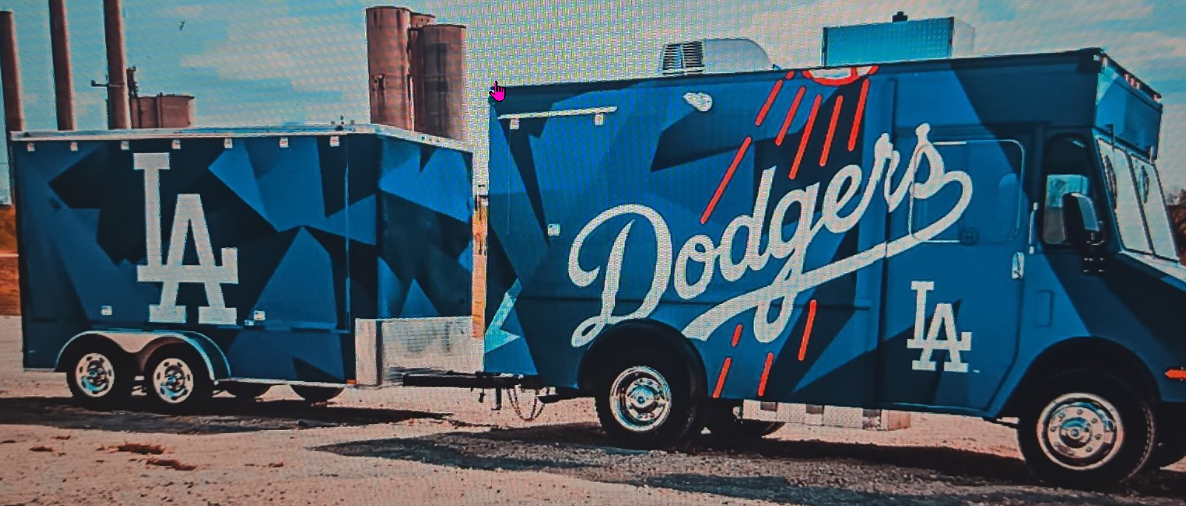
I did this interview a couple of weeks ago with Chef Mike, who runs the Dodgers Food Trailer for the Great Lakes Loons. They are there for every home and road regular season and playoff game. They prepare three meals a day for approximately 50 people (players and coaches). Since games end late most evenings, they do not prepare breakfast. Many of their hotels have a complimentary breakfast anyway. However,…
Meet LAD 2026 Draft Picks 1-12
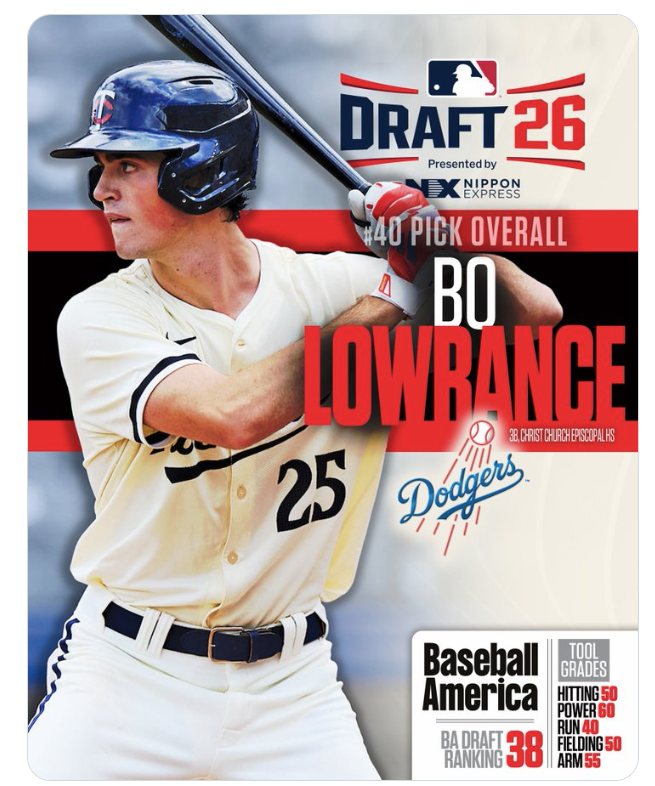
3 picks were High School players (2 SS and 1 OF). There was a college OF, college catcher, college SS, and 10 college pitchers. Of all the talk for a need for a catcher, the only catcher the Dodgers selected was Luke Bard, son of LAD bullpen coach Josh Bard. Bard was a 4th year senior from Houston Christian University. He is not a prospect, so the Dodgers are still…
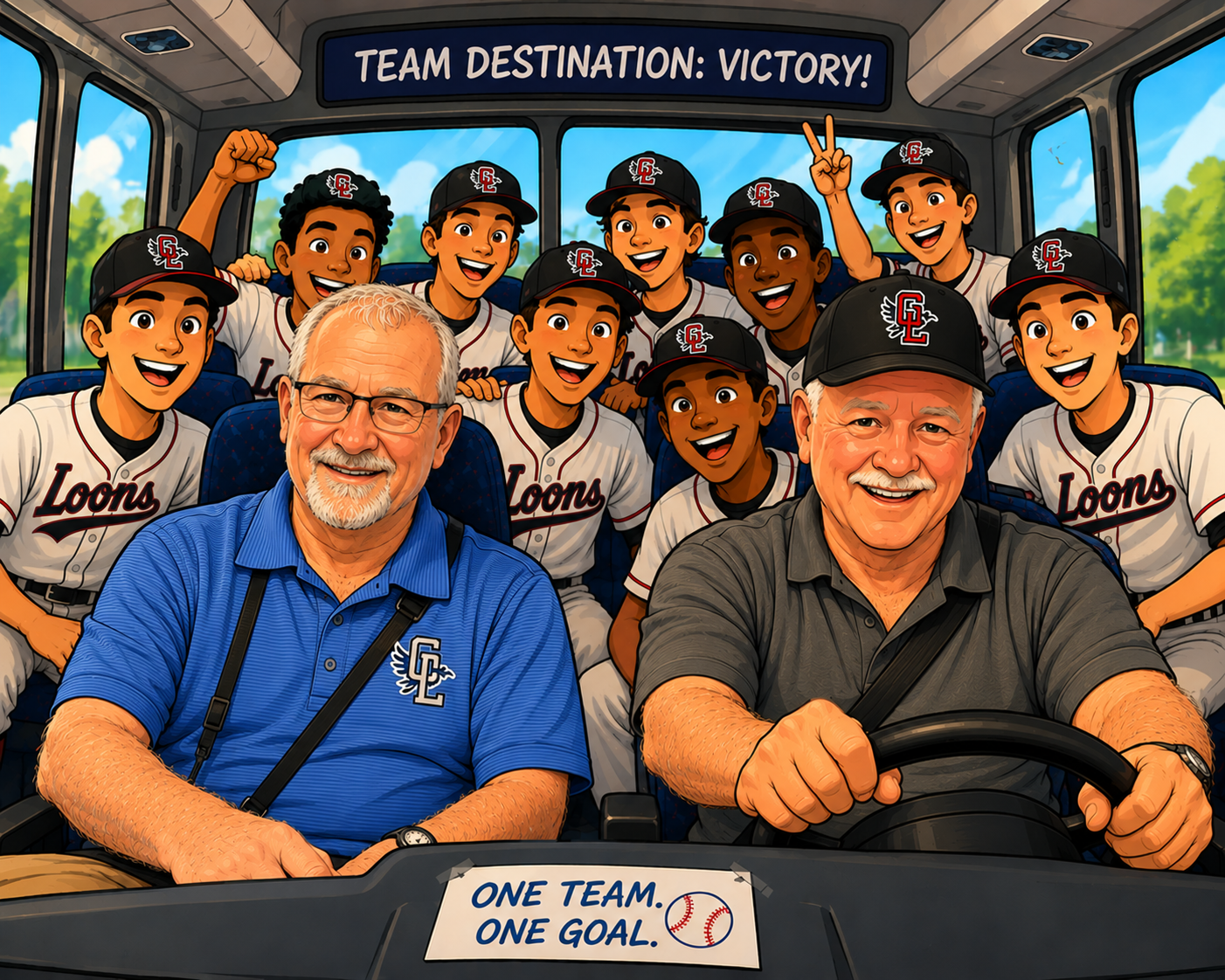
Interview with Paul Beachy – Team Bus Driver For The Great Lakes Loons (LA Dodgers Minor League Team)
It’s been a few days since I did this interview. We have evidently been working my son-in-law (the video guy) like a rented mule at US Water Systems. However, I am taking him to London with me in a few days, so maybe Watford will buy him a pint as a tip, but he’s a dang Red Sox fan, so there is that! I thought that it would be interesting…
Discussion (19)
Disagree, not disagreeable
It looks to me like KJ is struggling with his command. If I remember correctly the target was high and inside on his first two pitches on Sunday. Both pitches were low and outside. Both were actually strikes but KG missed so badly that the umpire called both a ball. Usually when you lose your command it is a flaw in your delivery. I hope Honeycutt can fix it before the play offs.
Like others here, KJ, with his inconsistency, makes me very nervous. He always seems to be trying to find that cutter. He’s a man without an out pitch. He is always up in the zone and working behind in counts. Seldom is anything below thigh high. And when that cutter is flat and up, he’s BP. I don’t know if he intends to live at the top of the zone (where high spin rate and velocity guys like Buehler can have success) or not. But he is always at the top of the zone or up and out of it. The high inside cutter to lefties is a strength when it’s right. I’d like to see his breaking stuff at the knees way more often but he either isn’t capable of that or wants to pitch up in the zone with cutters. He looks very fidgety still. But he’s who we have until Doc needs to change the roles. We’re all rooting for him to get it going on a consistent basis. If not I think Kelly, Urias and/or Baez can perform in that roll.
The player development side of the Dodgers has seen great improvement since Friedman et al have taken over. You can’t stress enough how important it is that they can take a 12th round pick like Matt Beaty or a cast-off like Max Muncy and turn them into contributors while drafting late annually.
There’s a great article about the Cubs’ so-called dynasty in Sports Illustrated which shows the wisdom in how the Dodgers have done things compared to the Cubs who, surprisingly, ended up being one and done.
Open on sports.yahoo.comhttps://sports.yahoo.com/dynasty-deferred-more-just-cubs-152219178.htmlWhile Chi still has some great individual players, their player development has gone nowhere in the past 3 years and their pitchers are aging rapidly. I am much more sanguine about the Dodgers’ future prospects than the Cubs’.
Great work 2D2 –
Just took a look at the complete and utter meltdown of one Craig Kimbrel ($32M next 2 years and a $1M buyout) in the last week or so… It speaks volumes about what M.T., AC and others have been saying about going out and spending the big $$$…
I have always liked the in house options and extremely pleased that they have drafted pitchers as designated bullpen…
I envision Urias as that lock down closer… Got the Latin music blaring from the pen along with the light show, gates open and crowd goes crazy just like Gagne….
A guy can dream, can’t he???
2d2,
It certainly seems that player development has come a long way from its inception and introduction in the farm systems of MLB. It would seem logical that in this day and age, all teams have a comprehensive program in place. If not, I can’t imagine the reason they don’t. But the Dodgers had been focused on cultivating the farm, yet they still performed at the MLB level with some real holes in their offense, ala the Turner Ward era and prior to that. It seems to have finally clicked in with the advent of Van Scoyoc & Cie. I think very few fans would argue that the batting, in general, this season is superior.
Is the pitching up to this level? In some ways it is, but it is still a work in progress. Honeycutt has been a mainstay, but as Mark’s thread about a possible change to ??, seems to sit right with my perceptions. As good as the development has been, it can rise to another level, I’m just not sure how they will do it and who will be the ‘guy’ that puts it together for them. Any ideas?
In my mind, the Dodgers are as good as any other team in both leagues. Many elements have to come together to run the gauntlet of playoff games. Health/conditioning, attitude/desire, focus and natural talent, and LUCK. So many possibilities could go wrong for a team, but the Dodgers have been resilient this year. They should have as good a chance as any to go all the way. The Vegas bookmakers feel the same way. It’s gonna be fun and maybe nail biting. Jansen definitely induces nail biting in me. The bats will have to speak loudly and hopefully quickly during the games. HFA, to me, is a big plus. We are outstanding at home. Let’s use that advantage.
Summer’s over, fall is in the air and you can just about sick a fork in the regular season. It looks like the only undecided matchup will be the American League Wild Card game and AL’s HFA. I’m rooting on the Indians over the Rays. Other than that, we’re a win or a Braves loss away from clinching HFA for the NL leg of the post-season. I don’t see the Yankees or Astros playing 500 the rest of the way and I don’t see the Dodgers sweeping the rest of our schedule either.
So, the Braves are going to play the Cardinals, which will be a great series. We’ll either get the Nats or the Brew Crew, so I’m rooting for the Brewers to win that Wild Card game. The AL will feature an Indians/A’s Wild Card game. Best record in the AL is unsettled, so we’ll have to wait and see who plays the Twins and who plays the Wild Card.
The Rays are the only young team with Post-Season aspirations this year. All the others have hundreds of years of baseball history behind them. This post-season is shaping up to be very exciting. I can’t wait until next week!
Enjoyed your article this morning, 2D2. Glad to see the scouts,coaches, and staff on the same page. Especially liked the information about the preparation made for incoming players. Assume good character is also looked at and passed on to everyone which is very important to me. Communication is so important for a cohesive unit. On a small scale, an example could be made of the communication between pitcher and catcher, on pitching coach and pitcher or on base coaches and players on base. Good morning and good job.
What a shame that some players for whatever reasons throw this opportunity away.