
Veeck as in wreck: baseball's most improvising promoter
He was born in Chicago on February 9th, 1914. His father, Bill Sr., was a sportswriter in Chicago who wrote articles about how he would run the Cubs differently. He was taken up on that by team owner; William Wrigley took him up on it in 1918 he was hired to run the Cubs. Bill Jr. was 4 years old.
He began hanging around Wrigley when he was 10. He worked there as a vendor and ticket seller. He was sent to the exclusive Phillips Academy in Andover Massachusetts but lasted only a few weeks. After two years in a public high school in the Chicago suburb of Hinsdale, he was sent to the Ranch School in Las Alamos, New Mexico. There they used an experimental curriculum based on Henry David Thoreau's back to nature philosophy. He left without graduating.
He entered Kenyon College in Ohio but remembered his college days as a nonstop party. He was elected freshman class president and played football and basketball. He also joined the Beta Theta Phi fraternity. He quit school early in his second year when his dad was diagnosed with leukemia. His father passed away in 1933 when Bill was 19. He had some success running the Cubs as his team's won pennants in 29-32-35. The 32 team was the one that faced Ruth's Yankees when he made his famous called shot at Wrigley.
Father and son were two completely different people. Dad was a starchy formal gentleman, a picture of established dignity. The son never wore a necktie, had wild, kinky reddish hair that earned him the nickname "Burrhead". He spent his lifetime tilting every establishment windmill he saw.
Now under the ownership of Phil Wrigley, William's son, Bill went to work for the Cubs at a salary of 18 dollars a week. Whereas Phillip was shy and would rather work on a car than meet the public, young Bill was full of promotional ideas like installing lights at the ballpark. Phillip shot them all down. Bill's only contribution was planting the ivy on Wrigley's outfield walls, but that was Phillip's idea.
Veeck married Eleanor Raymond on Dec 18th, 1935. She had been a elephant wrangler and horseback rider with the Ringling Brothers circus. He said her daredevilry appealed to him. She said he exaggerated her feats with the circus.
When he was 27, he bought his first baseball team, the Milwaukee Brewers of the American Association, the highest level in the minors. He would say he paid nothing for the failing franchise, and he just assumed 100,000 in debt. The team's business manager said otherwise. He said Veeck put up 40,000 dollars, mostly other people's money, which was usually the case when Veeck bought a team.
The 41 Brewers were a last place team when Veeck took over, he brought one of his investors, former Cubs manager, Charlie Grimm as manager. Grimm had been a first baseman who was left-handed, which is how he also played the banjo. Jolly Cholly as he was called, was perfect for Veeck. He tried out many different promotions, those that worked he kept. He gave out prizes almost every night. He held games in the morning for workers who worked at night and handed out breakfast of cornflakes to all. He bought players he could not afford and then sold them to raise money for more purchases. Something worked, Milwaukee won the AA championship that first year and then won 3 more in a row.
Veeck would later write that he tried to purchase the Phillies in 1942 wanting to stock the team with black players, and enlisted the help of Abe Saperstein, the owner of the Harlem Globetrotters to help him recruit black players. In 1998 some researchers claimed it was not true. True or not, it added to the legacy of pushing back against authority that Veeck was often accused of. Supposedly after he informed commissioner Landis and NL president Frick of his intentions, they arranged for the Phillies to be sold to another buyer. Landis is known to have been a racist.
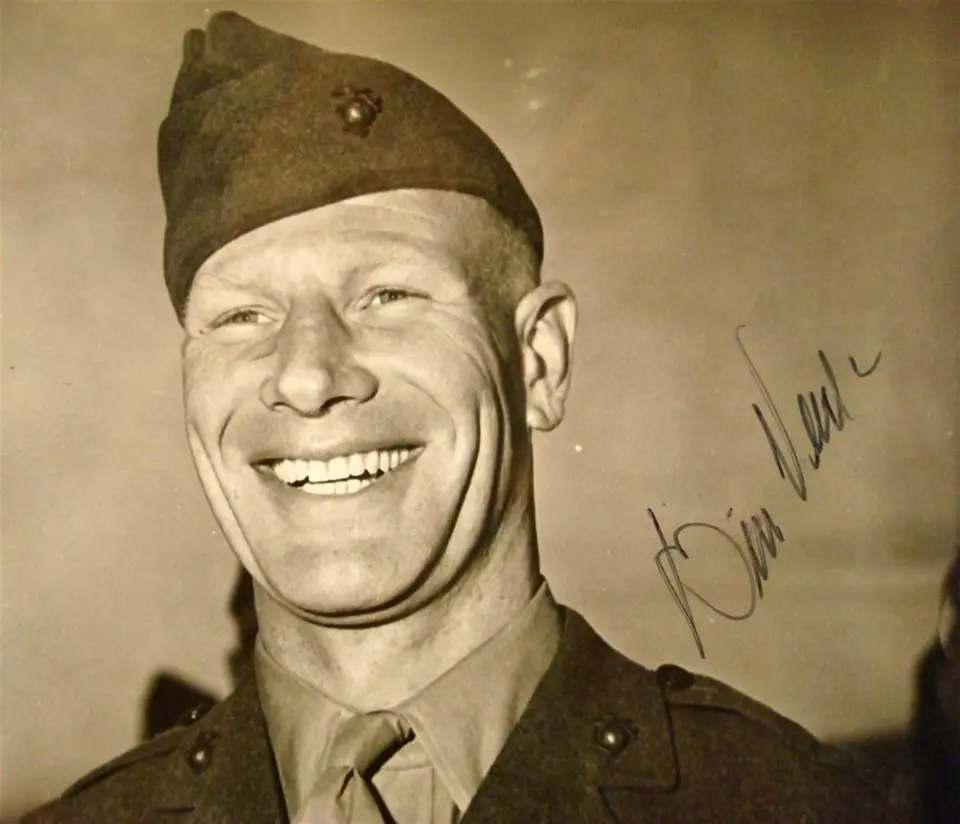
Veeck was not around to enjoy the fruits of his labors. By 1943, he was in the Marines. He was stationed in the Pacific. He was on the island of Bougainville when the recoil of an anti-aircraft gun smashed his right leg. He spent the rest of the war in a hospital.
Grimm left the Brewers in 44 to take over the Cubs. He got his friend, Casey Stengel, to come manage Milwaukee. When Veeck heard the news in the Pacific, he was furious and sent Grimm a letter telling him to fire that clown. After Stengel won the championship, Veeck admitted he was wrong and asked Casey to stay, but he had heard about the letter, so he went home to California.
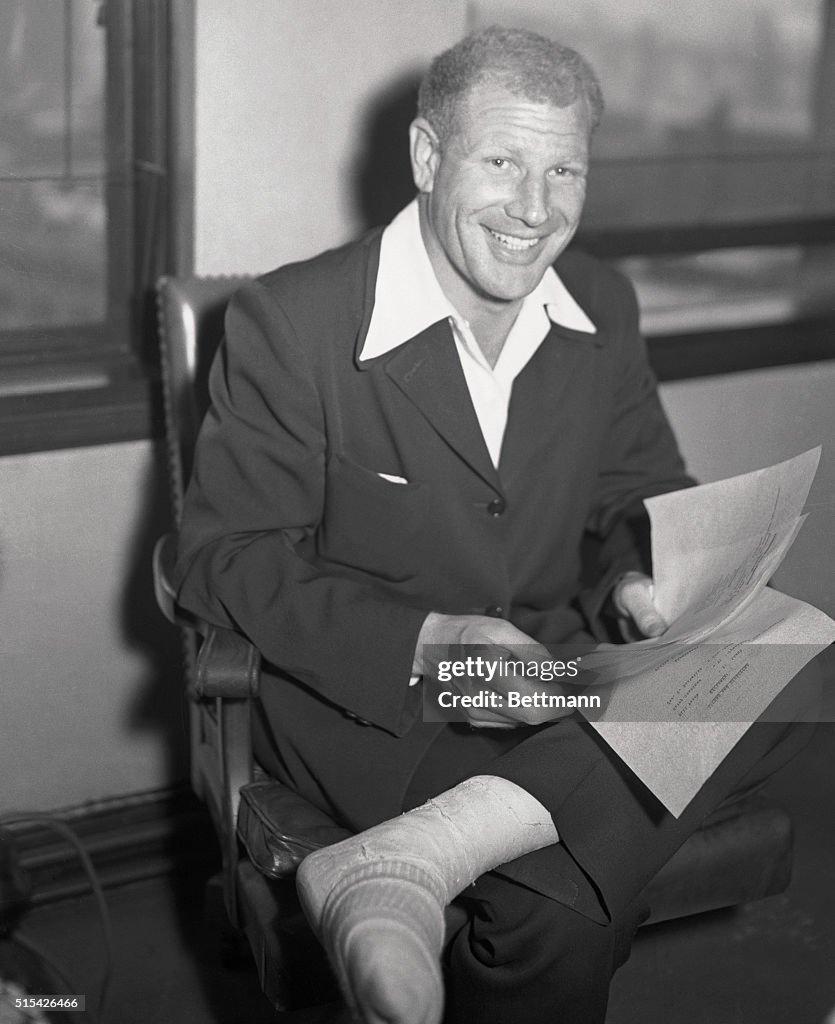
Veeck sold the franchise when he returned. His marriage was in trouble, so it was one or the other. The reconciliation did not take. Neither did his divorce from baseball. He began looking for a way to get back in the game, a vulture looking for a dying team. The Indians had not won a pennant since 1920. He put together a syndicate and bought the team for 2.2 million dollars. He put up 268 thousand for a 30% stake in the team.
Veeck brought all of his stunts, fireworks and giveaways with him. Minor league owners had recognized the value of promotion; MLB owners thought it unnecessary. Red Patterson, the Yankees PR director summed it up nicely when he said how Yankees GM, George Weiss had vetoed a cap giveaway saying he did not want every kid in NYC wearing a Yankees cap.
Veeck took over in June of 1946. He gave away things like nylons, which were hard to come by in 1946, thousands of orchids, the Indians went over the one million mark in attendance for the first time ever. He moved games from old League Park, capacity 22,000, to Municipal Stadium which would hold 78,000. He removed the door to his office and listed his home number publicly.
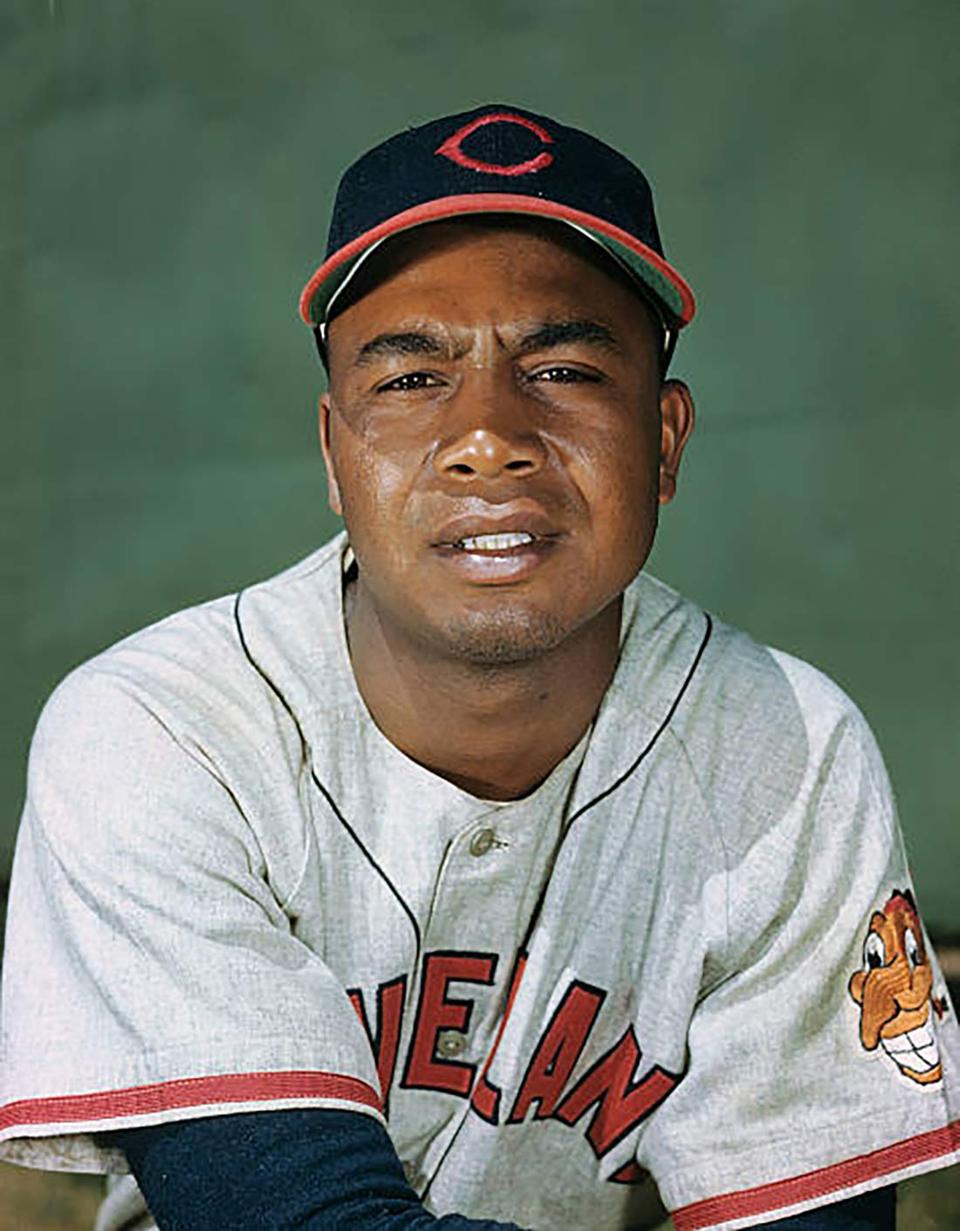
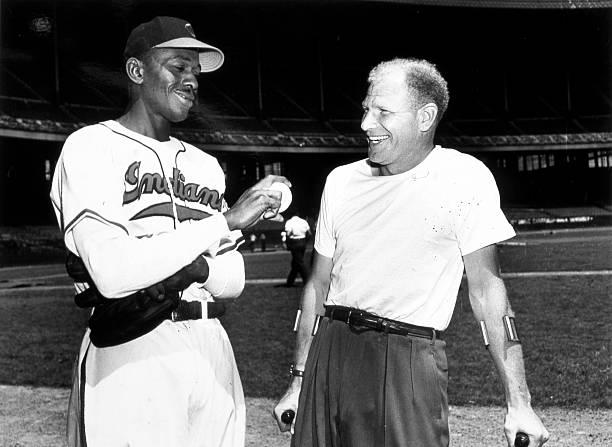
After the 1946 World Series, Veeck's right leg was amputated right below the knee. When his new artificial leg arrived, he threw a party to celebrate. Veeck would later endure successive amputations as infection moved up the stump of his leg, 36 in all. The Indians finished 6th in 46 and 4th in 47, but attendance climbed to 1.2 million. In July of 1947, Veeck signed the AL's first black player, Larry Doby. He played in just 29 games, but his impact on the 48 team would be huge.
Before the 1948 season, he signed Negro League legend, Satchel Paige. He played up the mystery of Ol Satch's age and had a drawing card as well as a good pitcher. He traded for Joe Gordon, former MVP, from the Yankees. Gordon would return to form for a few years in Cleveland, but the cost was Allie Reynolds, who became a huge part of the Yankees five year run as World Champs from 49-53.
He next decided to get rid of his SS and manager, Lou Boudreau. When news of the plan to trade him leaked, Veeck faced a hurricane of criticism. The fans wrote the papers and the sportswriters jumped on the bandwagon. Veeck decided to turn a PR disaster into a coup, and announced he was bowing to the fans wishes and retaining the manage.
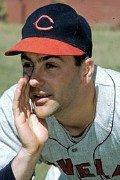
Not trading Boudreau was the best deal Veeck made. Lou had a career year, batting .355 with a .453 OBP and slugging .534. He won the AL MVP award. 3B Ken Keltner had a career year, .297/31/119. Joe Gordon, .280/32/124 returned to his All-Star form. Doby hit .301 in 122 games, Paige was 6-1, and unheralded pitchers, Gene Bearden and Bob Lemon finished with 20 wins each and 1-2 in the ERA race. Bob Feller was also on this staff. He went 19-15.
The Indians fought the Red Sox, A's and Yankees in a very tight pennant race. With a winner on the field, and his non-stop promotions, the Indians drew 2.6 million fans, a MLB record that stood for 14 years. Boston and Cleveland finished the season tied. In game one of a 2-game playoff, Boudreau homered twice and Cleveland won 8-3. They would face the Boston Braves in the World Series. The middle three games to be played in Cleveland. Usually, Series tickets are sold in sets. Veeck made the 48 series an event for the common fan. He sold them as single game tickets so as many fans could see the team as possible.
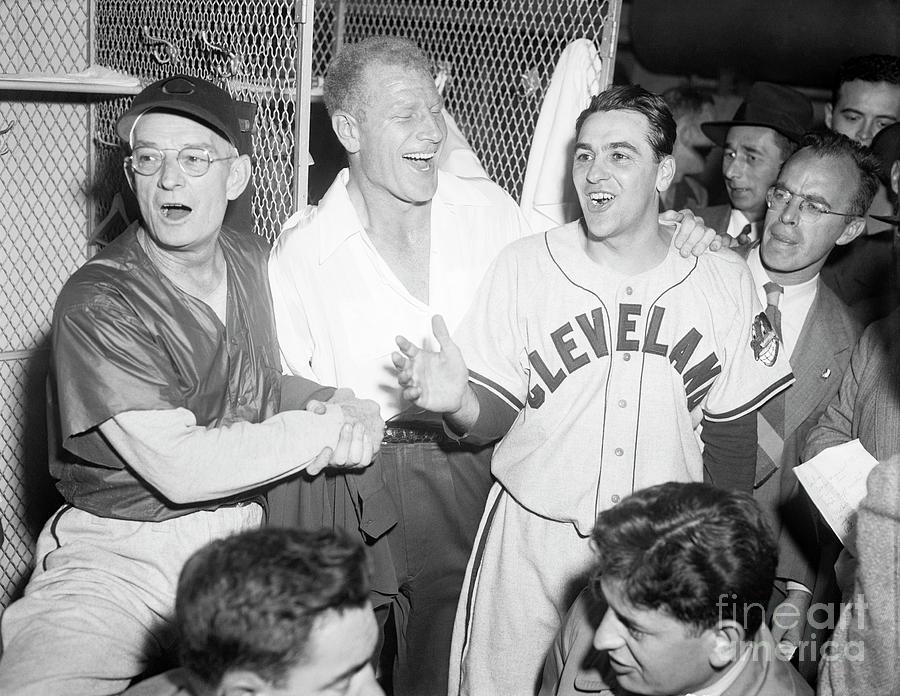
Except for game five, all of the games were low scoring affairs. Sain beat Feller 1-0 in game one. Lemon beat Spahn 4-1 in game two. Back in Cleveland, Bearden beat Bickford 2-0. Steve Gromek, 9-3 during the regular season, beat Sain 2-1. In game five, after falling behind 4-1, Cleveland took a 5-4 lead with a 4-run fourth. Boston tied it off of Feller in the top of the 6th. In the top of the 7th, Feller gave up 2 more runs, and the Braves added 3 off of his relief for an 11-5 win. The teams returned to Boston where Lemon would defeat them 4-3 with Bearden getting a save. It was the high point in Veeck's career in the game. After the parade, he went home to an empty apartment and said he had never felt so lonely in his life. It would explain why his years in Cleveland were spent looking for excitement. At one point, he would even fly to NYC so he could go to the Copacabana and then fly back in the morning.
The Indians fell to 3rd in 1949, attendance fell 300,000. When the team was eliminated, he staged a funeral at the ballpark, burning the 1948 banner. The stunt outraged fans and players alike. He had already decided to sell the team before the season ended. While negotiating the sale, he was also taking instruction to convert to Catholicism. He had fallen in love with Mary Ackerman, a vivacious publicist with the Ice Capades shows, and she wanted to be married in her church. The Catholic church does not recognize divorce. Some of his associates said the church granted him dispensation because his first marriage was performed in an Episcopalian church. He and Mary were married on April 29th, 1950. He had found his soulmate. She joined him as his radio and TV co-host and promoted his various teams. They would have six children. His son later said that my dad loved baseball so much, he had nine children. When the DH was introduced, my mother left town.
Veeck sold the team also because he needed the money to settle his divorce and provide trust funds for his 3 children. They rarely saw him after the divorce. He and Mary moved into his ranch in Arizona but not for long. Civic leaders in several cities, LA and Milwaukee included, wanted him to buy a team and move it to their city. He set his sights on the St. Louis Browns. The Brown's had won just one pennant, 1944 and were the AL's perennial doormats. Because of poor attendance, opposing teams complained that the gate receipts did not even cover travel expenses.
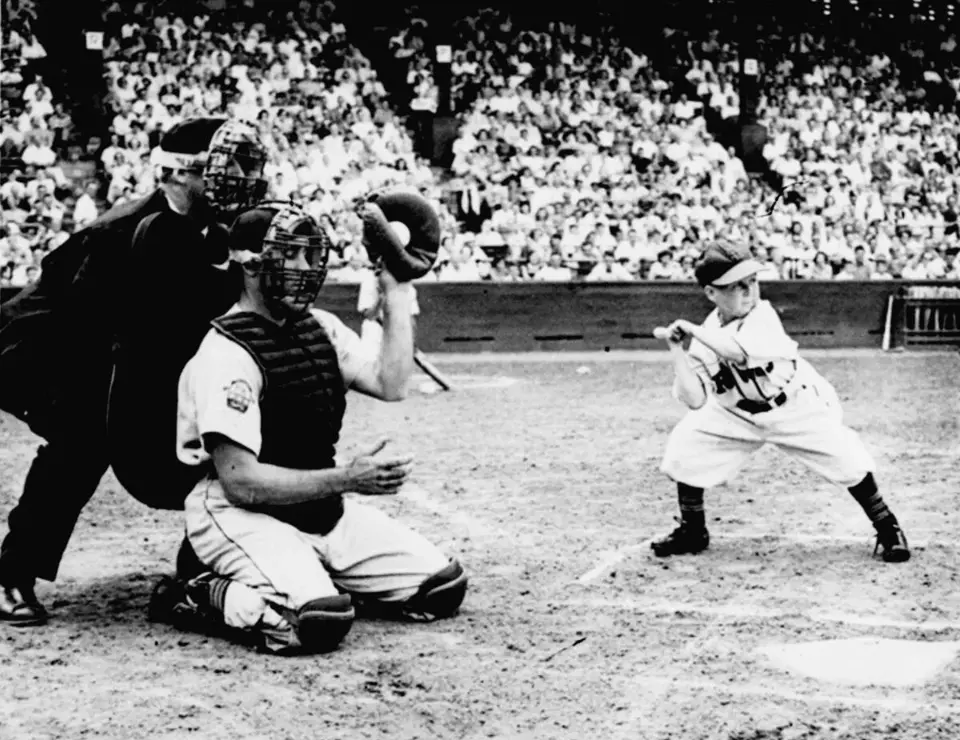
Veeck bought the Browns in July. On his first night as owner, he gave a free beer and soda to everyone in the ballpark. It was assumed he would be moving the team, but he later said he just wanted to run the Cardinals out of town. Six weeks after taking over, he pulled his most famous stunt. 3'7" Eddie Gaedel stepped out of the dugout to lead off the second game of a double-header with the Tigers. After the manager, Zach Taylor, showed the umpire that Gaedel had a signed contract, the tiny man squeezed into deep crouch at the plate displaying a strike zone about the size of a matchbox. The largest crowd in nearly four years roared their approval. Bob Swift dropped to his knees and pitcher Bob Cain threw four high ones. Gaedel went down to first, slapped the pinch runner on his rump and ran into the dugout tipping his cap.
Five days later Veeck came up with his grandstand manager promo. He had placards with yes or no handed out to fans behind the home plate dugout. At key points in the game they were asked to call the plays, steal, bunt, hit and run? Taylor watched from a rocking chair puffing his pipe while the Browns beat the A's. According to many, Veeck had gone too far bringing his stunts onto the field. The Browns attendance doubled but was still the worst in the league.
The IRS were the ones who brought Veeck down in St. Louis, not because his finances were shaky, but because Cardinals owner, Fred Saigh was convicted of income tax evasion and forced to sell the team. August Busch Jr bought the team. Veeck knew he could never run him out of town, so he struck a deal to move the Browns to Baltimore. His fellow owners turned him down; they had been enraged by his stunts. He was now a lame duck. He sold Sportsman's Park to Busch for 800,000 dollars; the Cardinals were tenants. He sold his Arizona ranch and several players during the 53 season just to stay afloat. In their last game, the Browns had to use scuffed up baseballs because they had no new ones. After the season, his fellow owners blocked his moving the team to Baltimore, defeated, he sold his interest in the team to a Baltimore syndicate, and the league immediately approved the sale and moving of the franchise. They just wanted Veeck gone.
Once again trying to find a way back into the game, he tried to buy the Philadelphia A's and Tigers. He worked with the governor of California trying to get a team to the west coast. He even negotiated trying to buy the Ringling Brothers Circus, since many had told him he belonged in a circus. He scouted for old friend Hank Greenburg's Indians. After one season of running Miami's AAA Marlins, he was a commentator on NBC's Game of the Week.
A family feud finally opened the door for his return. White Sox president, Grace Comiskey died in 1956 leaving the majority of the team to her oldest child, Dorothy Rigney, rather than her son, Charles Comiskey Jr. 31-year-old Charles, who had been running the team was now a minority leader and he resented it. The board of directors was deadlocked with 2 votes for each, with 54 percent of the stock, Dorothy did not have enough to appoint a fifth member.
Worn down by two years of squabbling, she told her lawyers to find a buyer. Veeck put together a group of local and out of town financers to acquire an option for her shares. Although Veeck had no money of his own, he had no trouble finding investors. They offered her 2.7 million for her 54% of the teams 5-million-dollar value. Young Charlie was given a chance to match the offer, but Veeck said his offer was a lowball offer.
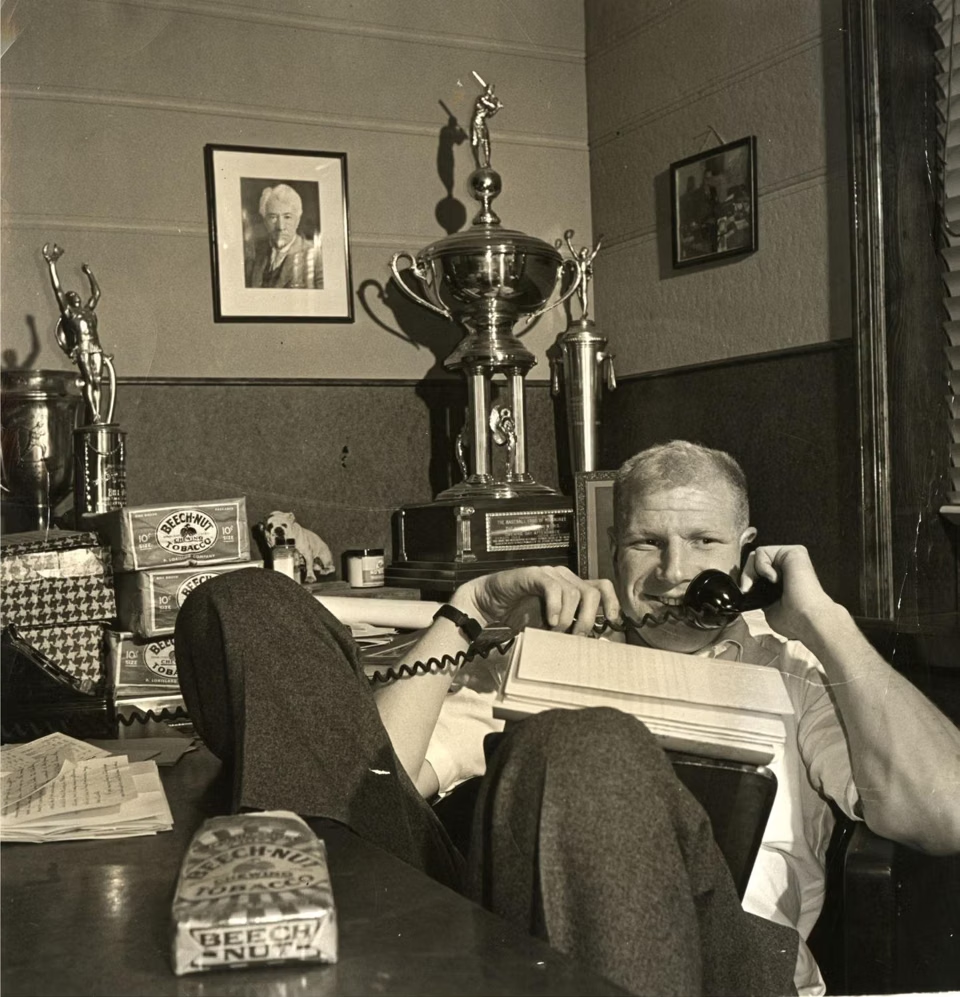
The group exercised its option in February of 1959. Comiskey filed a lawsuit trying to block the sale. In the coming months he would pepper the courthouses with lawsuits and he lost them all. Veeck compared him to a petulant child who felt the world revolved around him, and he should be the sole leader of the White Sox future fortunes. On the day Bill arrived at Comiskey Park, Charlie left stating he would not talk business with him. Veeck offered sportswriters a 54% cup of coffee.
During his entire time with the Sox, Bill and Charlie would be at odds. Veeck and his partners hoping Charlie would sell, him refusing, and Greenburg as the unlucky go-between. Veeck's first assessment of the 59 Sox had him convinced the team could not match the Yankees power, but manager Al Lopez insisted his team could win. So Veeck made few changes to the roster. His only additions were two over the hill outfielders. Del Ennis was with the team seven weeks before he was released, and Harry " Suitcase" Simpson, hit just .187 before he was traded in August to Pittsburgh for 34-year-old 1st baseman, Ted Klusewski. Big Klu had big time power in Pittsburgh before back problems had sapped his power. He hit 2 homers in 31 games for the Sox.
The 59 Sox were called the Go-Go Sox because of their speedy SS, Luis Aparicio who led the league with 56 steals. As a team they stole 113. Not a lot by today's standards, but back when speed was not really a thing, it was a lot. They took over 1st place for good on July 28th. Veeck was amazed that a team could win with pitching, defense and speed. 39-year-old Early Wynn led the staff with 22 wins. Bob Shaw had 18, and Billy Pierce 14. Closer Gerry Staley went 8-5 with 15 saves to lead the AL.
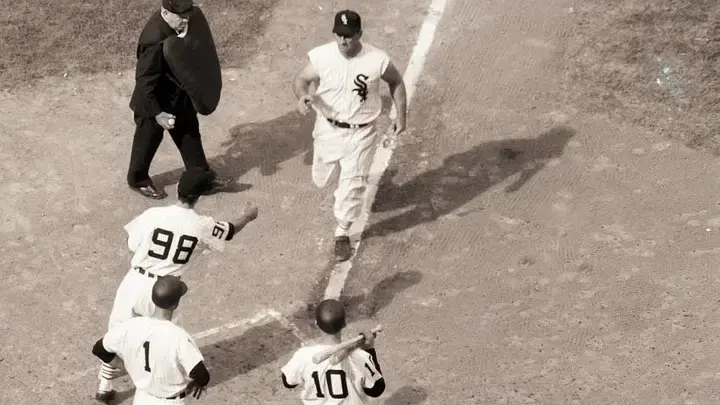
They faced the Los Angeles Dodgers in the World Series, their first series appearance since the 1919 Black Sox. The Dodgers were in their second season in Los Angeles after moving from Brooklyn. The team had some aging veterans and some kids but a lot more players with Series experience than the Sox. Nevertheless, the Sox pounded LA in game one 11-0. Klusewski slammed two homers in the rout. Once again Veeck sold the tickets as single game tickets, finding a list of the Sox fans who had been fans the longest, he offered the tickets to them first. Ultimately, even though both teams scored just 19 runs during the series, the Sox were beaten by the one thing the team lacked, power. LA hit 7 homers to their 4. Veeck would lament that lack of power after the series, and a joke circulated that the Sox should change their name to the Nylons since Nylons get more runs.
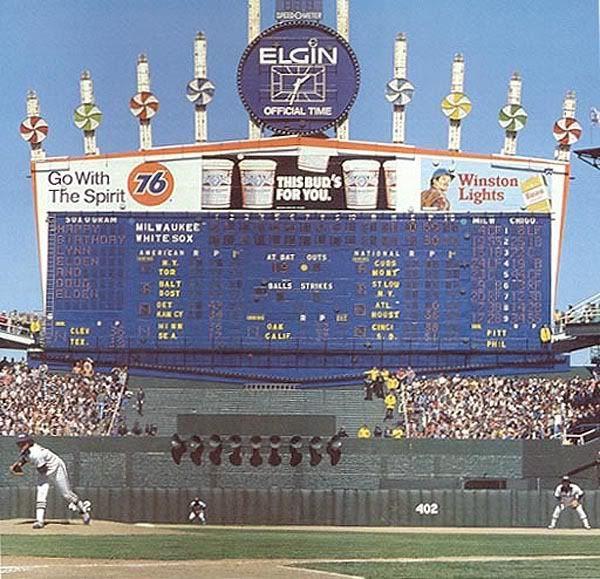
In 1960, Veeck added his most enduring touch to the game. He put the players' names on the backs of their road unis; the home unis got the same treatment in 61. He installed an exploding scoreboard to celebrate the home teams homers. It had every sound imaginable including a woman screaming "fireman save my child". The noise delighted fans and infuriated his critics. Jimmy Piersall once chucked baseballs at the board. Casey and the Yankees had a puckish response, after a Mantle homer, the Yankee players paraded in front of the bench with sparklers.
The Sox did not perform as well over the next few years partially because Veeck had set out to solve the power problem and he traded away prospects like Norm Cash, Johnny Callison, Earl Battey and John Romano, Don Mincher and Barry Latman. In return he got some aging vets who were his favorites, Roy Seivers, 33 when acquired, had played for him in St. Louis, and the Cuban Comer, Minnie Minoso, who he had traded to the White Sox before he became a star. Minsos's age was at question, he was supposed to be in his mid 30's. He also acquired some youth in 26-year-old Gene Freese and 25-year-old pitcher, Frank Bauman. Veeck defended the trades by saying the 5-year plan had produced no pennants. He was simply unwilling to wait for prospects to develop.
The 1960 Sox set a record for attendance with 1.6 million. Veeck himself was suffering from various ailments. He was a chain smoker who sometimes passed out when coughing fits struck. He finally went to Mayo's clinic where the doctors found a variety of ailments and prescribed treatment. Veeck sold his share of the team to Arthur Allyn, one of his partners. He moved his family to Maryland to a farm on the shore of Chesapeake Bay. He named the farm Tranquility.
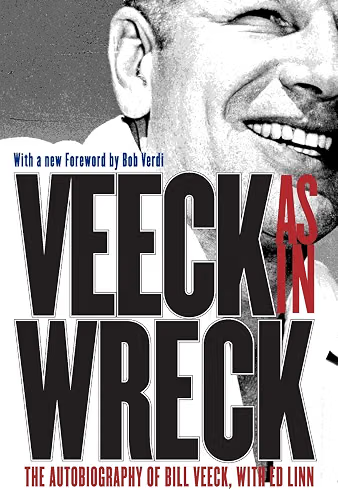
In 1962 he published his autobiography, Veeck as in Wreck, co-wrote with sportswriter Ed Linn. The book is both joyful and bitter. He settled some old scores and lobbed some grenades at the baseball establishment. Over the next few years he wrote a newspaper column, captivated sportswriters who came to Tranquility and recovered his health. Reflecting on his many hospital stays, Veeck said, suffering is overrated. While watching a local little league game, he found a 12-year-old with a sweet swing, Harold Baines. He and Linn wrote another book, the Hustler's Handbook.
He had the itch to get back into baseball again. He thought he had a deal to buy the Orioles, but the owner backed out afraid that Veeck would sell the team in a few years and not care if it was moved from Baltimore. He also tried to buy the struggling Senators before Bob Short bought the team and moved them to Texas.
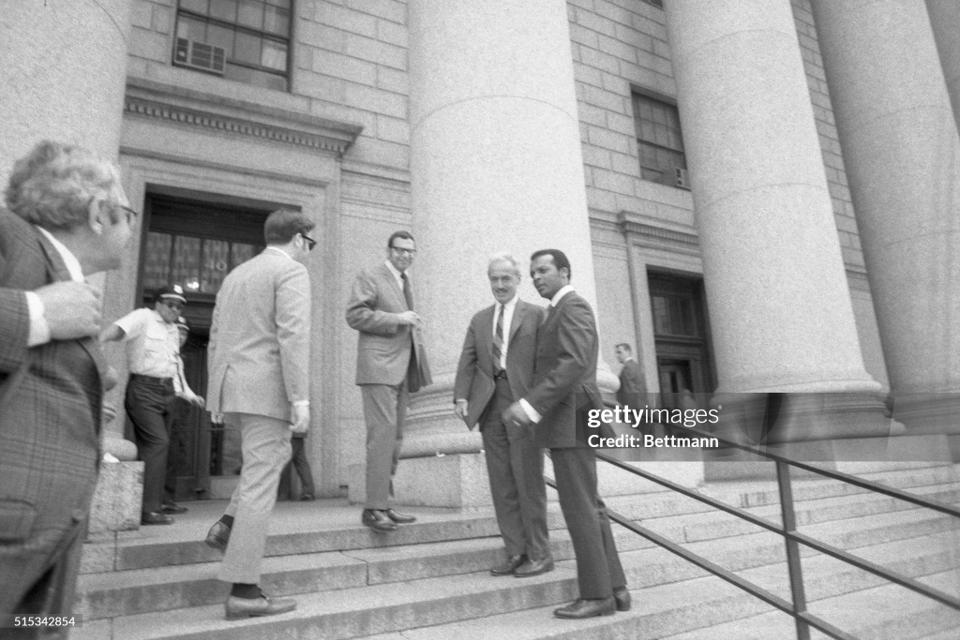
He did himself no favors with the baseball establishment when he testified in support of Curt Flood's challenge of the reserve clause. He likened a ballplayer's condition as human bondage. He also stated the clause should be phased out gradually as to avoid chaos. Greenburg, Jackie Robinson and Veeck were the only ones associated with the game who spoke in Floods behalf.
In 1975, Veeck learned that Sox owner, John Allyn, who had bought control from his brother, Allyn, was near bankruptcy. Attendance had dropped as fans had stayed away from the deteriorating neighborhood around Comiskey Park. The team was on the verge of being transferred to Seattle. Veeck put together a group of 40 investors including Greenburg and onetime Sox manager, Paul Richards. The owners rejected the bid saying it relied too much on borrowed money. The real reason was that most of the owners despised the man. Veeck raised more cash, they rejected him again. But this time Tigers owner John Fetzer told his colleagues that Veeck had done everything they asked, and despite the names he had been called, that they needed to take another vote. It was 10-2 in favor. A delighted Veeck kicked up his artificial leg and hung a sign in the lobby of the hotel where the winter meetings were taking place that said open for business and spent 14 hours making trades public. On his first day back in the club, his antics cause fellow owner, Bud Selig to declare this is a meat market.
Veeck had only 13 days to celebrate his comeback. On the 23rd of December, arbitrator, Peter Seitz ruled that the reserve clause binding the players to teams for life was abolished. Dave McNally and Andy Messersmith had brought the suit which Seitz now ruled on. It abolished the reserve clause and opened the door to free agency and the spiraling salary's that followed. Working with little capital, with no margin for error, he was on his way out of the game almost as soon as he was back in. He would not go quietly.
He told GM, Roland Hemmond, don't bother drawing up a budget, we do not have any money. We will figure it out as we go along. Veeck usually worked 20 hours a day, chain smoking and drinking beers. Hemmond said, I worked for Veeck for five years, but it was really 10 because we never slept.
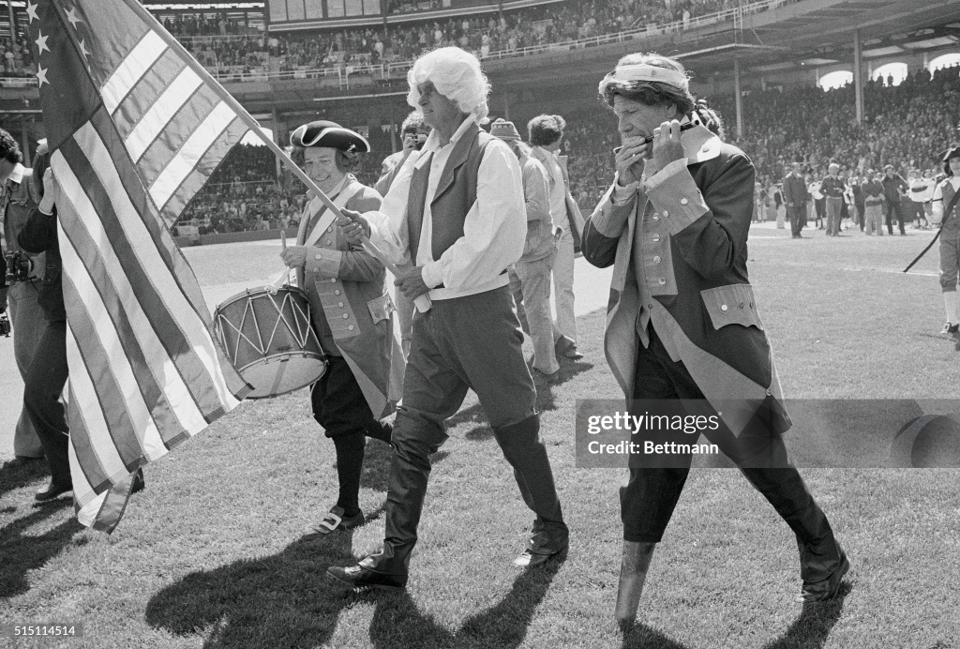
Celebrating the US's Bicentennial, he reenacted the famous painting Spirit of 76 by wearing bandages and uniforms of the Revolutionary War, Veeck wore a peg leg and played the fife with Paul Richards carrying the American flag and longtime friend, Ruddie Schaffer playing the drum they marched across the field. The stunts continued throughout the season, Belly Dancers, a parade of horses and cattle, he put the players in shorts for a few games. He had coach Minnie Minoso, supposedly 53 at the time, in the lineup as the DH. Although attendance climbed some, they finished last.
In 1977, he found an angle and nearly rode it to glory. He became the rent a player man. He got players who were a year from free agency who he knew he could not resign; Oscar Gamble and Richie Zisk turned the Go-Go Sox into the South-Side Hit Men. The team hit 192 homers, 2nd in the majors and they won 90 games. They contended for the division crown but sank to 3rd by seasons end. They broke Veeck's old attendance record with more than 1.6 million. Veeck was named Exec of the year by the Sporting News.
After that, it was all downhill. Veeck just could not compete with rising salary's caused by free agency and arbitration. Salarys had more than doubled. He hired Larry Doby as the majors second black manager but fired him before a full season. He then replaced him with Tony La Russa, a 34-year-old career minor leaguer.
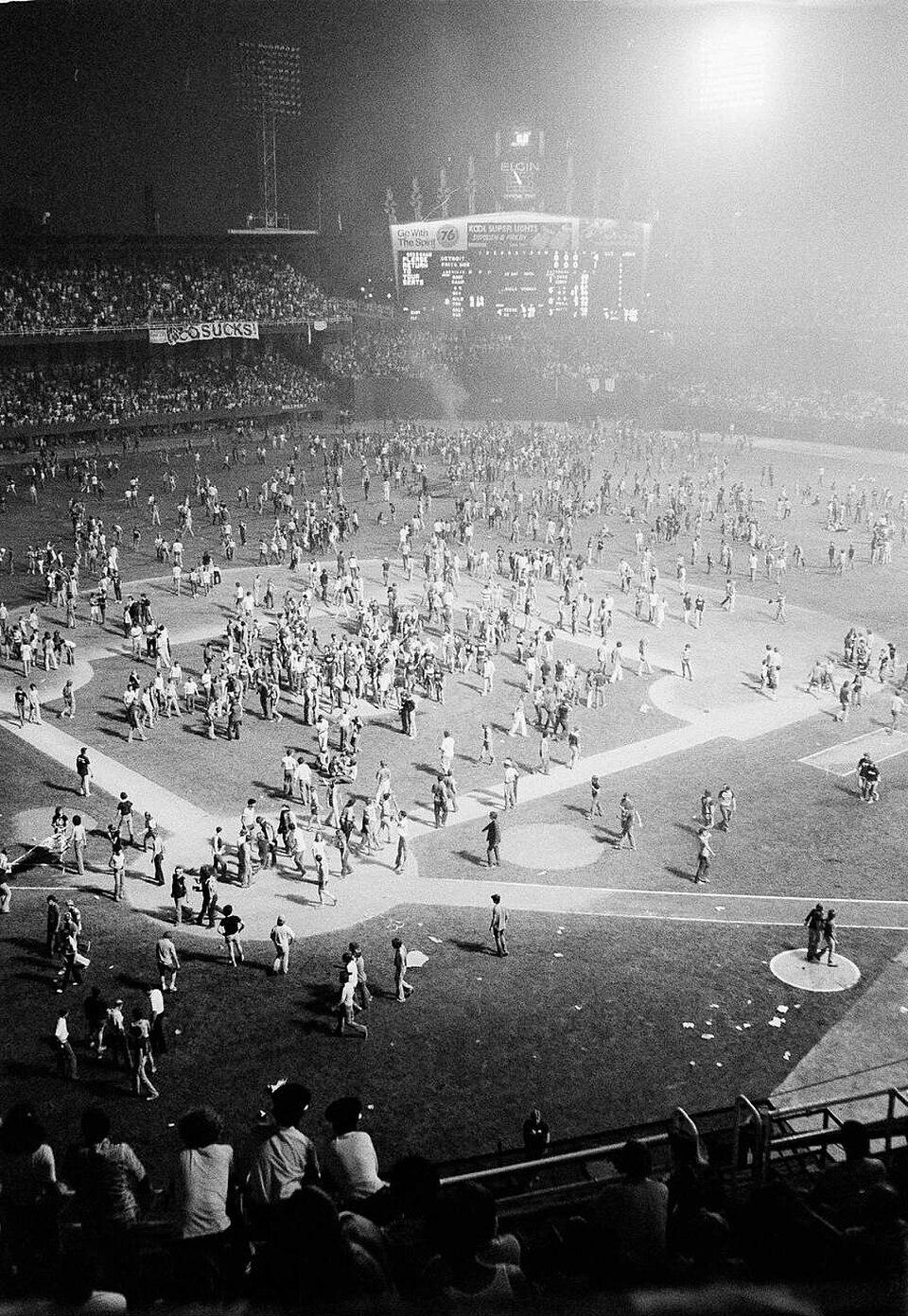
Veeck's second stint with the Sox was doomed by an ill-conceived event in July of 1979. Disco-demolition night became a disaster. Young people were told to bring a disco record, and they would be admitted for 98 cents and watch them blown to bits between games of a doubleheader. An overflow crowd crashed the gates, fueled by beer and marijuana, they tossed the records on the field. The second game was forfeited to Detroit.
By 1980, the 66-year-olds luck and health had run out. He had emphysema and an operation on his remaining leg. His hearing and his eyesight were failing. He could not leave the game without controversy though. When he agreed to sell the team to shopping mall magnate, Eddie DeBartolo, the league refused to approve the deal on the grounds that he would be an absentee owner, and he owned racetracks. DeBartolo suspected the real reason was his Italian heritage and its stereotype Mafia connections.
Jerry Reinsdorf and Eddie Einhorn stepped in to buy the club. At their press conference, Einhorn promised to run a high-class operation. Veeck was insulted and never went to Comiskey again. Einhorn later said he meant no offense, but he did not back off of his criticism of Veeck's operation. He said the ballpark was his outdoor saloon and was proud of it. We set out to change that and succeeded in making it a family place to be.
Bill returned to his roots as a Cubs fan and became a regular in the raucous bleachers at Wrigley. In 1984, he contracted lung cancer. He died at 71 in January of 1986. Besides the ivy on the walls of Wrigley, his son carried on his legacy as an owner and flamboyant promoter for several minor league teams. My father had a sense of the absurd, and he passed it on to me. Veeck was cremated and his remains interred at Oak Woods Cemetery in Chicago. When the White Sox won the series in 2005, they gave rings to his wife Mary and members of the Comiskey family. Veeck was elected to the Hall of Fame in 1991, his enemies on the veterans committee managed to keep him out until he was dead, just like they did with Leo Durocher. His Cooperstown plaque reads, a champion of the little guy. Veeck was indeed that.
Discussion (0)
Disagree, not disagreeable
Be the first to weigh in.
Disagree, but don't be disagreeable.
Join the discussion