
Biggest LA Dodger Trades 1958-1979.
I am limiting this to L.A. Dodgers history simply to keep it from being more than a post long. We shall travel in our way back machine to 1958 when they traded Gino Cimoli to the Cardinals for Wally Moon. Cimoli had a nice career without being a big star. He ended up playing for 6 more teams over the last 8 seasons of his career. Moon, who became so

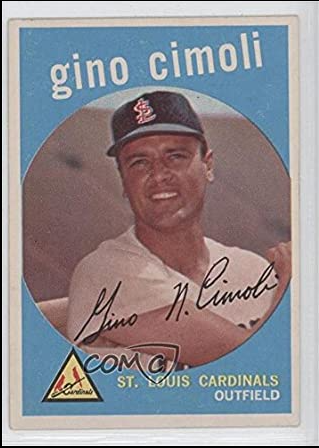
I am limiting this to L.A. Dodgers history simply to keep it from being more than a post long. We shall travel in our way back machine to 1958 when they traded Gino Cimoli to the Cardinals for Wally Moon.
Cimoli had a nice career without being a big star. He ended up playing for 6 more teams over the last 8 seasons of his career. Moon, who became so well known for his moon shots over the left field screen at the Coliseum, had an immediate impact on the team. He was a major piece of the run to the Championship in 59, hitting . 302 with 76 extra base hits, a league leading 11 triples, 19 homers and 74 RBI’s.
Moon had very good years in 60 and 61, and was a member of both the 63 and 65 Championship teams. Definitely a win of a trade. Wally was also known for his extremely bushy eyebrows.
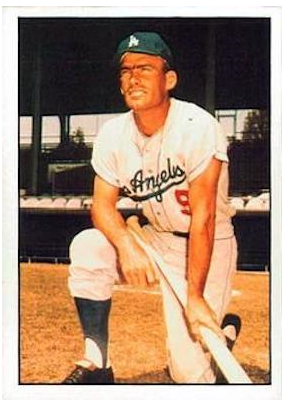
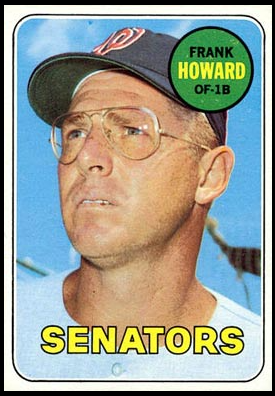
In December of 1964, the Dodgers shipped Frank Howard, Phil Ortega, Pete Richert, Dick Nen and Ken McMullen to the Senators for Claude Osteen and John Kennedy. Basically it was Osteen for Howard, and many were skeptical of the deal. But Osteen became a rotation regular over the next 9 years, and in the 65 series against the Twins, he pitched a 5 hit shutout in game 3 that started the Dodgers back on the road to winning the Championship.
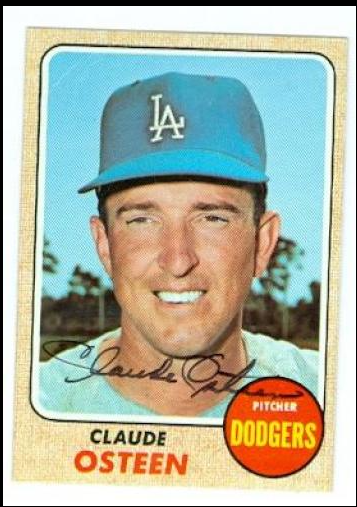
Howard became a monster power hitter in DC, but none of the other players became stars. McMullen had a nice career, but was never a major force for any team. At the time it was one of the best trades ever in Dodger history. Time sure does change things.
December 1966. In a pique of anger, O’Malley ordered Bavasi to trade team captain and SS, Maury Wills after Wills left the team while they were on a tour in Japan because they were not getting paid. Although Maury also claimed his legs were extremely sore from all his base stealing and sliding. So, he was traded to the Pirates for Bob Bailey and Gene Michaels.
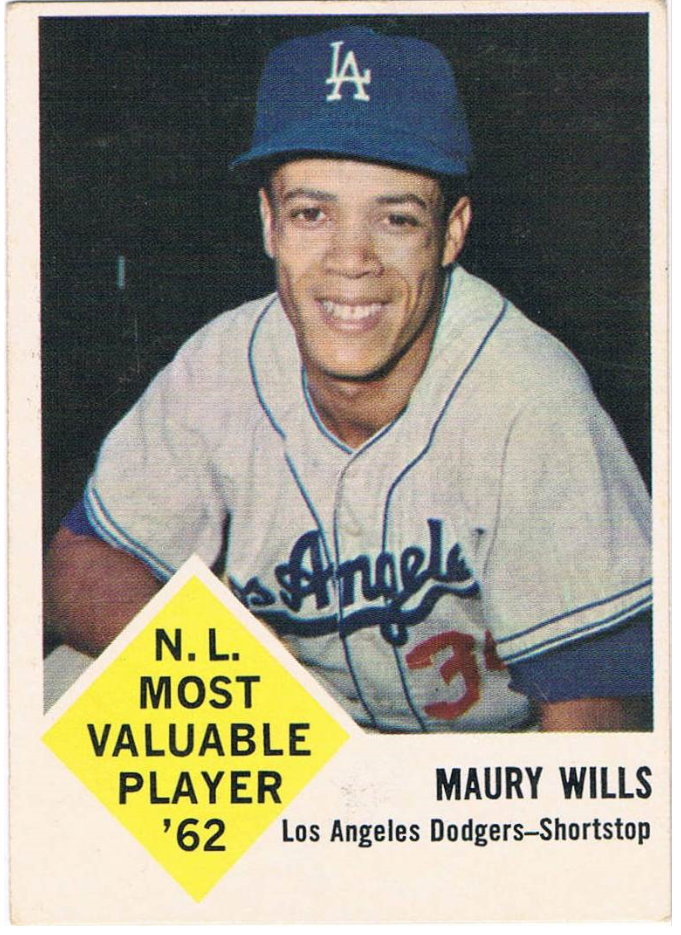
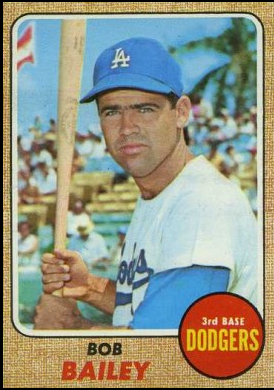
The trade was clearly a loss. Bailey developed into a solid player in Montreal, but only played 2 years in LA, and hit .227. Michaels hit .202 in his only season. He did have a nice career in the Yankee front office.
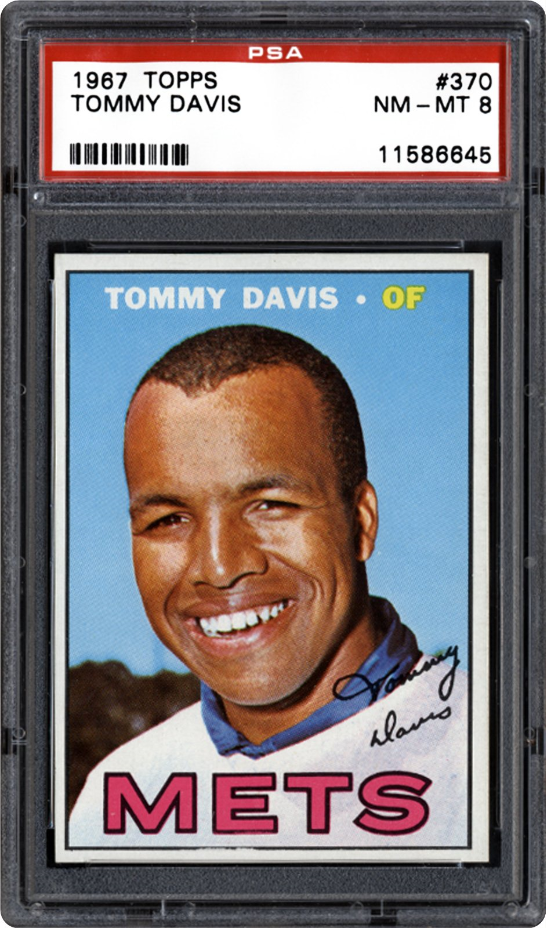
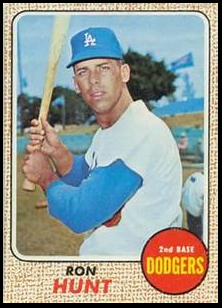
November 1966. The Dodgers traded Tommy Davis and Derrell Griffith to the Mets for Ron Hunt and Jim Hickman. Considered a blockbuster at the time, it turned out to be a big mistake for the Dodgers. Neither Hickman or Hunt lived up to expectations. And while Griffith never had an impact, Davis went on to play until 1976 for 9 other teams. He hit .302 his only year as a Met. Hunt, who was known for getting hit by pitches, was only hit 10 times in LA. He was traded to the Giants the following year for Tom Haller.
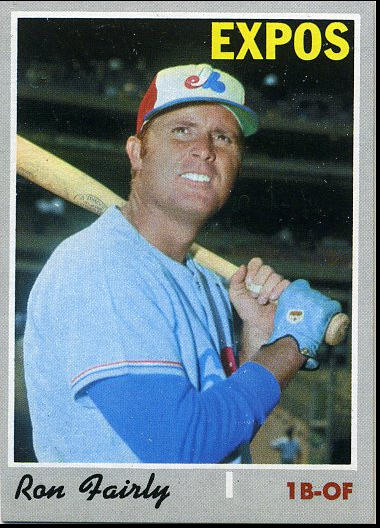
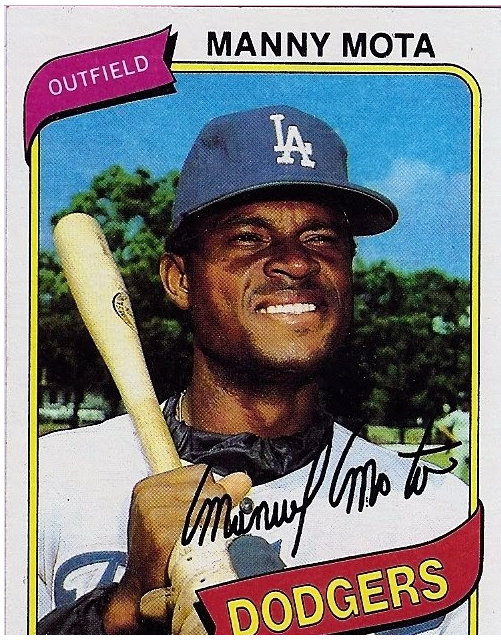
June 1969. This was when the deadline was the 15th of June. Dodgers traded Ron Fairly and Paul Popovich to the Expos for Manny Mota and Maury Wills. Wills played 3 more seasons hitting over .270 in all 3. He added 69 steals to his Dodger total of 490. Mota would hit .318 as a Dodger and become the all-time leader in pinch hits until 2001 when he was passed by Lenny Harris. Harris spent 5 years with the Dodgers. Mota hit .375 in 5 post season series. LA gets the nod on this one. Fairly did well in Montreal, hitting .276 with 86 dingers in his 5 year stint. He played a year and a half in St. Louis and finished his career with stints in Cal, Tor and with the A’s.
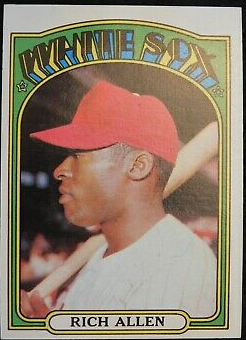
October 1970. Dodgers trade ROY Ted Sizemore and C Bob Stinson to the Cardinals for Richie Allen. Allen went on to have an All Star campaign in 1971, his only season in blue. Sizemore never reached the heights he had with the Dodgers in his 5 years in St Louis. But he played until 1980 and even returned to the Dodgers for a short time in 1976. Allen went on to bigger things in a White Sox uni. Oh yeah, a 1 year win for LA. You might put the trade of Allen to the White Sox the next year for Tommy John and Steve Huntz here. John did pitch for 6 seasons in LA and Allen only played 3 in Chicago and even returned to the Phillies a few years later.
February 1971. Dodgers traded Andy Kosco to the Brewers for Al Downing. Kosco was known for leading the Dodgers in HR’s in 69 with 19. He and Wes Parker were the only players on that team who drove in 60 runs or more. Downing was coming off of 3 down seasons after 5 years of double digit wins with the Yankees.
Downing went on to have the best year of his career with a 20 win season in 36 starts, 5 shutouts, 262 innings pitched and a 2.68 ERA. He would win only 26 games over the next 5 seasons in LA, He was 3rd in the Cy Young voting that year. He is most famous for serving up Aaron’s record setting 715th Homer. Kosco played 1 year with the Brewers and never came close to 19 homers again.
December 1971. Campanis kept busy after trading Allen to the Sox and sent Doyle Alexander, Sergio Robles, Bob O’Brien, and Royal Stillman to the Orioles for Pete Richert and Frank Robinson. None of the players traded amounted to much except Alexander. And he did most of his best work after he left Baltimore. Robinson played one year in LA. He had 19 homers, and was not one of Alston’s favorite guys. Richert stuck around for 2 years and was used in a trade in 1973 for former Met star, Tommy Agee who came over from the Cardinals.
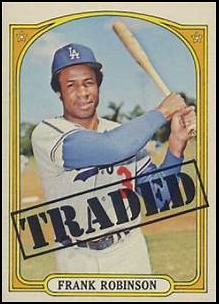
November, 1972. Dodgers traded Billy Grabarkewitz, Bill Singer, Bobby Valentine, Mike Strahler, and Frank Robinson to the Angels for Ken McMullen and Andy Messersmith. Messersmith went 55-34 in his 3 years in LA. McMullen did not fare as well as he had in DC. Messersmith and Dave McNally challenged the reserve clause in the winter of 75 and won becoming free agents and thus starting that process. He signed with the Braves.
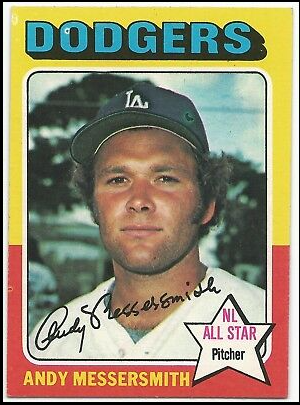
Robinson played parts of 2 seasons with the Angels and finished up as a player manager in Cleveland. Singer spent 3 years in Cal and actually won 20 games in 73. Grabarkewitz was there for one season. Strahler never pitched for the Angels, instead he was traded to the Tigers in April of 73. Valentine never reached the heights many thought he would. Part of the reason might be the bad injury he sustained, much like Pete Reiser hitting the outfield wall and breaking his leg.
December, 1973. Willie Davis to Montreal for reliever Mike Marshall. A painful trade for the fans. Willie was very popular. But what Marshall accomplished in 1974 makes the trade a winner for the Dodgers. 106 games, a Cy Young award and a trip to the World Series. Davis played one season for the Expos. He had a decent year, but was traded to the Cardinals for Pete Mikkleson.
December 1973, the day after the Davis trade, Campanis sent Claude Osteen and Dave Culpepper to Houston for Jim Wynn. As good as Marshall was out of the pen, Wynn was just as good for the offense and finished the season with 32 dingers and 104 RBI’s. The Toy Cannon as he was called was hugely popular with the Dodger faithful. He finished 5th in the MVP race and was an all-star. Osteen went 9-9 in his only year with the Stros.
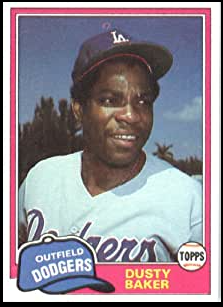
In November 1975, Dodgers traded Jim Wynn, Tom Paciorek, Lee Lacy and Jerry Royster to the Braves for Dusty Baker and Ed Goodson. While Royster, Paciorek and Lacy all went on to fine careers, none meant as much as Baker would to the Dodgers. And Lacy was traded back to LA 7 months later with Elias Sosa for Mike Marshall, the pitcher. He spent 3 more years in LA and left as a free agent after the 78 season.
May 1975. Campanis did it again, He traded Eddie Solomon and Geoff Zahn to the Cubs for Burt Hooten. Hooten would pitch for 10 years in a Dodger uniform. Winning 112 games. Zahn pitched 2 years for the Cubs, but did not become a force until he went to Minnesota. He won 105 games with the Twins and the Angels combined over a 7 year period. Solomon pitched one year in Chicago and went on to pitch for 4 other teams. He never won in double figures and finished with a career 36-42 record.
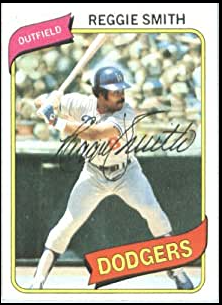
June 1976. Joe Ferguson, Bob Detherage, and Fred Tisdale to the Cardinals for Reggie Smith. For the Cardinals only Ferguson had any kind of impact. Smith on the other hand spent 5 years as a Dodger. Smith only had 2 of those seasons where he was a full time producer. In 77 and 78 he combined for 61 homers and 180 RBI’s. After his playing career he returned to the Dodgers as a hitting coach. Ferguson played with the Cardinals for a year, was sent to the Astros in the Larry Dierker trade in 76 and was traded back to the Dodgers by the Astros in July of 1978 with cash for Rafael Landestoy and Jeffery Leonard. He ended up spending 11 seasons with the Dodgers.
April, 1979. Dodgers send Rick Rhoden to the Pirates for Jerry Reuss. Reuss would spend 9 years in LA and win 86 games and was part of the 81 WS winning team. He was 2-5 in postseason games and is the main reason Fernandomania started. He could not make the opening day start in 1981 due to injury, so Fernando started, and the rest is history. Rhoden spent 8 years with the Bucs. He ended up with a 79-73 record with them but never pitched in the postseason with the Pirates. He was injured during their 79 run to the pennant. He went on the professional golfers circuit after he left baseball and did pretty well.
Well those are the major moves from 1958 to 1979. Some may think they had limited impact, but usually over time LA came out ahead on almost all of these trades.
More from Dodger Talk
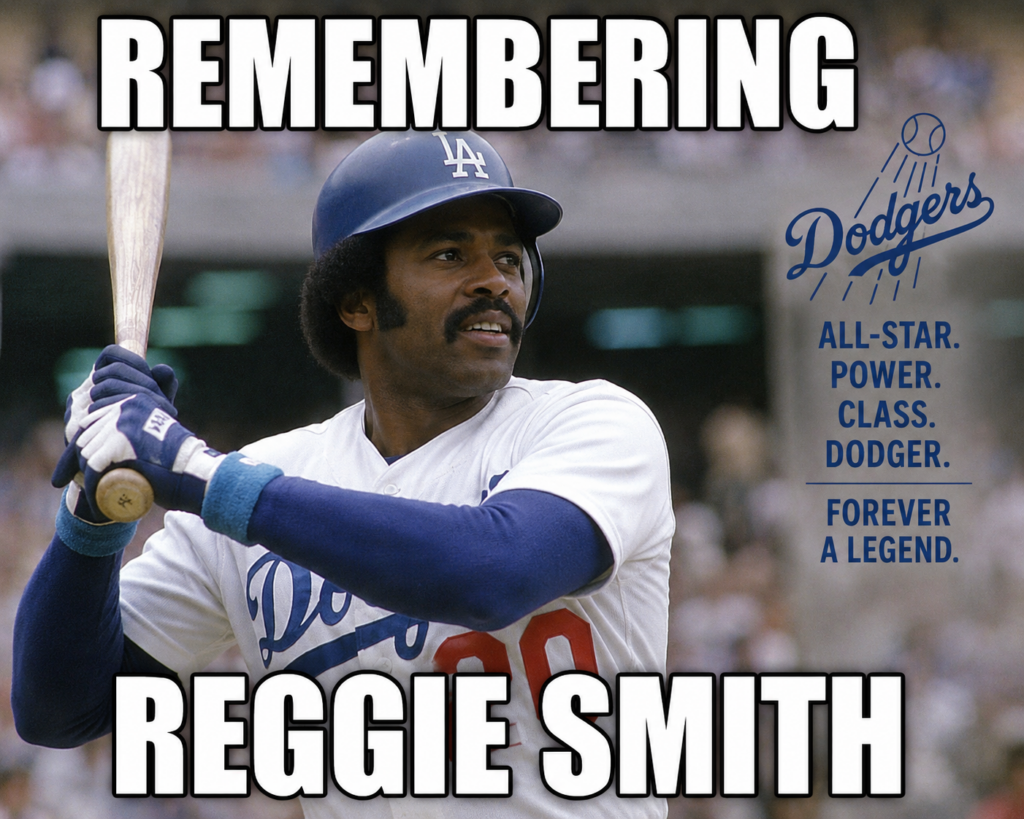
Remembering: Reggie Smith
Carl Reginald Smith was born on April 2nd, 1945, in Shreveport Louisiana. His father played in the Negro Leagues; his mother was a gifted musician.
Ron Fairly Taught Me
I think it was in 1965 or 1966 that I figured out Ran Fairly was not very good against LHP. I was only 12 years old, but every time a LHP went against the Dodgers, I knew that Ron Fairly (who may have been my favorite Dodger at one time) would not do well. To the best of my…
Baseball's Past is An Important Part of the Future
Many fans around today know little of the game of baseball’s history. Its past is filled with colorful characters. Some performed at levels today’s stars will never reach, especially on the pitching side of the game. It is a safe bet that no one ever approaches 511 wins. I would…
Greatest Hitters In Dodger History
The Dodgers this season saw two of the best in the major’s bat back-to-back all year. Both put up excellent seasons. Both have had stellar careers to this point. Both Freeman and Betts will get some serious Hall consideration. Where do they rank with the hitters of the past…
Discussion (57)
Disagree, not disagreeable
Congratulations to the Oregon Ducks on their Pac-12 title. Washington should have been there instead, but the Virus claimed another victim. USC played terrible in the first quarter and never recovered.
Let’s sign Tim Lopes
Los Angeles Dodgers president of baseball operations Andrew Friedman revealed changes to the universal DH are being discussed and he is hopeful to find middle ground between that and traditional NL style of play, via AM 570 L.A. Sports:
“I wish there was some way to figure out how to maintain some strategy to the game while having a DH. There have been some different ideas kicked around that I think are really creative and can kind of solve that with tying the DH to the starting pitcher. So you start with the DH in your lineup and as soon as your starting pitcher comes out of the game, you then lose your DH. So it adds some real strategy to how much you push your starter, whether you double-switch him out.
“There’s a lot of strategy to it. And also where you hit your DH, because then the pitcher’s spot goes into that spot. I think that could provide for a lot of strategy while also limiting the amount of at-bats pitchers are getting.“
Interesting stuff at ESPN.com today about the esthetics of baseball.
They interviewed Don Mattingly, who said this:
“I watched a lot of the playoff games after we were eliminated and quite honestly it was a little hard to watch,” he said. “There was nothing going on. Strikeout, strikeout, home run. It was hard to watch. It tells me we have to find a way to make our game move.”
In the same article, Theo Epstein as quoted
“”I take some responsibility for that because the executives, like me, who have spent a lot of time using analytics and other measures have unwittingly had a negative impact on the aesthetic value of the game and the entertainment value of the game,” Epstein said.”
The article observed that : “According to ESPN Stats & Information, plate appearances that ended in a walk, home run or strikeout — in other words, those without a lot of action — have gone up 7% over the past decade. Those types of appearances occurred 36% of the time last season, an all-time high.”
Howard Bryant wrote similarly about baseball’s future in another article:
“For the entirety of the postseason, Tampa Bay’s technocratic, assembly-line approach to baseball was highlighted on every broadcast, baseball’s embrace of how front offices not only evaluate talent but impress upon managers through which lens they will game-plan, of how smart everyone upstairs happens to be. “You have to have a short memory and thick skin because that’s the way they do things,” Fox’s lead mic man, Joe Buck, said of Tampa Bay’s organizational approach. The preceding and ensuing conversations about the Rays’ way centered on analytics, the quantitative analysis approach to talent acquisition and in-game planning for nearly two decades.”
“One day, perhaps in a few weeks, Curt Schilling will be elected to the Hall of Fame, and his induction will have been cemented by his Octobers, in victory, defeat and no decision — moments the Tampa Bay Rays refused to grant Snell.” and
“Luis Tiant never won a World Series, but for his generation in Boston, he will always be remembered not for his trend lines but for what we saw: three starts in the 1975 World Series, including his final one, Game 6, where he left the game trailing 6-3, beaten but having squeezed out every ounce of effort and competition.” and
“Gibson, the greatest of the modern-day postseason performers, who became Bob Gibson because he was allowed to in 1964, Game 7, fighting pain and pressure and fatigue and the Yankees to close out a ninth inning. …Johnny Keane (Gibson’s manager) said, “I made a commitment to his heart.” From that day forward he was no longer Bob Gibson. He was now feared. A big-game pitcher. He was THE Bob Gibson.”
“In the sixth, I did not care if the Rays’ formula told them to go to the bullpen for another faceless reliever as they counted outs. I cared about Blake Snell, 2018 American League Cy Young Award winner, competing against the Los Angeles Dodgers and whether Snell could find the championship reserve necessary that separates the ones we remember from the ones we do not…Blake Snell can never be a great pitcher without these moments, and without these moments, the game ceases to be great…People might remember final scores, but they recite poetry. If baseball is going to exchange the lyric of competition for the mechanical maximum efficiency of recording 27 soulless, indistinguishable outs, it has already lost.”
Those of us who have questioned the Andrew Friedmans of the world ask ourselves these questions.
The Dodgers got zero complete games in 2020, 3 in 2019, 0 in 2018, 2 in 2017, 3 in 2016. Dodger pitchers aren’t allowed to compete for more. Koufax completed 27 games in 1966 before he retired, 27 the year before in 1965. He was a warrior. By comparison Kershaw has 25 in his career. (I’m not saying that a complete game is a be all; it’s just an indication how baseball has changed and pitchers aren’t allowed to fight to finish a game anymore.)
When did a strikeout become OK? Joe DiMaggio finished his career with 7672 plate appearances and 369 (!) strike outs vs. 790 walks.
Why do only power pitchers matter now? Randy Jones won the Cy Young award in 1976 going 22 – 14 in 315 innings with a 2.74 ERA in 40 starts (!) and 25 complete games for a Padres team that finished 73 – 89 and a 75 MPH fastball.
The game has become too much about numbers and not enough about the men who play. There’s more than one way to win but the pointy heads are ruining the game.
USC-Oregon tonight for the Pac-12 Championship….Go Trojans!!
Bear, you’re becoming James Michener. Great stuff again today. Lots of trips down memory lane. Nice research. Fun read.
Just for fun I’m putting out a trivia question that has won me a beer or two over the years. It should be easy for many readers here, especially if they read your article today. Ready?
“who was the only man in uniform the day that Roger Maris hit his 61st and Henry Aaron hit his 715th?”
Just read there’s some thought to modifying the DH. A team would start with the DH in their lineup and as soon as the starting pitcher comes out of the game, you lose the DH, so it adds some real strategy to how much you push your starter, whether you double-switch him out.
Double switching would benefit teams with flexibility (Dodgers for one).
Two foul ball stories:
Rays sign Michael Wacha to a one year contract. I remember when he first started in post season announcers were denigrating the Dodgers for not drafting him. Of cause they left out the reason. The Dodgers drafted Corey Seager.
I really hated the Frank Howard trade. When we lived in Columbus, Ohio, his grandmother lived behind us. It was a huge grass area between the houses and we played baseball there. His grandmother would tell us stories about Howard when he was a kid, playing in that same field. She pointed to nearby houses where he broke window because he hit the ball so far, even back then.
He was my favorite player at the time, the only legitimate power threat the Dodgers had at the time. Then he exploded with the Senators.
My oh My, what a walk down memory lane… Wally Moon and his moon shots over the infamous chinese curtain… Nope the L.A. Memorial Coliseum wasn’t esthetically beautiful, but it provided many of us with memories before Chavez…
I will say now that the Coliseum was the easiest ballpark to sneak into and box seats were a walk in the park… Seeing Frank Howard up close was a lil scary for a kid. A giant of a man…
Having Manny Mota, pinch hitter supreme, stay us forever was a blessing…
The Toy Cannon Jimmy Wynn was a favorite of mine, but getting Dusty B. later was a thrill…
OK OK I’ll cut it out, but those were the days for me as a kid loving baseball…
Another interesting walk down memory lane. I remember most of those move, but certainly don’t remember them in detail.
Messersmth is from my home town. He was ahead of me in high school but every kid knew who he was. I played some sandlot football with him. He was playing for Cal at the time. Laid him out with a cross lock tackle that really pissed him off. My thigh had a bruise from my hip to my knee cap. Thought I had broken my leg. But I got up and a few plays later intercepted a pass and pissed him off again. He called PI on me, like he was the referee. It wasn’t of course but he got his way. He was a pompous ass for the most part. I don’t think he liked me much. I thought it would be cool playing ball with him but it wasn’t really. He is a legend in these parts. Last I heard he was living well in Newport Beach.
Hey Gonzo. Good to see you again. Drop me a line when you find the time. We can catch up. I’m not in Arizona anymore. Maybe you knew that?
A piece written by Moura in the Atlantic suggests there will be changes made. Roberts: “ I just believe change, infusing new life and new energy, for me, I think is a good thing,” Also – “Adding new pieces is always welcome for me. But they have to fit.” He said he wants Turner back because of course he would say that.
Thanks for taking the effort and time to summarize those trades — brings back memories of times long gone. I hated the trade for Claude Osteen, even though he was a tremendous pitcher for the Dodgers. Frank Howard was one of my favorite Dodgers, but I was also a fan of Pete Richert, one of the first prospects that I started to follow through the team’s minor league system. He had a terrific left arm, with high strikeout totals in the minors. He did not reach his potential with the Dodgers pitching behind Koufax, Drysdale, Podres, Miller, Moeller, Ortega, and others. After leaving LA he had several excellent seasons as a starter (an AL All Star in 1965 and 1966). In his 5 seasons with Baltimore he had a 2.83 ERA, 3.21 for Washington over 3 seasons. 13-year career he won 80 games (lost 73) and saved 51; finishing with a very respectable 3.19 ERA.
Great look Bear. I remember most of those trades. One of my favorites was the Burt Hooten trade.
When I saw the title “The Trade” I thought we were going to re-hash the Nick Punto trade. Thankfully, not. I remember most of those trades. Win some, lose some, but they were fun.